Hoq Cave: The Walk, the Inscriptions and What They Say
Hoq is a limestone cave running roughly three kilometres into the escarpment above Socotra's north-east coast. Inside are more than two hundred texts and drawings left by sailors and traders, the majority in Indian scripts, most of them from roughly the first to sixth centuries CE. The visit is commonly given as three to four hours, including a steep, unshaded climb, and there is no lighting inside, so bring a head torch.
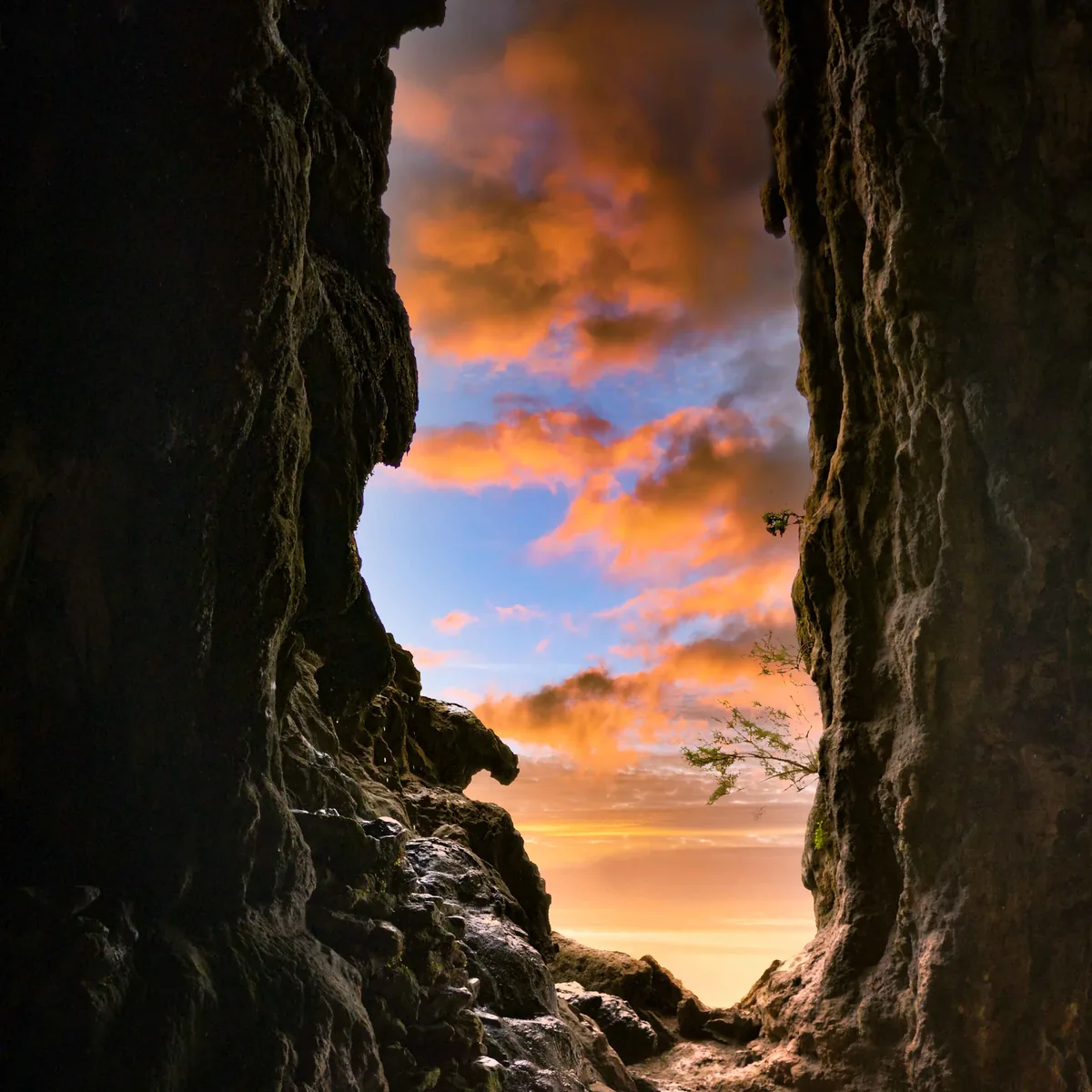
The walk up to Hoq is not the interesting part, and everyone who has done it will tell you about the walk. It is steep, it is unshaded, the ground is loose limestone, and there is a point about two thirds of the way where the path appears to be heading into a blank cliff. Then the cliff resolves into an opening perhaps thirty metres across, and the temperature drops about ten degrees.
What the cave is
Hoq runs roughly three kilometres into the escarpment behind the north-east coast. Most visitors walk the first kilometre or so, which is where the formations are and where the archaeology is.
It is a limestone cave in an island made largely of limestone lifted out of the sea, and it does what those caves do: stalactites, stalagmites, columns where the two have met, flowstone sheeting down the walls in frozen curtains. Some of it is enormous. There is a pool deep inside, and a river that flows in the wet season.
None of that is why it matters.
The writing on the walls
In 2000 and 2001, Belgian and Russian teams surveying the cave found inscriptions. Not a handful. More than two hundred texts and drawings, cut and painted onto the walls and onto broken stalagmites, in a range of scripts that maps almost exactly onto the Indian Ocean trade network of late antiquity.
The majority are in Indian scripts, mostly Brahmi. There is South Arabian, there is Ethiopic, there is Greek, and there is at least one Palmyrene text from what is now Syria. Most are dated to somewhere between the first and sixth centuries CE.
What they say is, for the most part, unremarkable, and that is what makes them extraordinary. They are names. A man records that he was here. Sometimes a father's name, sometimes a home port, occasionally a ship. There are drawings of vessels. There is a wooden tablet, left in the cave and recovered intact, inscribed in Palmyrene.
These are sailors. They came ashore on an island in the middle of a monsoon crossing, walked up a hill to a cave, and wrote their names on the wall, and then most of them presumably sailed on. The cave is the single richest surviving record of who was actually moving through the western Indian Ocean two thousand years ago, and it exists because a cave is dark and dry and nobody painted over it.
Socotra appears in the Periplus of the Erythraean Sea, the first-century Greek merchant's handbook, as Dioscurida, with a note that it was inhabited by a mixed population of Arabs, Indians and Greeks. For a long time that was a line in a text. Hoq is the same claim written by the people themselves.
Getting there and going in
The approach starts from the coast road on the eastern leg of the standard circuit, usually the same day as Arher and its dunes, which is a merciful order: cave first while it is cooler, then the beach.
You will have a local guide from the nearby village in addition to your own. This is not optional and it is not a formality. The cave has a community access arrangement, the fee supports it, and the guide knows where the archaeology is and where you should not put your feet.
 Rod Waddington from Kergunyah, Australia · CC BY-SA 2.0
Take a head torch, not a phone. Take more water than you think, because the climb is hot and the cave is not. Wear shoes with real grip: the floor is uneven, and in places it is wet and slick. There are no handrails, no walkways, no lighting and no signage, which is precisely the appeal and also the reason to move slowly.
What not to do
Do not touch the inscriptions. Do not touch the formations either, though for a different reason: skin oils stop a stalactite growing at the point of contact.
Do not take anything. Fragments of broken stalagmite on the floor are part of the site, and some of them carry writing.
Ask before photographing the archaeology, and do not use flash on it. Your guide will tell you what is permitted, and the rules exist because this is an archaeological site that happens to have no fence.
How it fits the trip
Hoq sits on the eastern leg, and it pairs naturally with the dunes and the coast. If the island's history is what draws you rather than the botany, it is the single most important stop on Socotra and it deserves more than a rushed hour.
The wider set of caves and canyons, including Digub in the south and the freshwater pools at Kalysan, runs through caves and canyons. The standard circuits that include Hoq are in our expedition packages, and the archaeology connects to the island's longer trade history in the culture guides.
A caution about times
You will find the walk described as anything from forty-five minutes to two hours each way. Nobody has published a measured figure, and the range you see quoted online is not evidence of disagreement so much as evidence that nobody timed it. Plan for three to four hours door to door, ask your guide on the day, and treat the numbers on operator sites as approximations rather than schedules.
The other caves
Hoq is the one that gets visited, but it is not alone. Socotra is limestone, and limestone dissolves.
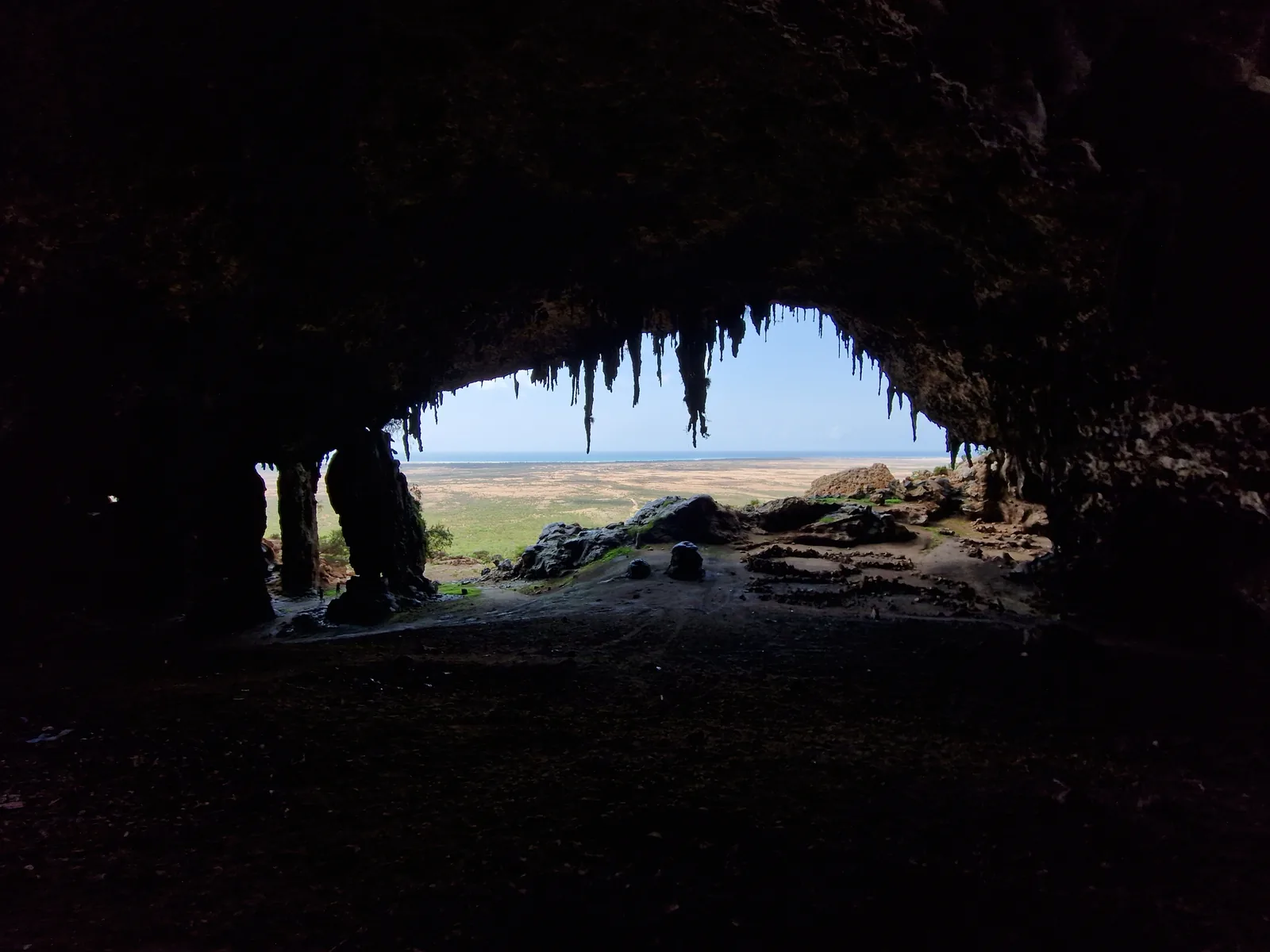
Digub, on the south side, is broader and far easier to reach: a short walk rather than a climb, with a wide mouth and a chamber of heavy columns. It is the cave to see if the Hoq approach is beyond someone in your group, and it is often paired with the southern beaches.
 Hardscarf · CC BY-SA 4.0
Dahaisi appears on longer itineraries in the east and is genuinely large. It sees very few visitors, partly because getting there eats most of a day.
There are many more. The plateau is riddled with them, most unnamed on any map you will find, and a fair number never properly surveyed. Cavers have been working on the island intermittently since the 1990s and the surveying is nowhere near finished.
Why the cave preserved what the island did not
It is worth asking why the inscriptions are in a cave rather than at the harbour, where the sailors actually landed.
Part of the answer is that they are probably in both, and the harbour ones are gone. Coastal sites erode, get built over, get scavenged for stone. A cave a few hundred metres up a cliff, in a dry chamber, with no reason for anyone to go in and no material worth taking out, is about the best archive conditions an ancient text could ask for.
The other part is that going up there may have been the point. A cave above a landfall, reached by a climb, with fresh water inside it, is the kind of place people mark. Several of the texts read as votive rather than casual, and the wooden tablet in particular looks like something left deliberately rather than scratched in passing.
Nobody knows for certain. That ambiguity is honest, and it is more interesting than a tidy answer.
Chat with a real person — free
Seif and the team reply on WhatsApp — trip questions, custom plans and booking help.
Ask Seif on WhatsAppCommon questions
How long does the Hoq Cave trip take?
Commonly given as three to four hours in total, with around an hour of that inside the cave. The approach is a steep, unshaded climb. Confirm timings with your guide, because published figures vary and nobody has measured them systematically.
How hard is the walk?
Steep and rocky rather than technical. There is no scrambling and no exposure, but it is a sustained uphill on loose ground in heat, and most people find the descent harder on the knees than the climb was on the lungs.
Do I need caving experience?
No. Hoq is walked, not climbed. The floor is uneven and wet in places and there is no lighting of any kind, so a proper head torch and shoes with grip matter more than any technique.
What are the inscriptions?
Texts and drawings left by visiting sailors and traders, the majority in Indian scripts, alongside South Arabian, Ethiopic, Greek and Palmyrene. Most are dated to roughly the first to sixth centuries CE.
Can I touch or photograph them?
Photograph without flash where your guide permits it, and do not touch. They survived two thousand years because the cave is stable and almost nobody went in. Skin oils and abrasion are the risk now.
Is there lighting inside?
None. The cave is completely dark beyond the entrance chamber. Bring your own head torch with fresh batteries rather than relying on a phone.
Is it suitable for children?
The cave itself is fine for confident walkers. The approach is the limiting factor: a steep hour or so in the sun. Families often send part of the group up while others stay at the beach below.
Where is it?
Above the north-east coast, on the same stretch of coast as the Arher dunes. It is usually combined with the dunes and beach in the same day, on the eastern leg of the standard circuit.
Keep reading
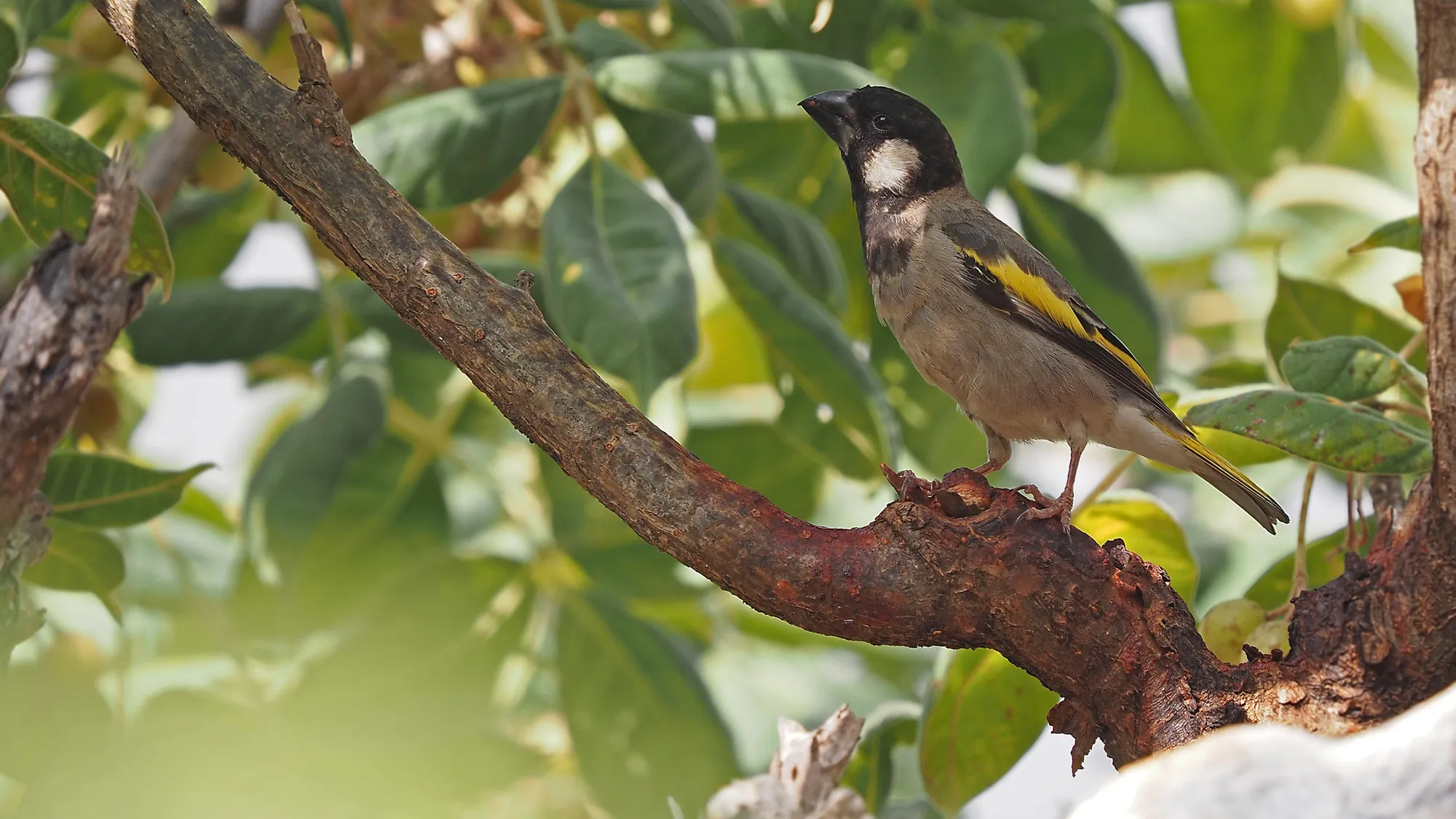
Birding on Socotra: The 11 Endemic Birds and Where to See Them
Eleven bird species live only on the Socotra archipelago. Where to look for them, the one standard trips cannot reach, and how each is doing on the Red List.
By TiS Authors8 min read
How to Get to Socotra in 2026–27: The Jeddah Flight, and Every Other Route
One direct international flight reaches Socotra, and even its timetable is disputed. The Jeddah flight as filed, what Yemenia has and has not confirmed, what it costs, and what became of the other routes.
By TiS Authors9 min read
Socotra Permit and Entry, 2026–27: It Is Not a Yemen Visa
Every Socotra trip runs on a permit your operator arranges, while governments describe a different document altogether. What the permit is, what it costs, who issues it, and the distinction almost nobody writes down.
By TiS Authors8 min read