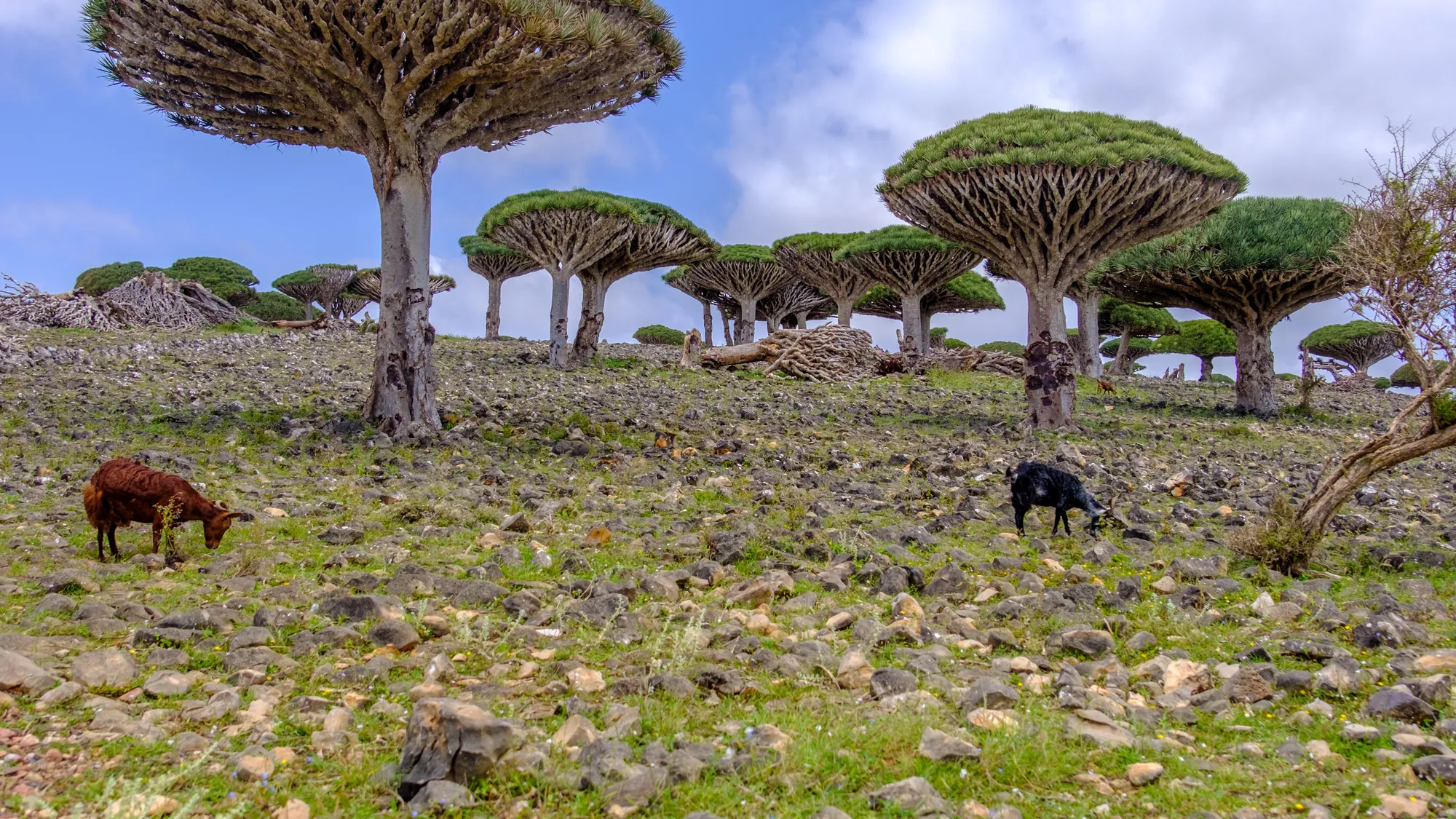
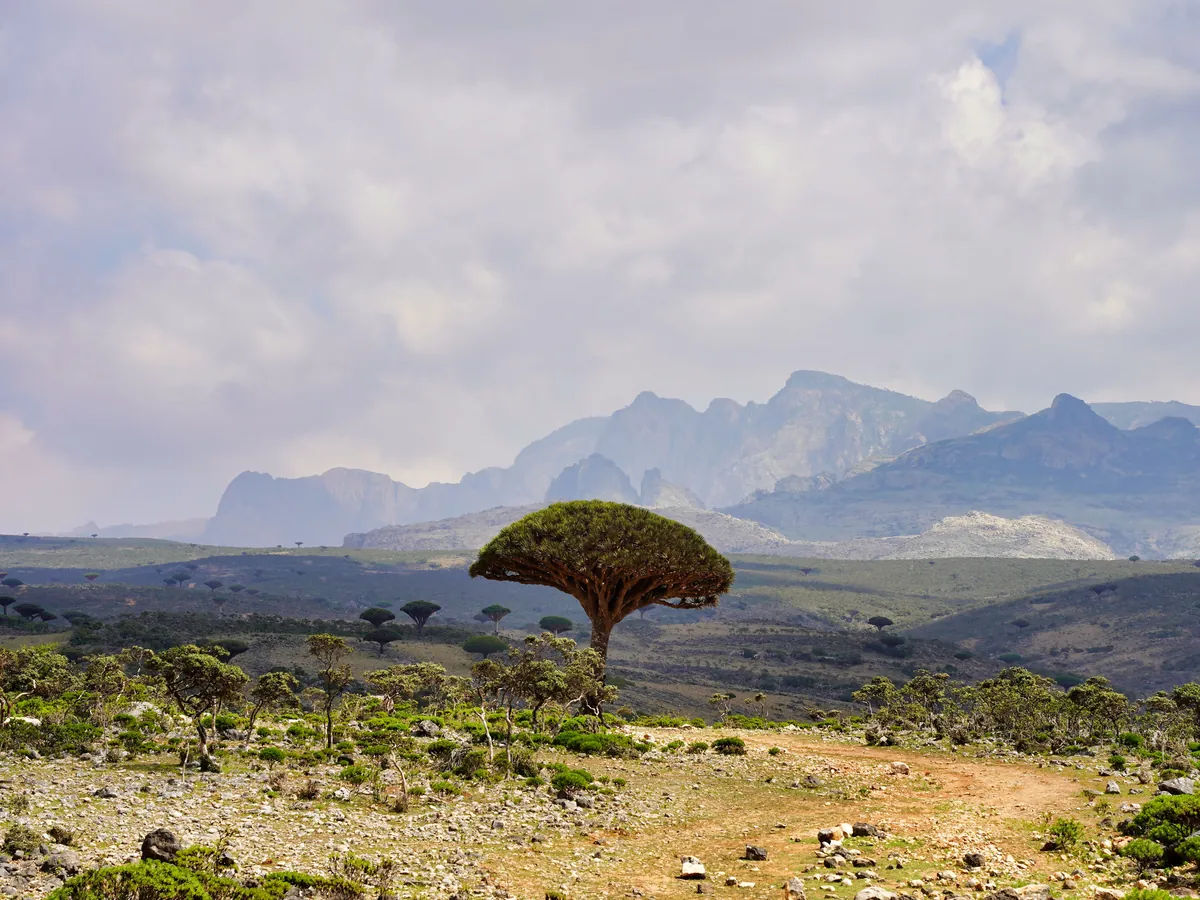
Dragon's blood trees on a stony plateau, with goats grazing in front of them

Wildlife of Socotra

The trees, birds, reptiles and sea life of the island, with where to see them.

Hardscarf · CC BY-SA 4.0
Quick answer

Socotra's best-known endemic is the dragon's blood tree. About 37% of the island's plant species, 28 of its 31 native reptiles and 95% of its land snails are found nowhere else, and 11 bird species live only on the archipelago. The dragon's blood forests at Firmihin and on the Diksam plateau are also among the best places to see the endemic birds.

Apart from bats, Socotra has no documented native land mammals. The Socotran pipistrelle is the only mammal thought to be endemic to the island.

Trees and plants

Socotra has 825 recorded plant species, and 307 of them (37%) grow nowhere else.

A dragon's blood tree on a plain below the Haghier mountainsAlex38 · CC BY 4.0

Dragon's blood tree

Dracaena cinnabari

EndemicVulnerable (IUCN assessment, 2004)
  • Its umbrella-shaped crown catches mist and fog, which runs down to the roots.
  • Firmihin holds more than 40% of all dragon's blood trees, on about 2% of the land where they could grow.
  • Adult trees rarely die. Young ones are eaten by goats long before they grow out of reach.
A frankincense tree, Boswellia socotrana, on stony groundRod Waddington from Kergunyah, Australia · CC BY-SA 2.0

Frankincense trees

Boswellia, 11 endemic species

EndemicAll 11 Endangered or Critically Endangered (2024 assessment)
  • 11 of the world's 24 frankincense species grow only on the Socotra archipelago.
  • At Homhil, one species fell from 1,187 trees in 1956 to 264 in 2017.
  • Socotra's trees are not the main source of the frankincense sold today.
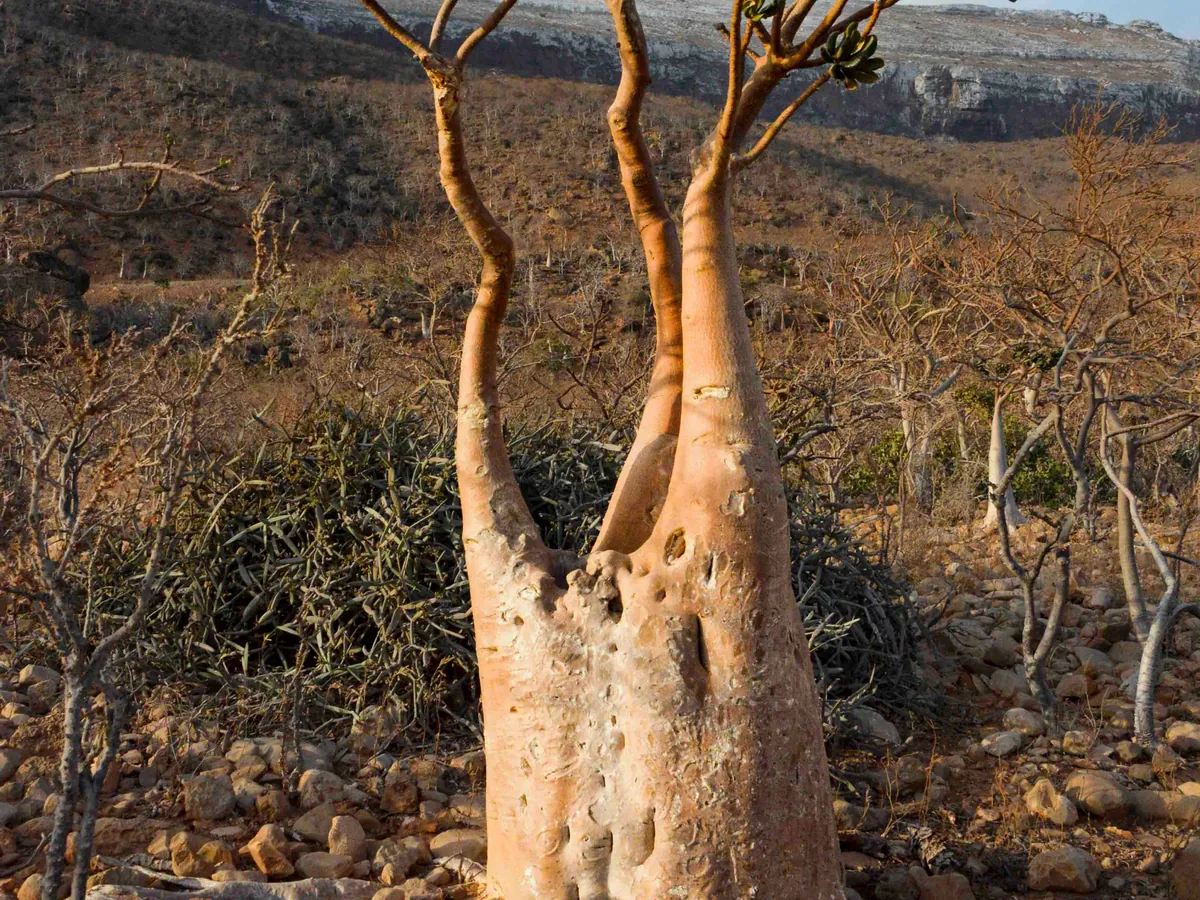
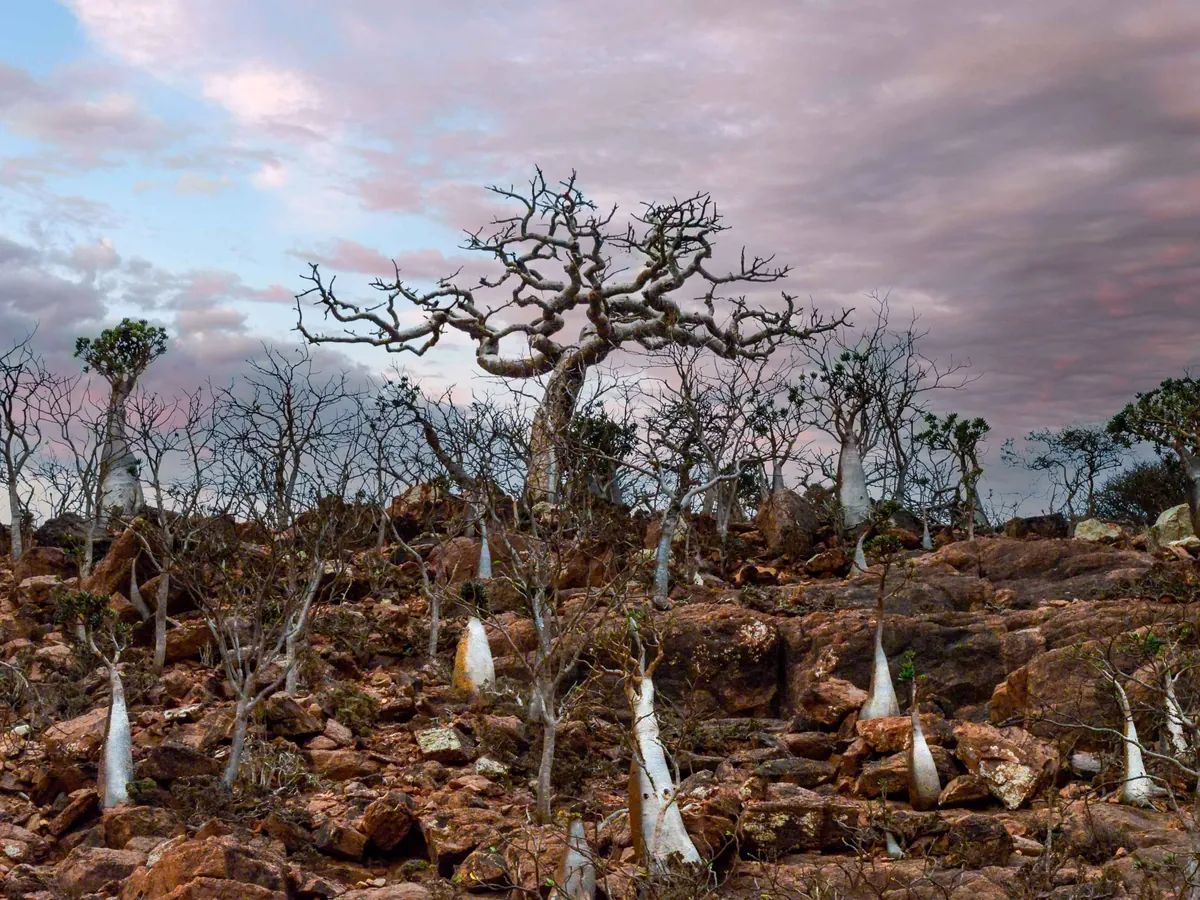
A bottle tree with a swollen pale trunk on a rocky slopeRod Waddington from Kergunyah, Australia · CC BY-SA 2.0

Bottle tree

Adenium obesum subsp. socotranum

Endemic subspecies
  • Named for its swollen trunk, which stores water.
  • It flowers best in February and March.
  • At Homhil it grows alongside frankincense and dragon's blood trees.
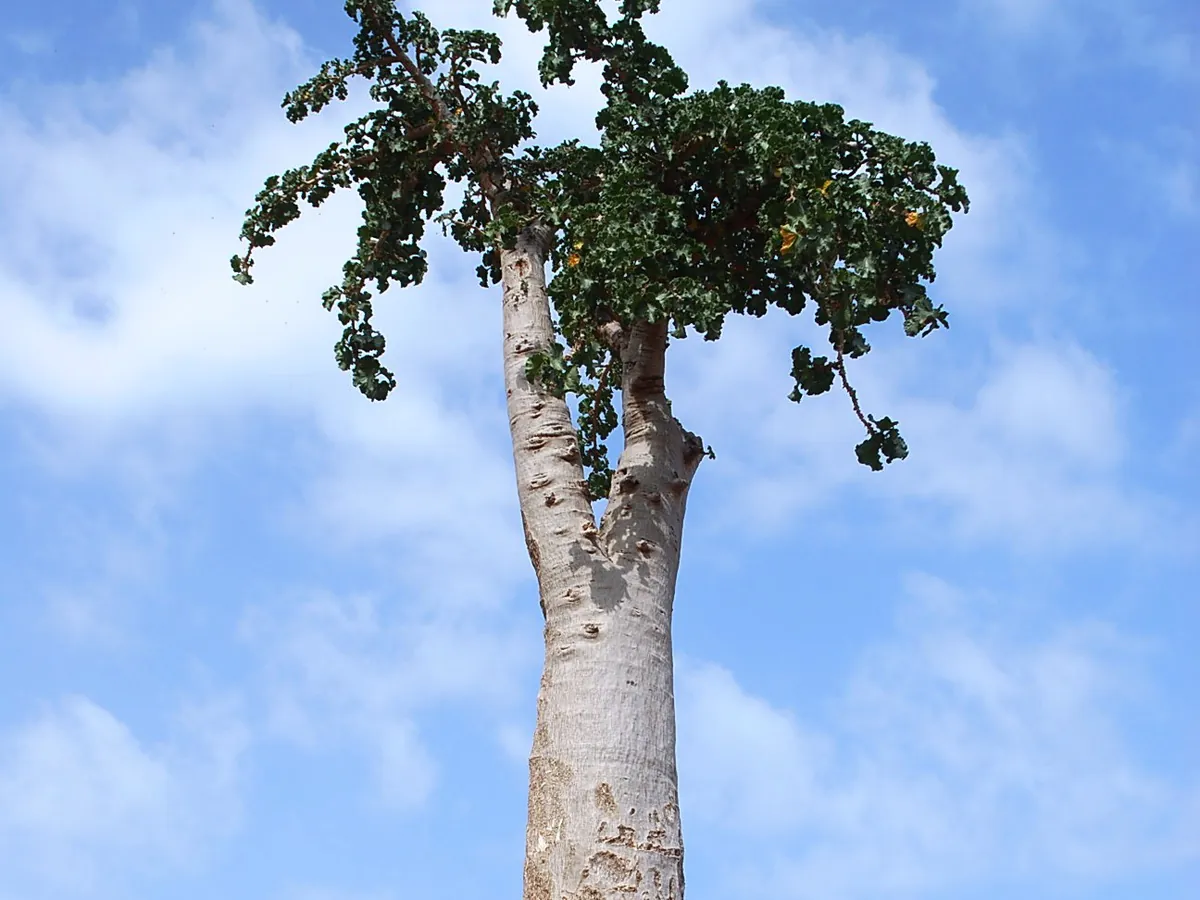
A cucumber tree with a thick pale trunk on a rocky outcropGerry & Bonni · CC BY 2.0

Cucumber tree

Dendrosicyos socotranus

Endemic
  • The only member of the cucumber family that grows into a tree.
  • A survey found 163 trees at 24 sites and estimated that more than 6,400 grow on the island.
  • It grows mostly in shrubland with succulents and in wadis.
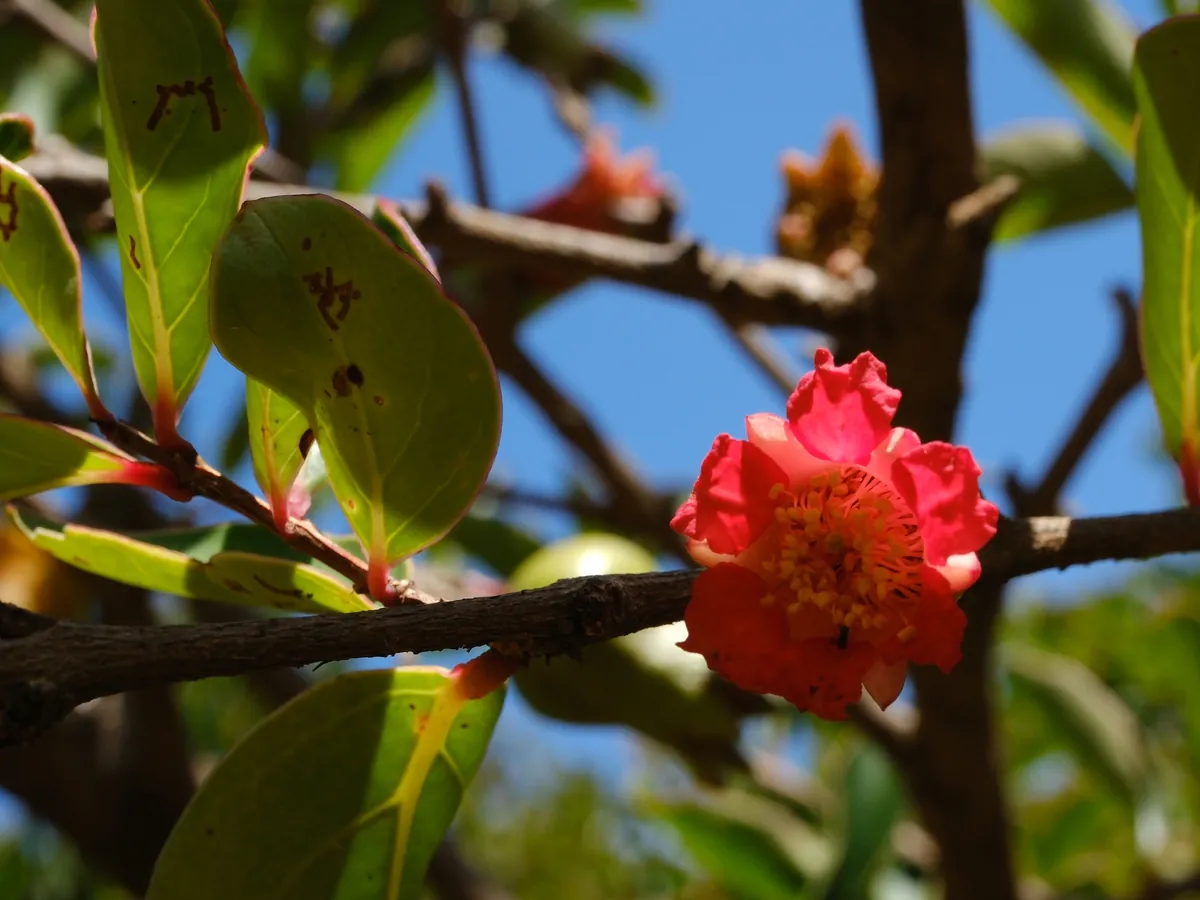
A red flower of the Socotra pomegranate among glossy leavesNick Helme · CC BY-SA 4.0

Socotra pomegranate

Punica protopunica

EndemicVulnerable (IUCN assessment, 2004)
  • One of only two species in its genus. The other is the pomegranate grown for its fruit.
  • It grows in the island's dry woodland.
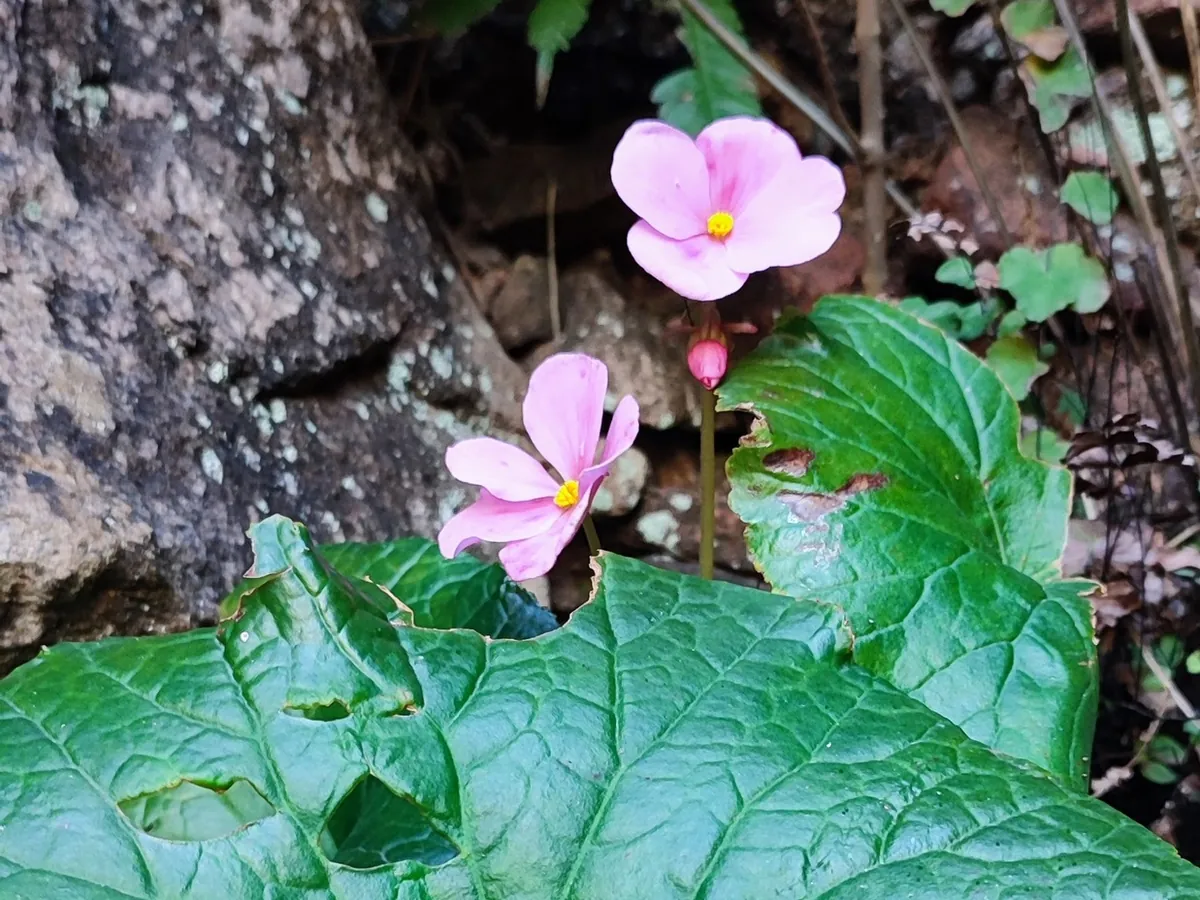
Pink begonia flowers above a large round leafNick Helme · CC BY-SA 4.0

Socotra begonia

Begonia socotrana

Endemic
  • In the wild it grows only in the north-central part of the island.
  • Breeders began crossing it with tuberous begonias in 1881. It is a parent of the winter-flowering Hiemalis and Elatior begonias.
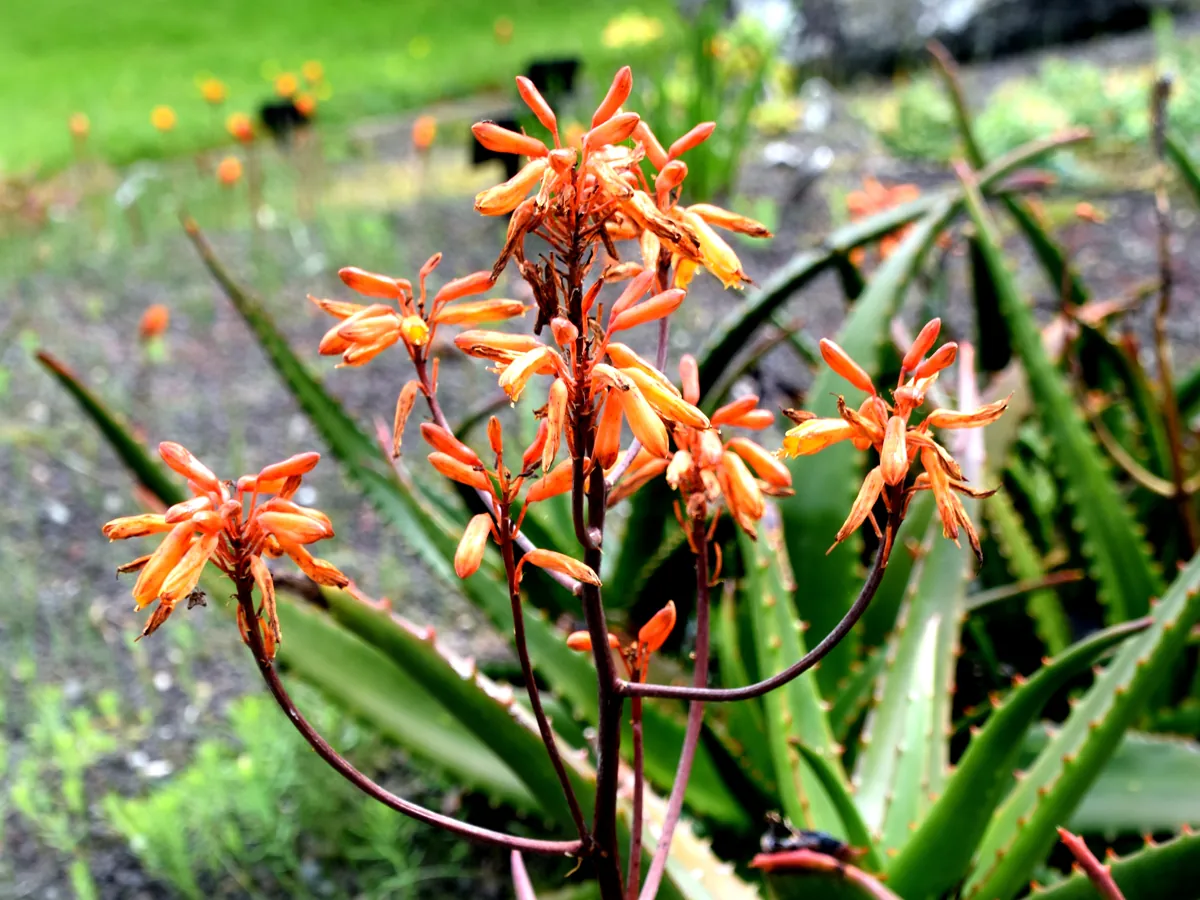
Orange flowers of Aloe perryiKrzysztof Golik · CC BY-SA 4.0

Socotrine aloe

Aloe perryi

Photographed in cultivation at Auckland Botanic Gardens

EndemicNear Threatened (IUCN assessment, 2004)
  • Its bitter dried sap was sold for centuries as "Socotrine aloes", a purgative in Arabic and European medicine.
  • The medieval pharmacologist Ibn al-Baitar rated aloes from Socotra above those from Yemen.
  • By 1833 the island exported only two tons, and the trade later stopped.

Birds

The April 2020 checklist by Richard Porter and Ahmed Saeed Suleiman lists 11 bird species found only on the Socotra archipelago. The Diksam plateau and the Haghier mountains each hold 8 of them, and Firmihin holds 7.

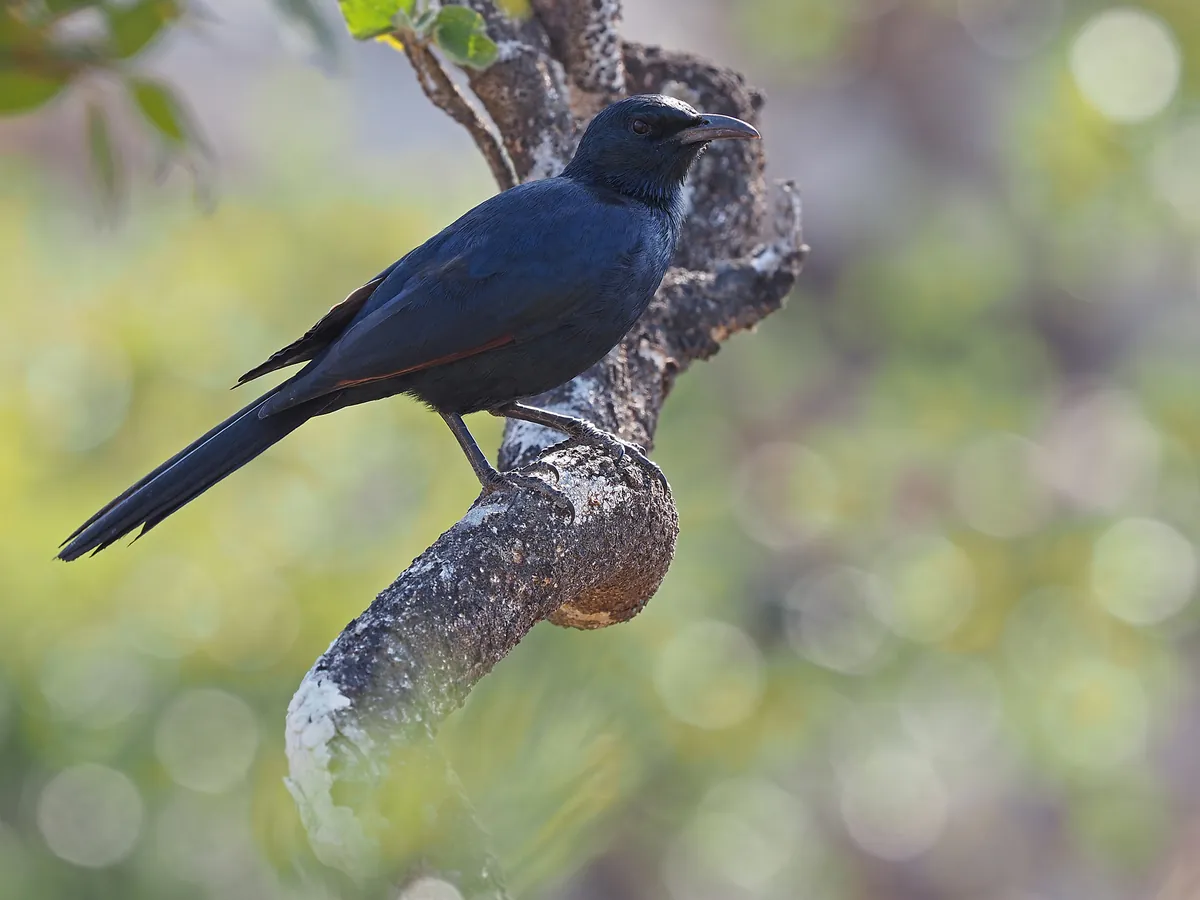
A dark Socotra starling perched on a branch

Socotra starling

Onychognathus frater

Endemic
  • Nests in hollow branches of dragon's blood trees.
  • Eats the trees' berries and helps to spread their seeds.
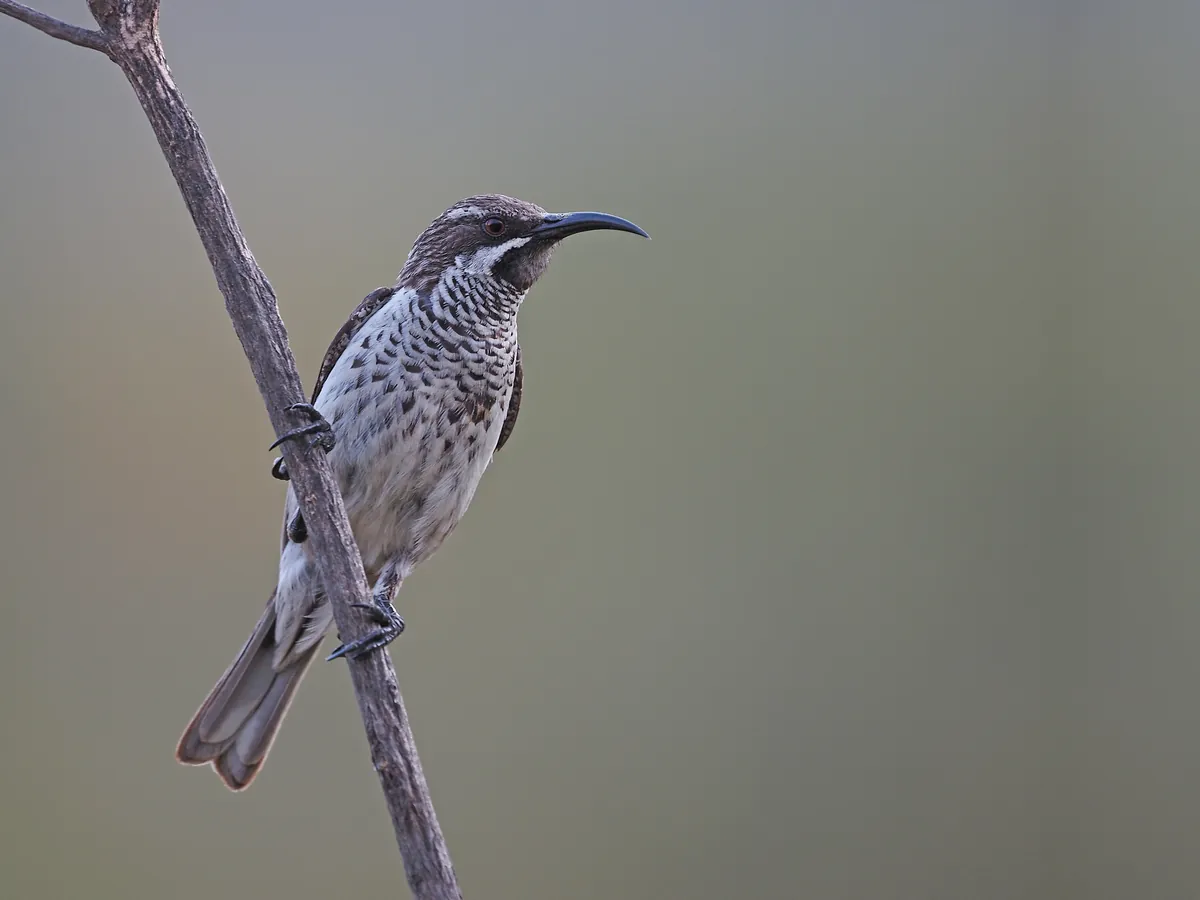
A Socotra sunbird with a long curved bill and a streaked breast

Socotra sunbird

Chalcomitra balfouri

Endemic
  • Lives in shrubland, from the lowlands up into the mountains.
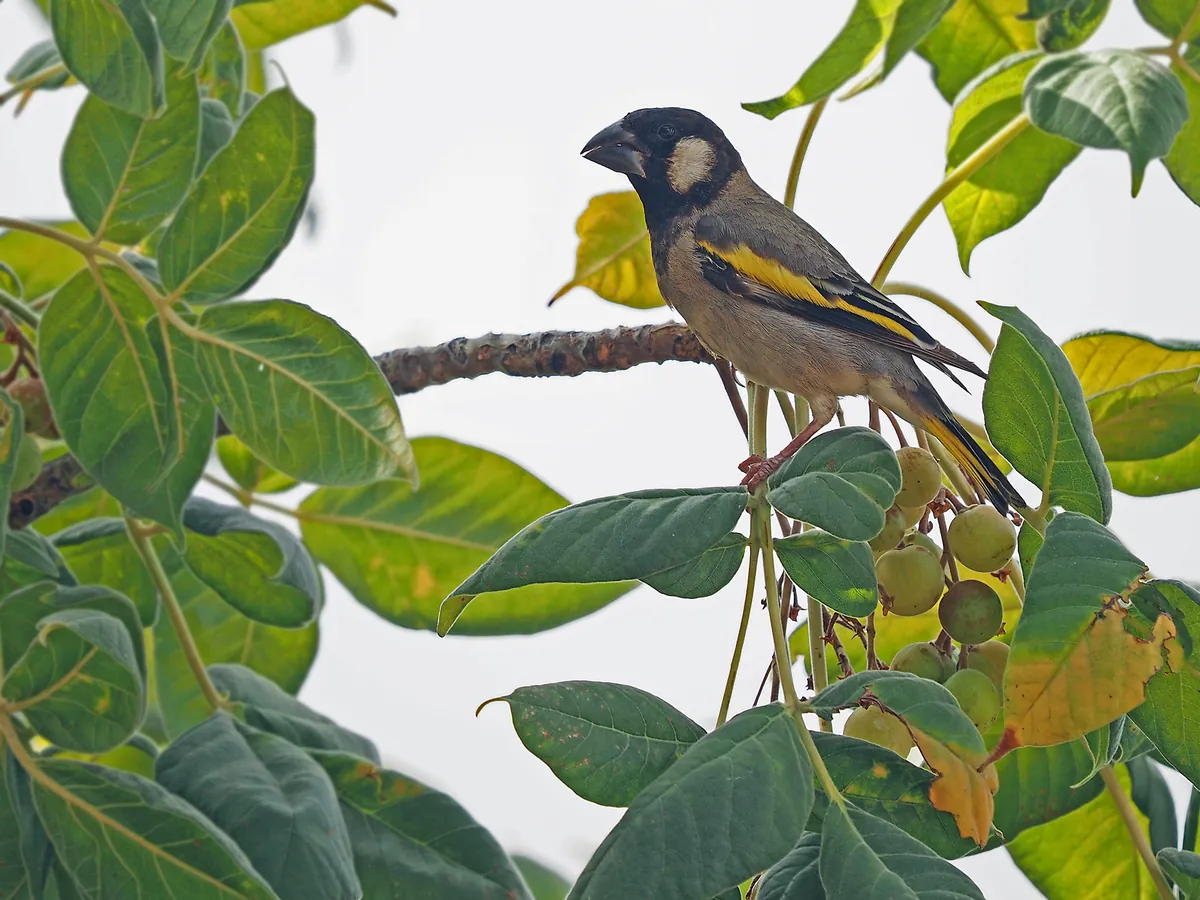
A Socotra golden-winged grosbeak with yellow wing patches among leaves

Socotra golden-winged grosbeak

Rhynchostruthus socotranus

Endemic
  • Males have bright yellow patches on the wings and tail, and white cheeks.
  • It was once treated as one species with the grosbeaks of Arabia and Somalia, which are now separate species.

Woodland and wadis, including Wadi Ayhaft and Firmihin.

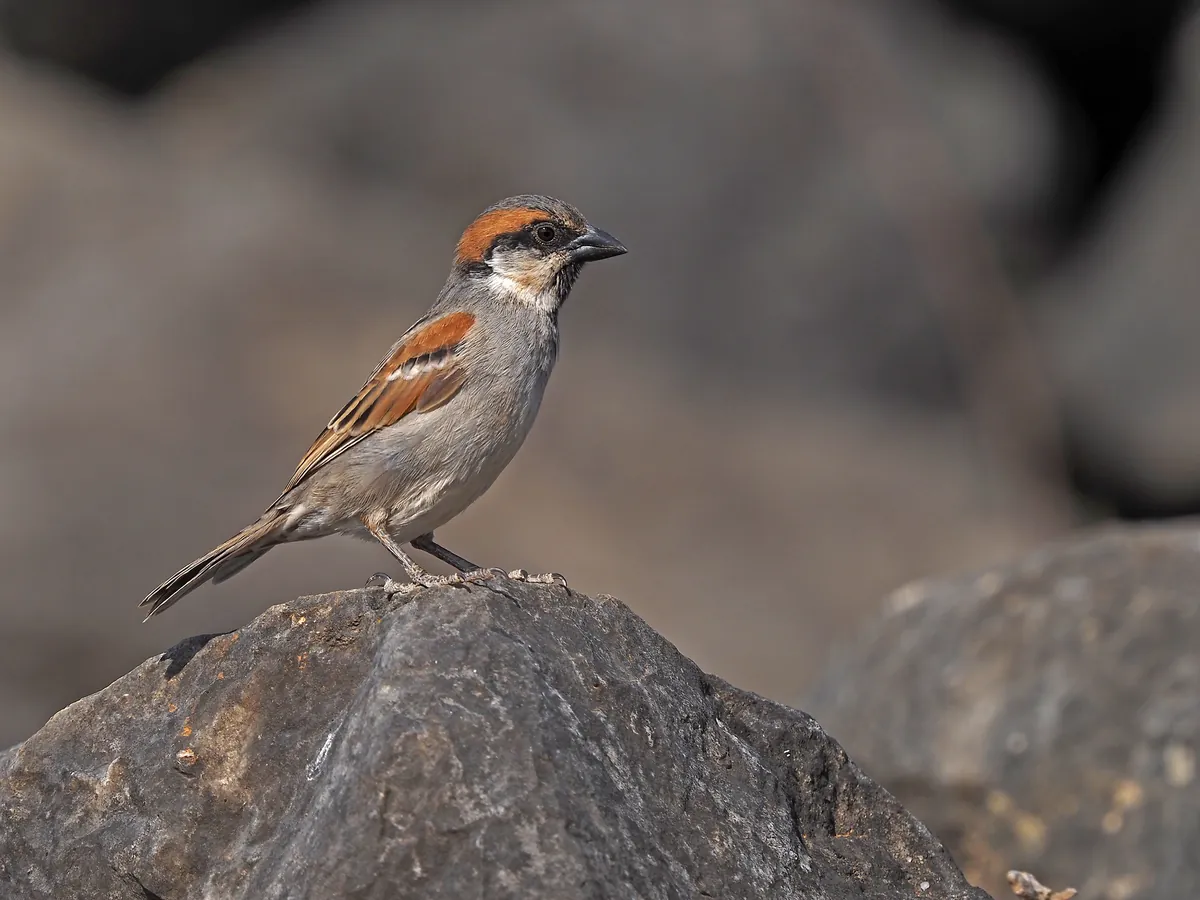
A Socotra sparrow standing on a rock

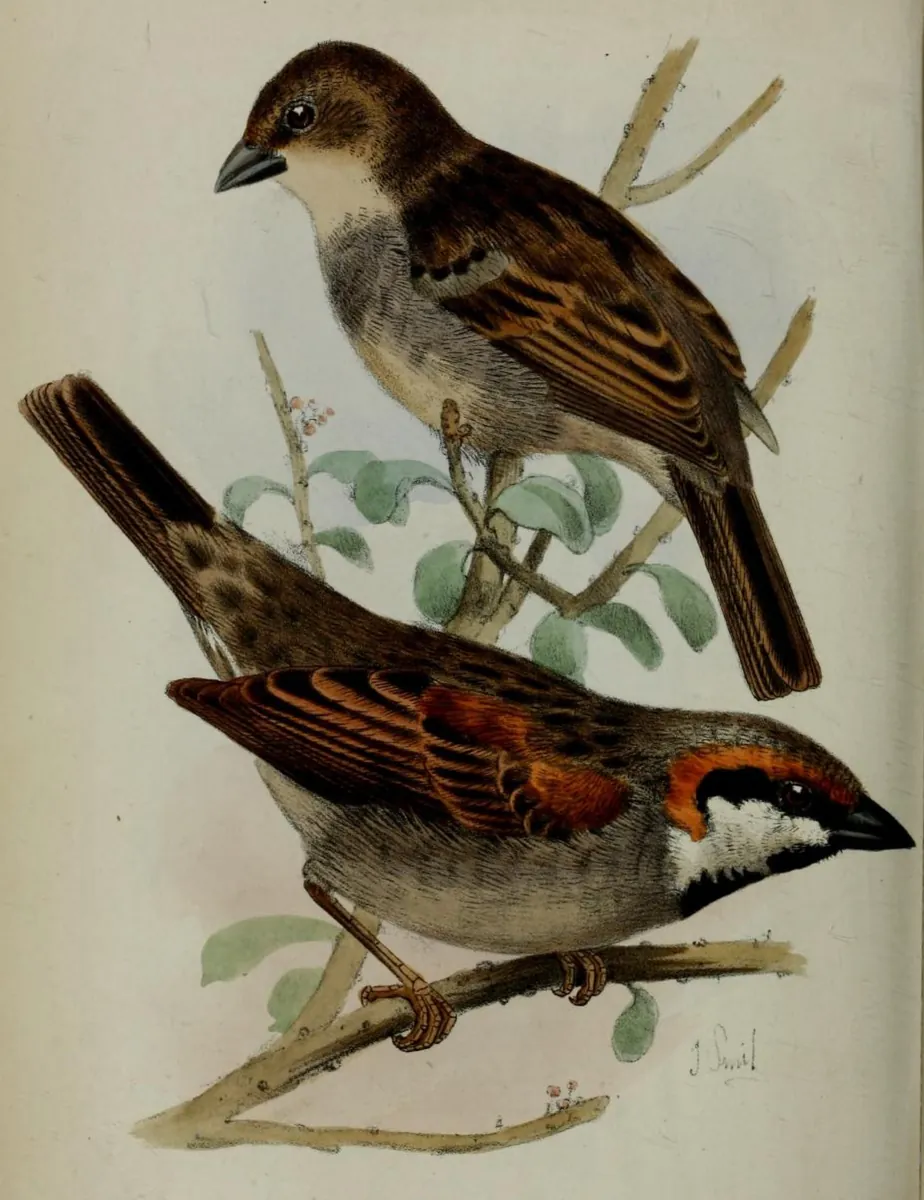
Socotra sparrow

Passer insularis

Endemic
  • Found on Socotra and on the smaller islands of Samhah and Darsah.
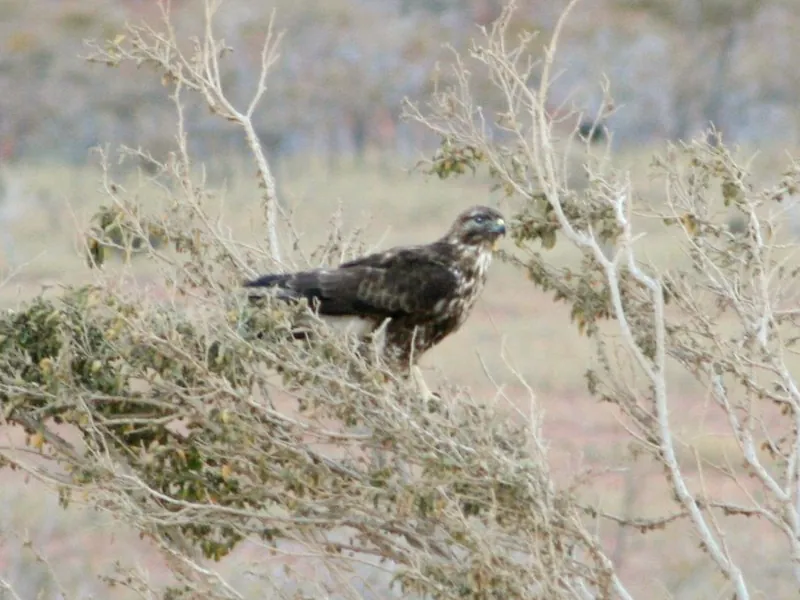
A Socotra buzzard perched in a dry bushManuel Schwarz · CC BY 4.0

Socotra buzzard

Buteo socotraensis

EndemicVulnerable (IUCN, 2022)
  • Known for more than a century, but only described as a separate species in 2010.
  • There are 250 to 500 mature birds, and the number is falling.

Foothills and plateaus. Firmihin has the most breeding pairs.

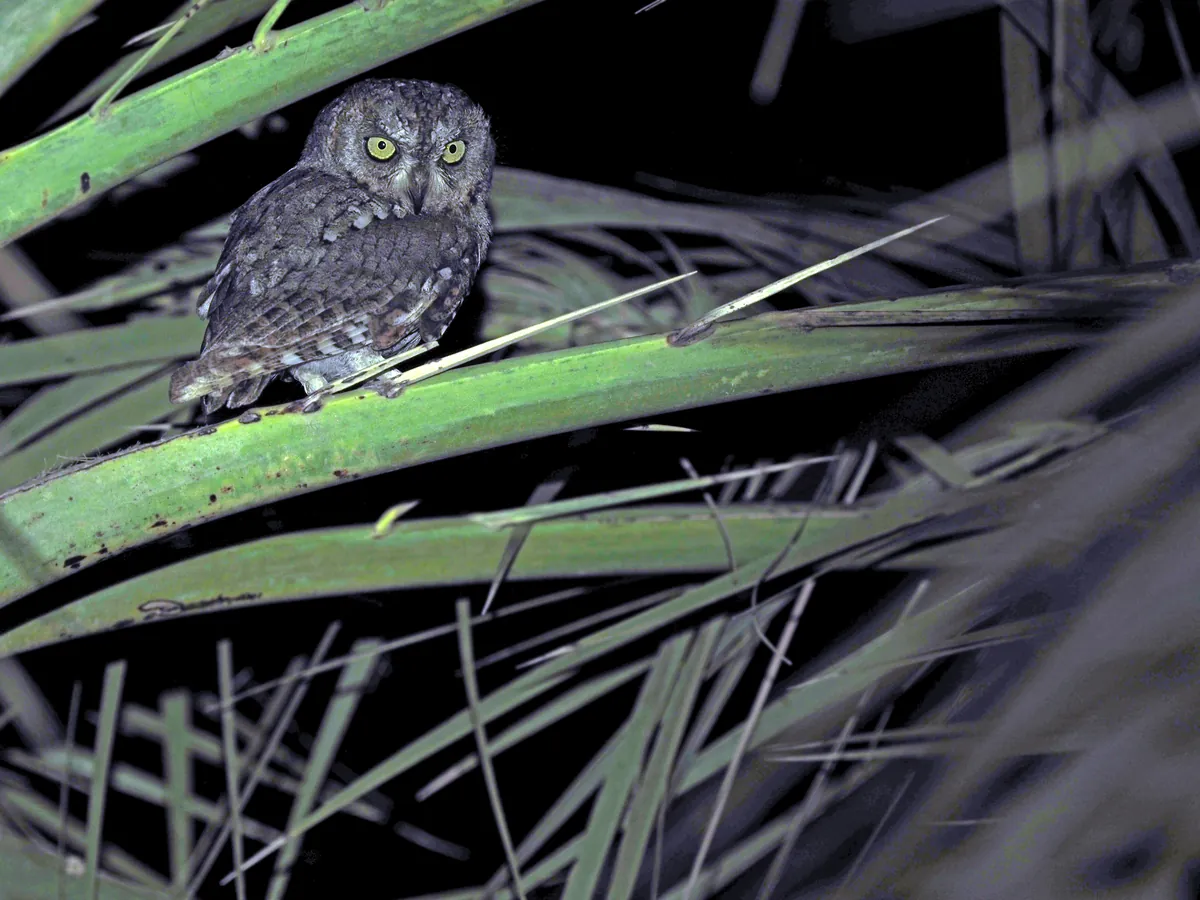
A Socotra scops owl on a palm frond at night

Socotra scops owl

Otus socotranus

Endemic
  • Split from the African scops owl because its plumage and calls are different.
  • It hunts at night, and has been seen catching moths at dusk.

Found across much of the island, most often where there are mature palms.

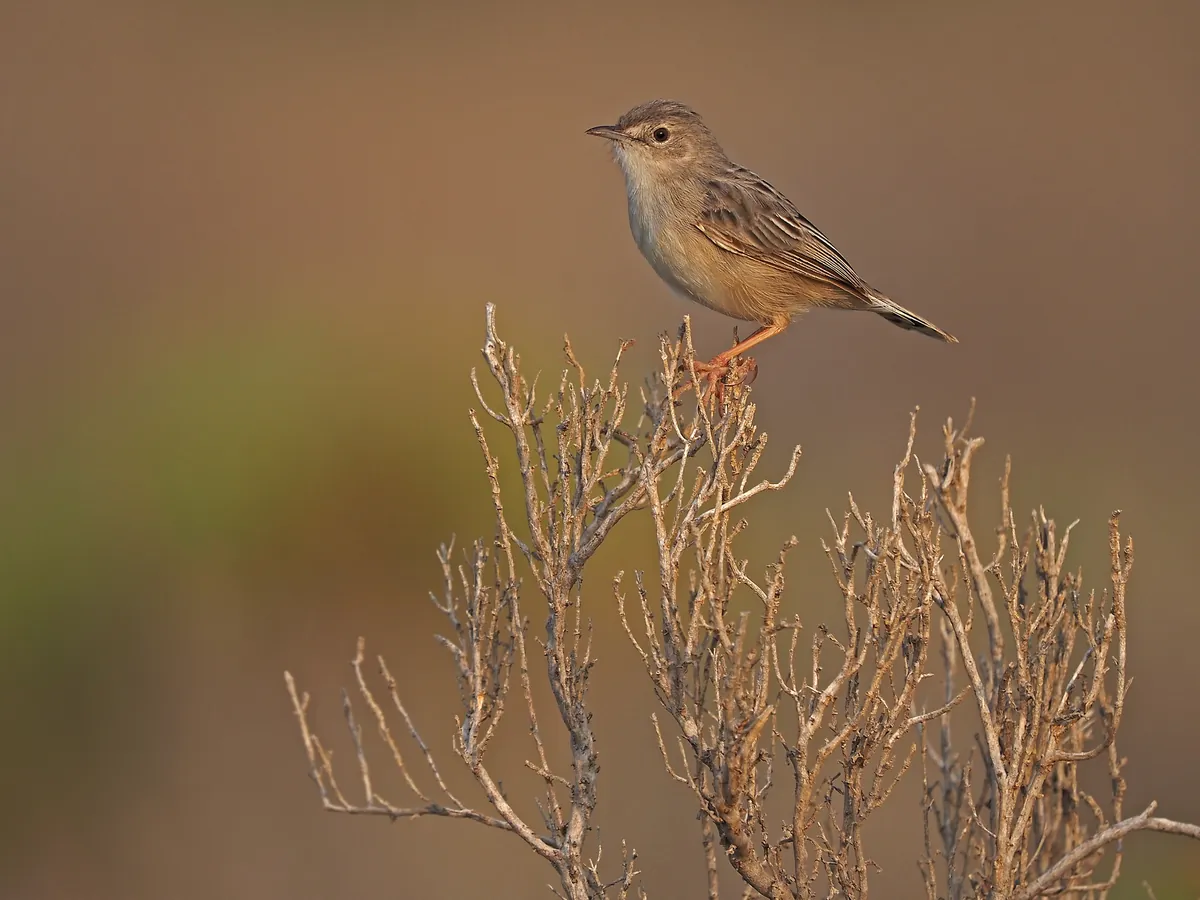
A small streaked Socotra cisticola on a dry shrub

Socotra cisticola

Cisticola haesitatus

EndemicLeast Concern (IUCN, 2022)
  • More than a quarter of the world population lives on the north coast plain between the airport and Di Selmeho.
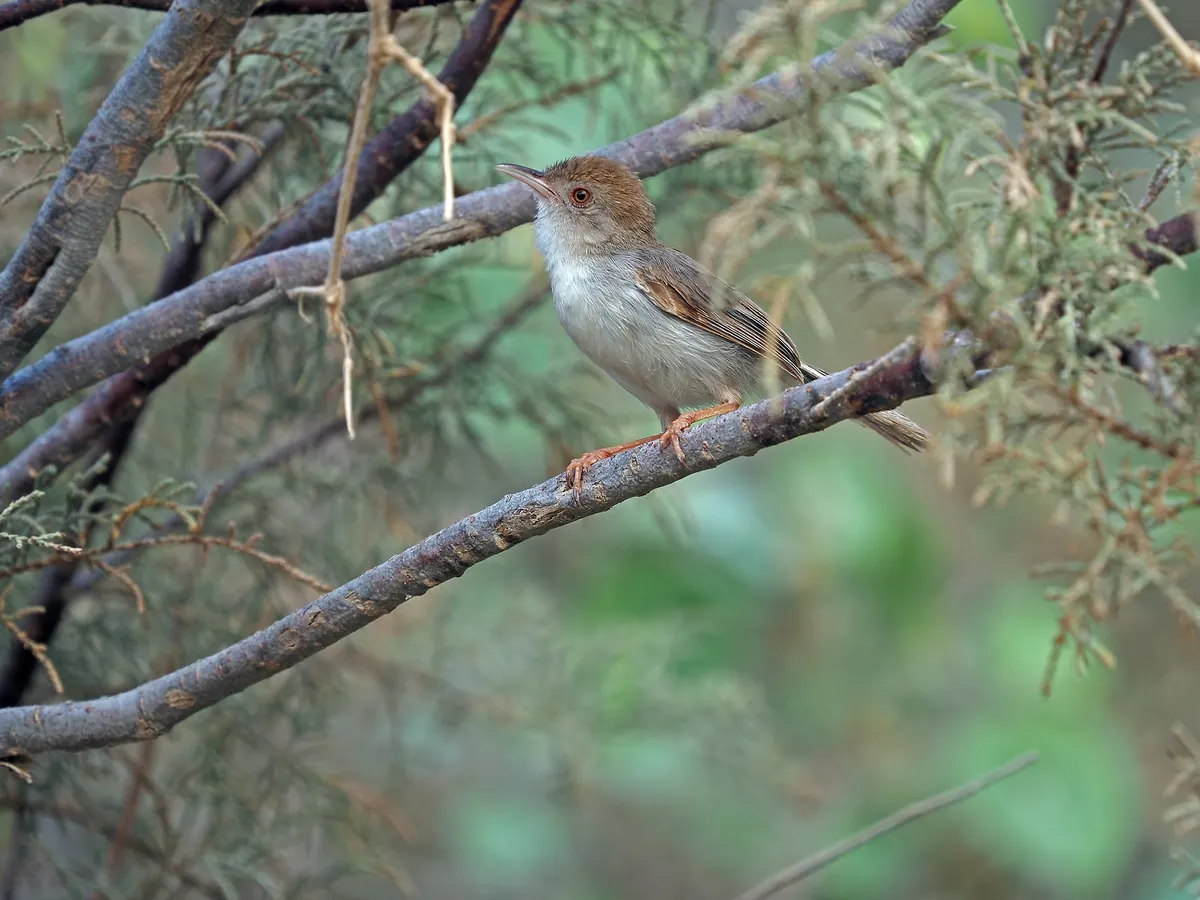
A Socotra warbler with a rufous cap on a branch

Socotra warbler

Incana incana

Endemic
  • The only species in its genus. It was once placed with the cisticolas.
  • Lives in dry shrubland, including in the mountains.
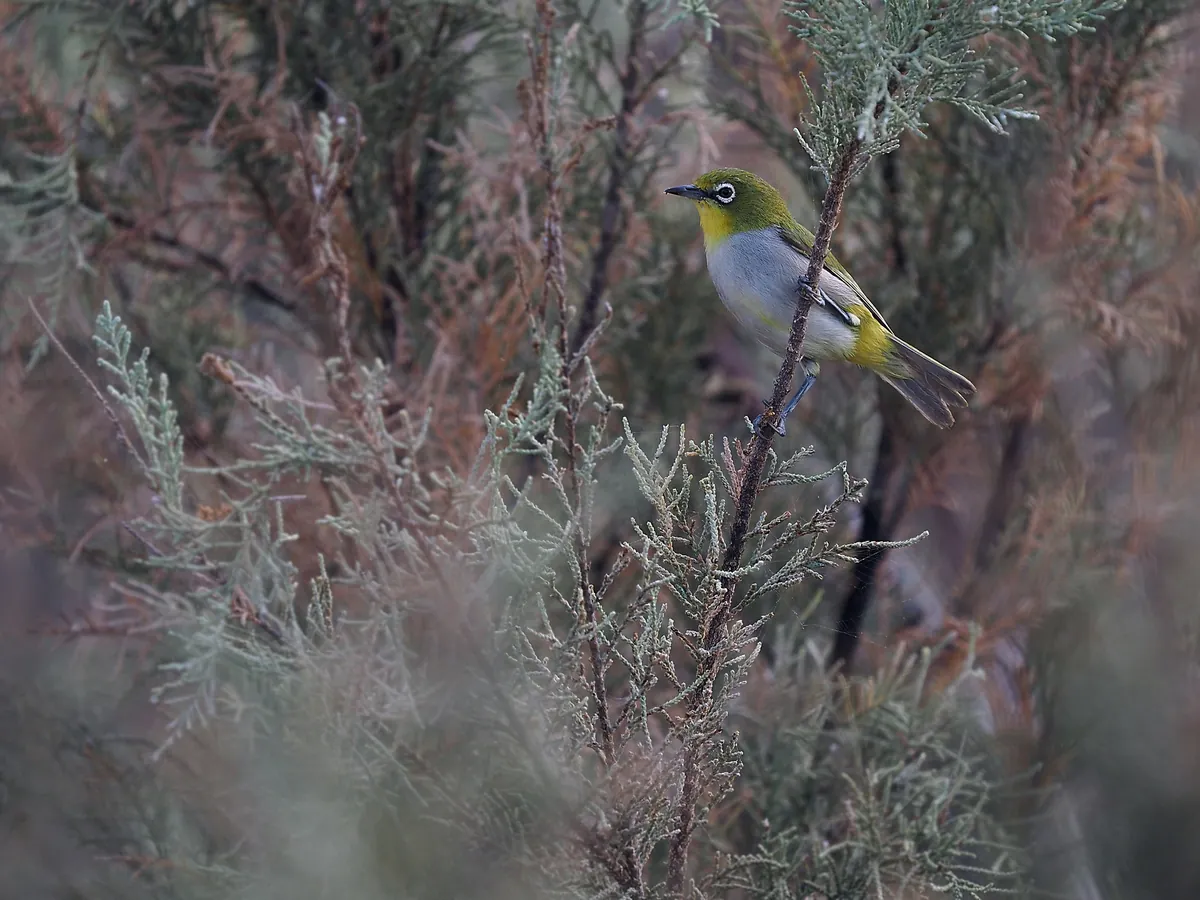
A yellow and grey Socotra white-eye in a shrub

Socotra white-eye

Zosterops socotranus

Endemic
  • Treated as a race of the Abyssinian white-eye until a 2014 genetic study showed that the two are not closely related.
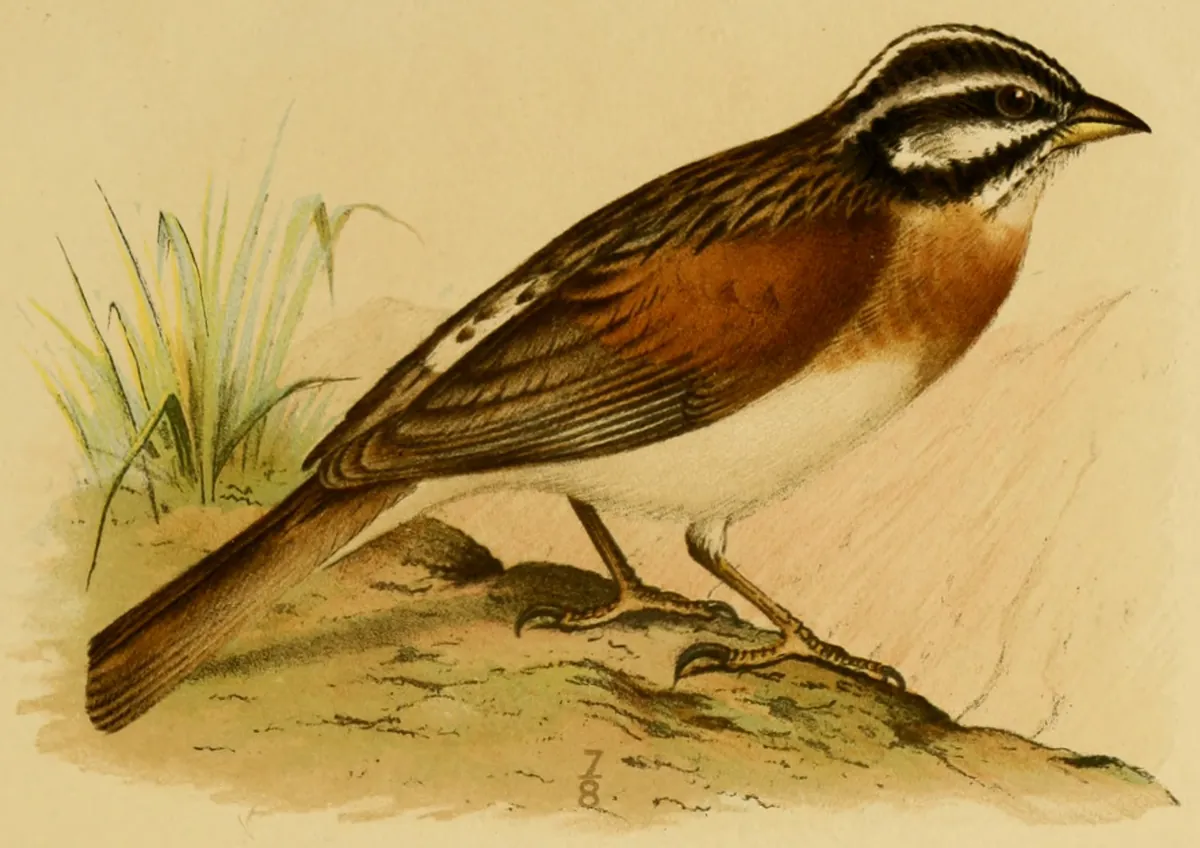
Illustration of a Socotra bunting with a striped head and a chestnut breast

Socotra bunting

Emberiza socotrana

Plate, 1903

EndemicNear Threatened (IUCN, 2017)
  • There are about 2,500 mature birds, and the number is stable.

Mountains and uplands, including the Haghier and Diksam.

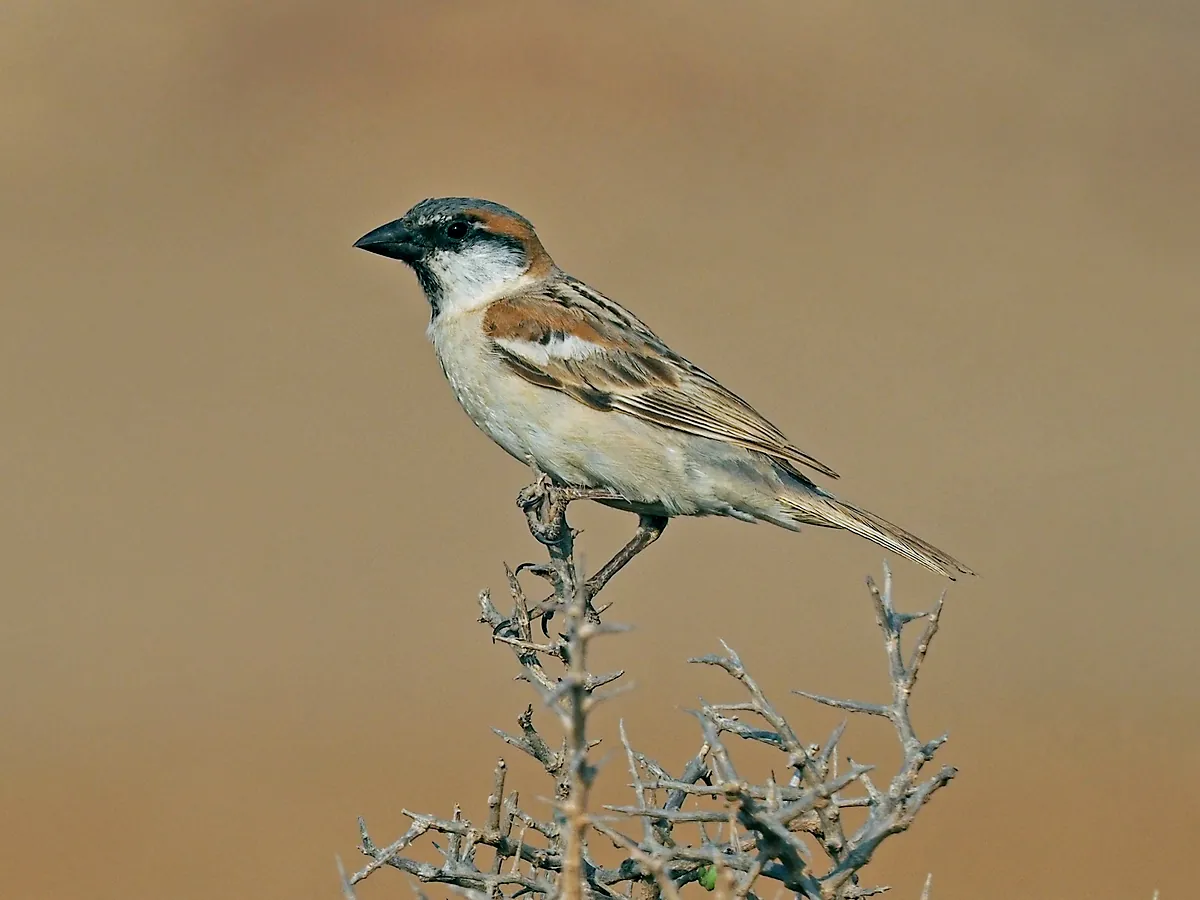
A male Abd al-Kuri sparrow on a thorny twig

Abd al-Kuri sparrow

Passer hemileucus

EndemicVulnerable (IUCN, 2022)
  • Its entire world range is about 244 km² on a single island.
  • There are 250 to 999 mature birds, and the number is falling.

Abd al-Kuri only, about 100 km west of Socotra. Standard trips do not go there.

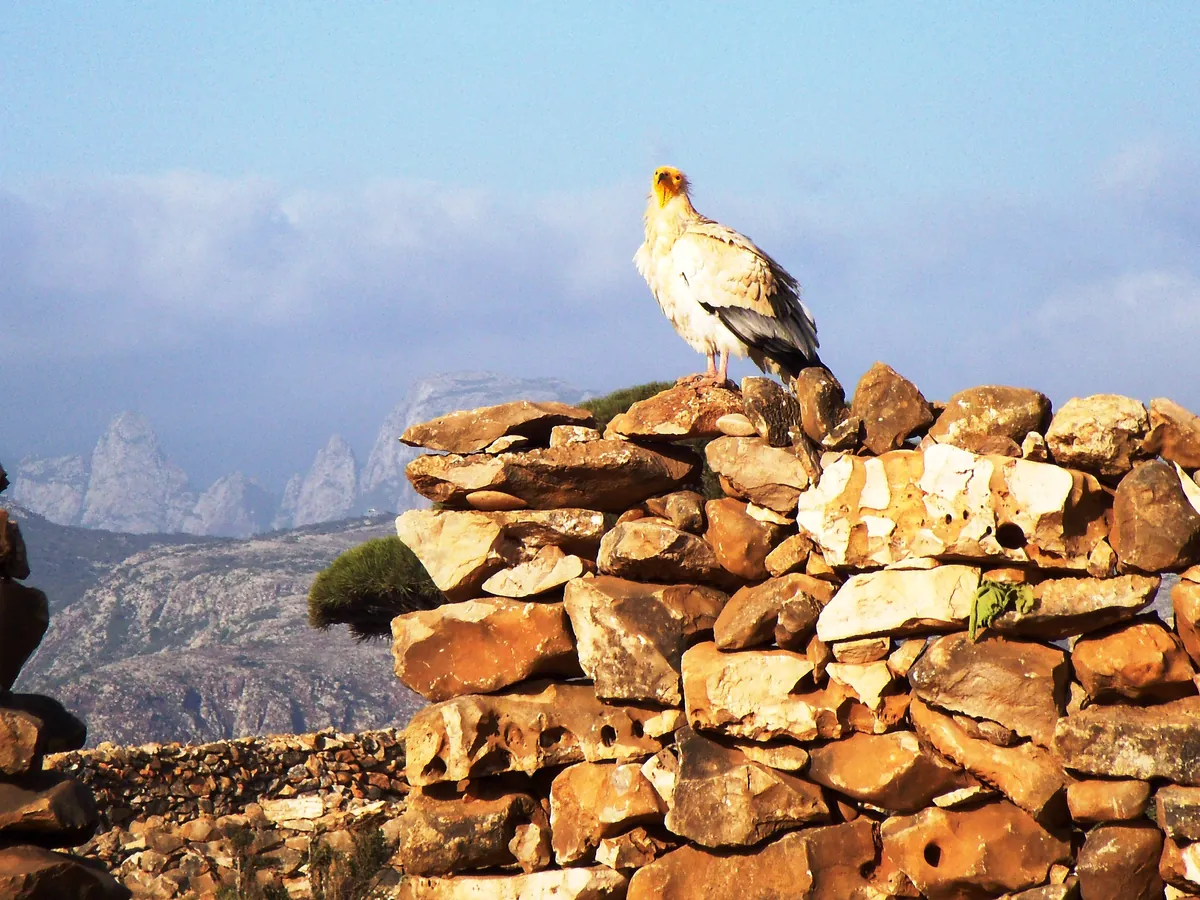
An Egyptian vulture on a stone wall with mountains behindGerry & Bonni · CC BY 2.0

Egyptian vulture

Neophron percnopterus

Not endemicEndangered globally
  • Abundant on Socotra. Roosts of more than 350 birds gather on the north slopes of the Haghier.
  • Recorded at 12 of the archipelago's 21 Important Bird Areas.

Across the island. It also feeds and roosts at Wadi Ayhaft.

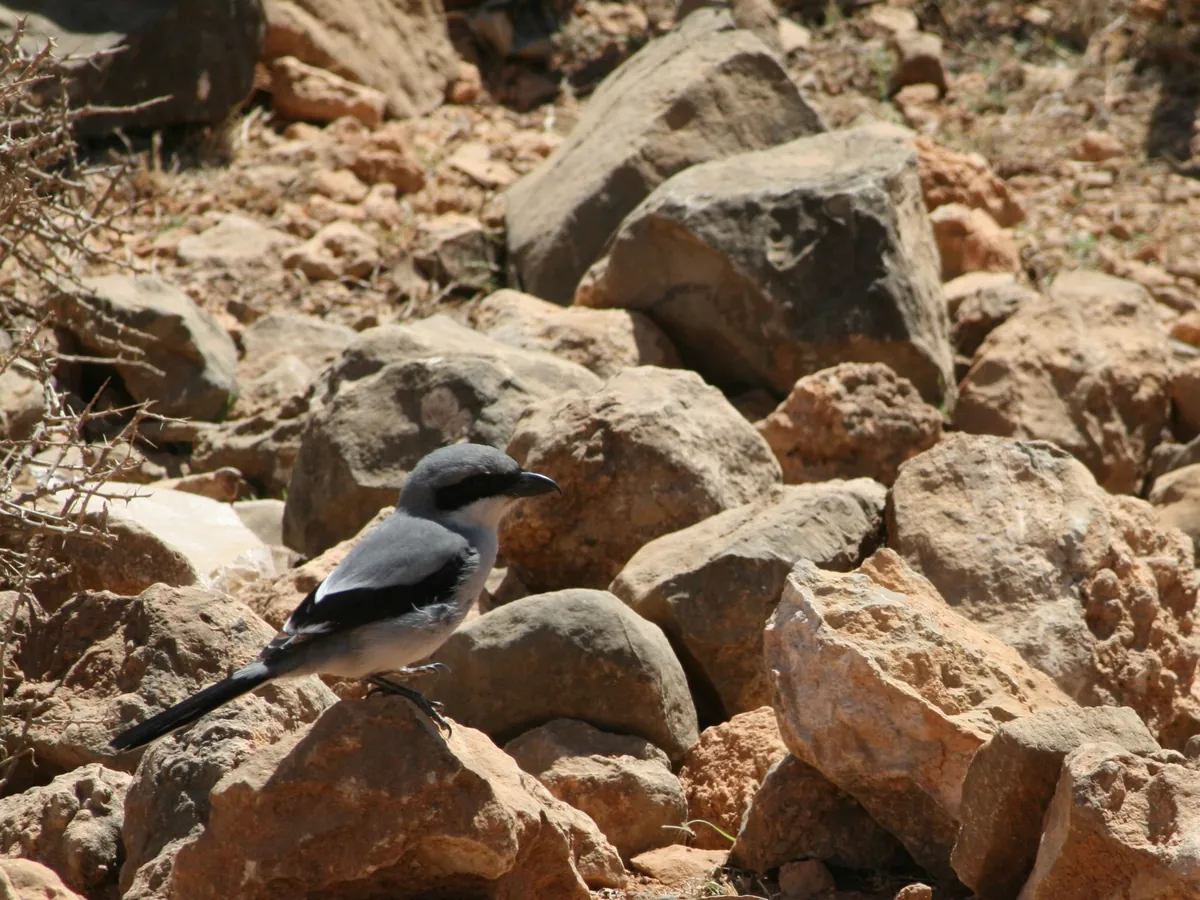
A grey and white shrike standing on rocksManuel Schwarz · CC BY 4.0

Socotra grey shrike

Lanius excubitor uncinatus

Under review
  • Whether it is a separate species was still under review in September 2026. If it is accepted, it will be the 12th endemic.
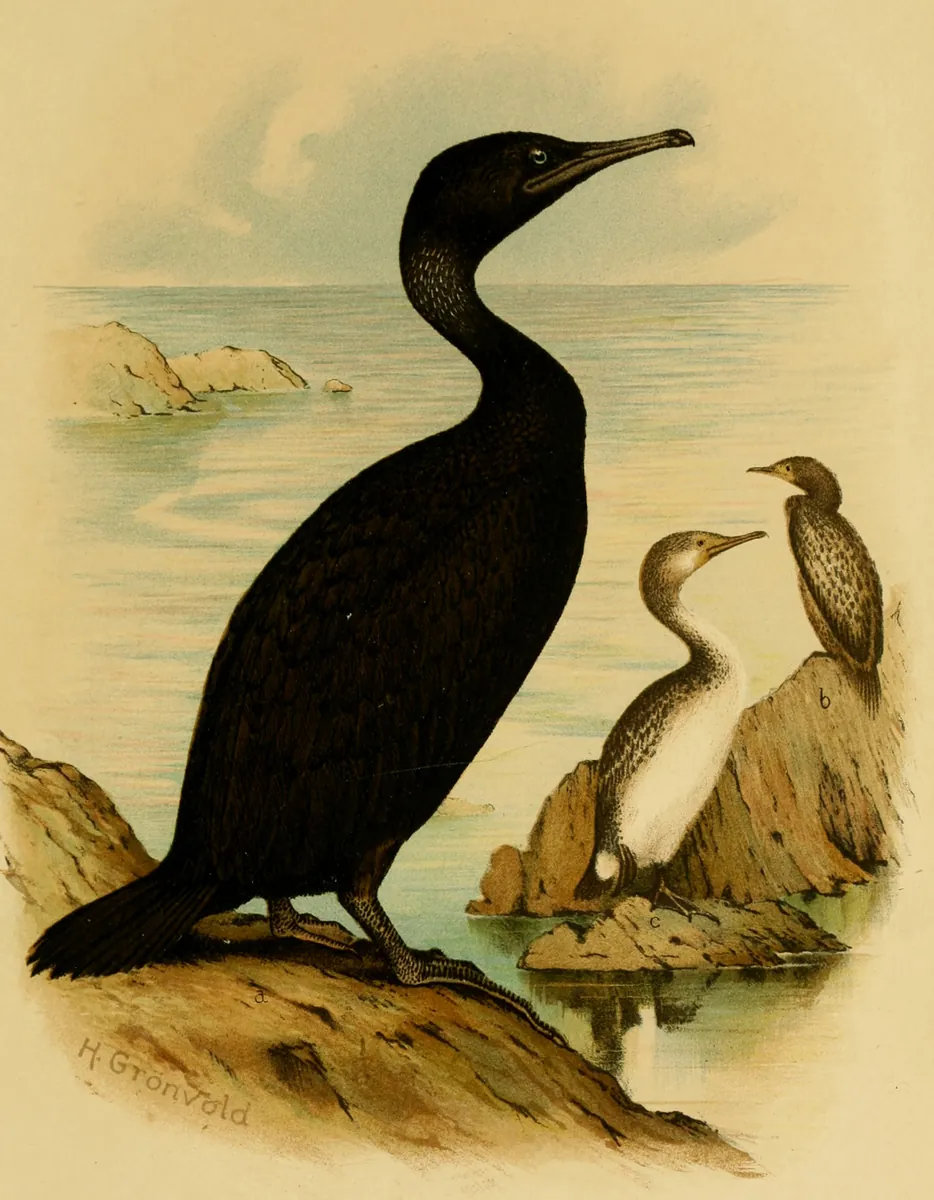
Illustration of Socotra cormorants on a rocky shore

Socotra cormorant

Phalacrocorax nigrogularis

Plate, 1903

Not endemicVulnerable globally
  • Despite the name, it is not endemic. It breeds on islands in the Gulf and the Arabian Sea.
  • Around 2,500 pairs breed at Kal Farun, more than 2% of the world population.
  • It also nests at Detwah Lagoon.

Reptiles

28 of the island's 31 native reptile species are endemic, and 12 of them use the dragon's blood tree as habitat.

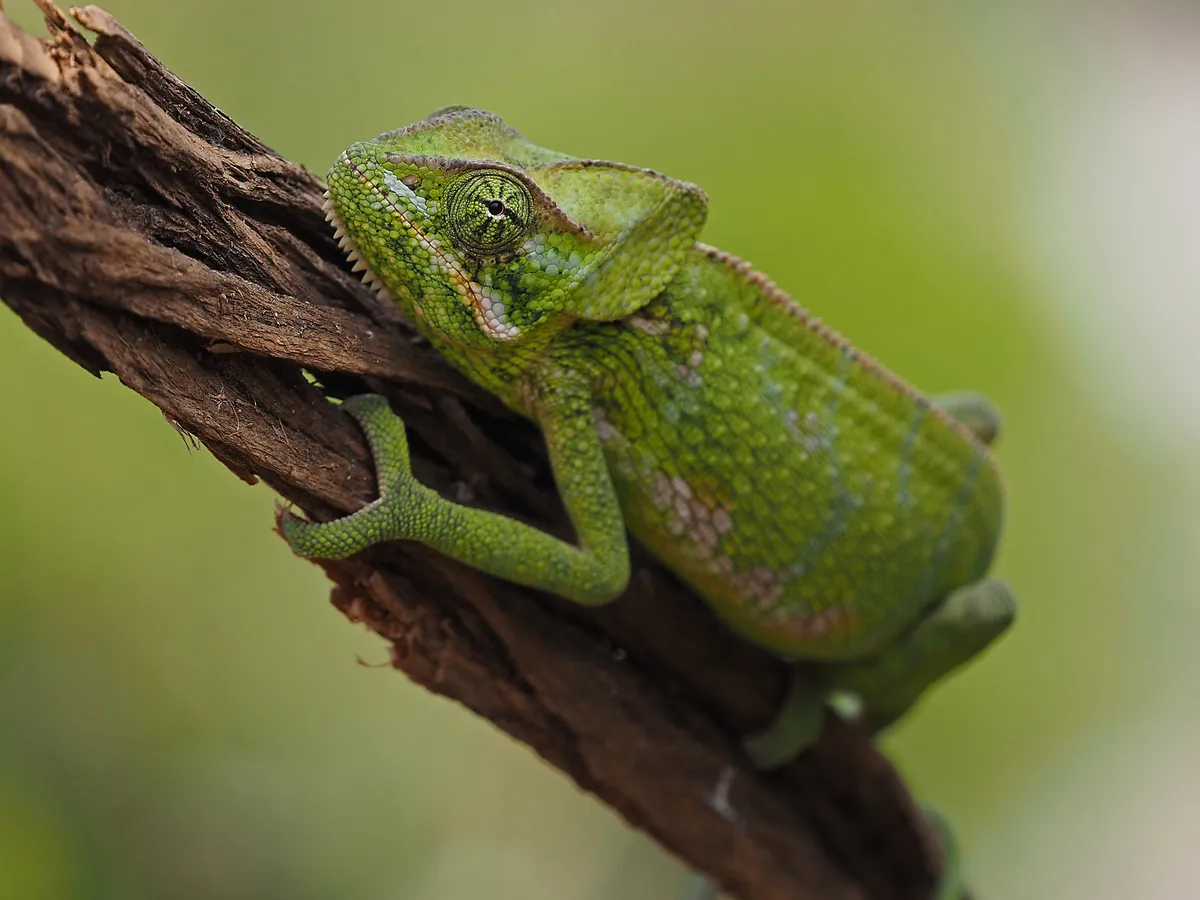
A green Socotra chameleon on a branch

Socotra chameleon

Chamaeleo monachus

Endemic
  • Lives in dense shrubland, along wadis and sometimes in palm groves.
  • Overgrazing of that shrubland is a threat to it.
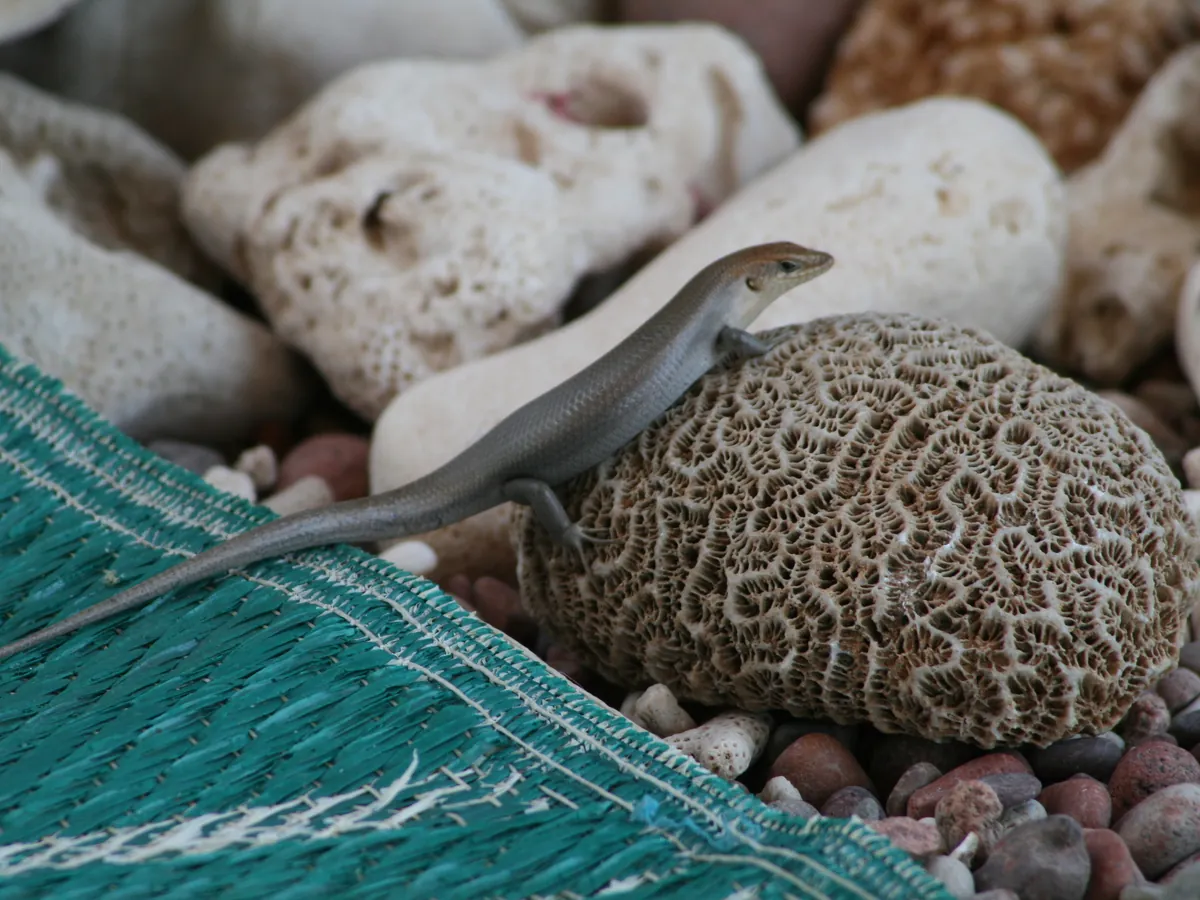
A Socotra skink resting on a piece of coral rockManuel Schwarz · CC BY 4.0

Socotra skink

Trachylepis socotrana

EndemicLeast Concern (IUCN, 2010)
  • Catching skinks to show tourists for tips is prohibited, but it still happens. Don't pay for it.
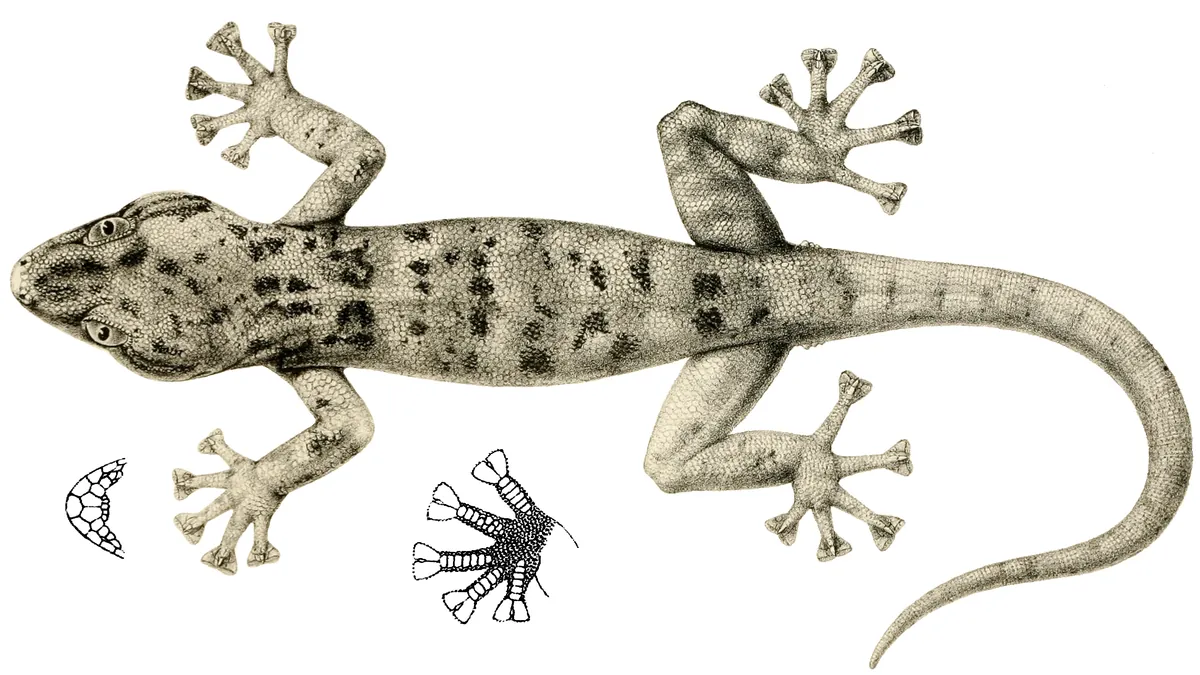
Illustration of the gecko Haemodracon riebeckii seen from above

Haemodracon geckos

Haemodracon riebeckii and H. trachyrhinus

Plate, 1903

Endemic genus
  • A genus of two rare geckos found only on the Socotra archipelago.
  • The name means "blood dragon", after the dragon's blood tree.
  • Some of the island's endemic geckos live in an area of 10 km² or less.

Spiders, snails and insects

About 95% of Socotra's 96 land snail species are endemic, and 42% of its 1,564 recorded insect species.

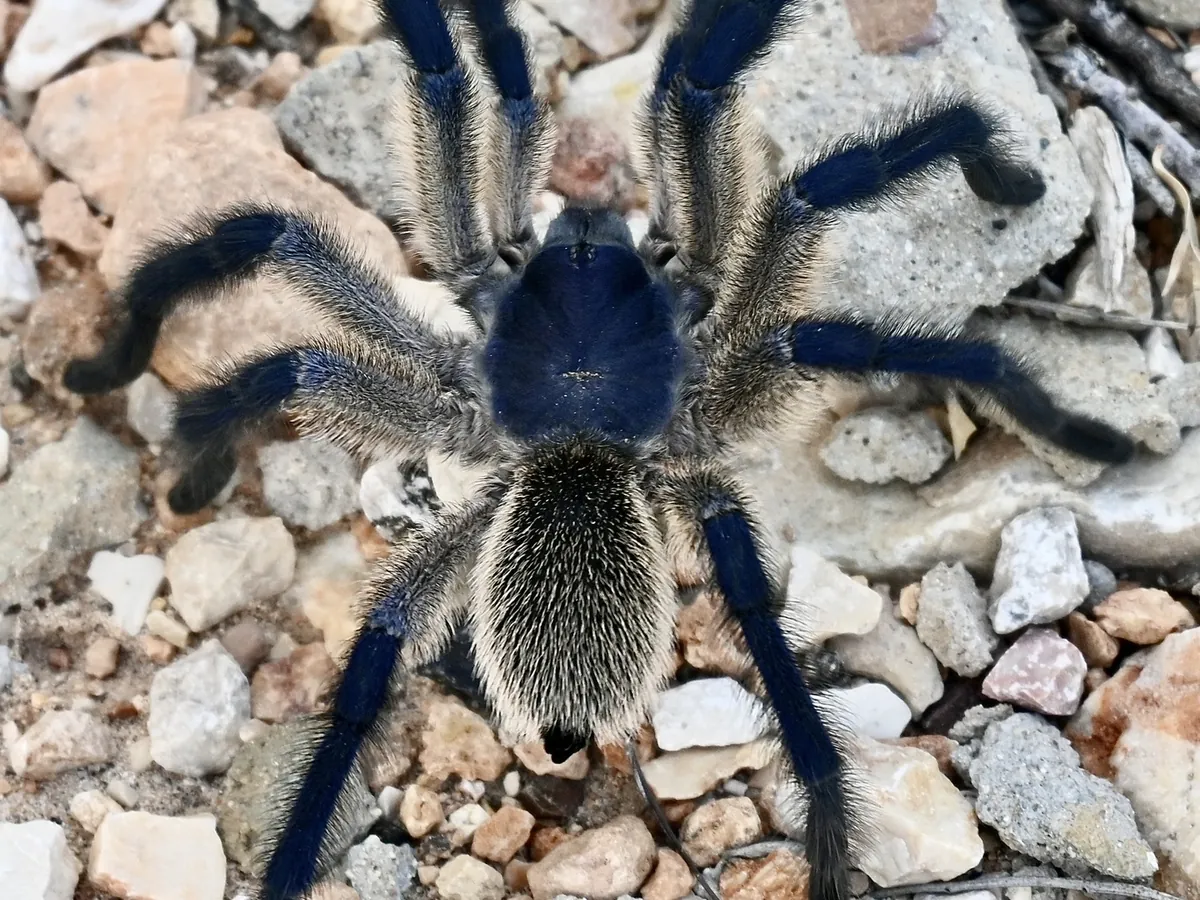
A blue and grey tarantula on gravelArabella Willing · CC BY 4.0

Socotra blue baboon spider

Monocentropus balfouri

Endemic
  • A tarantula found only on Socotra. The adults are bright blue.
  • It lives in burrows, and females guard their young.
  • It is smuggled off the island for the pet trade.
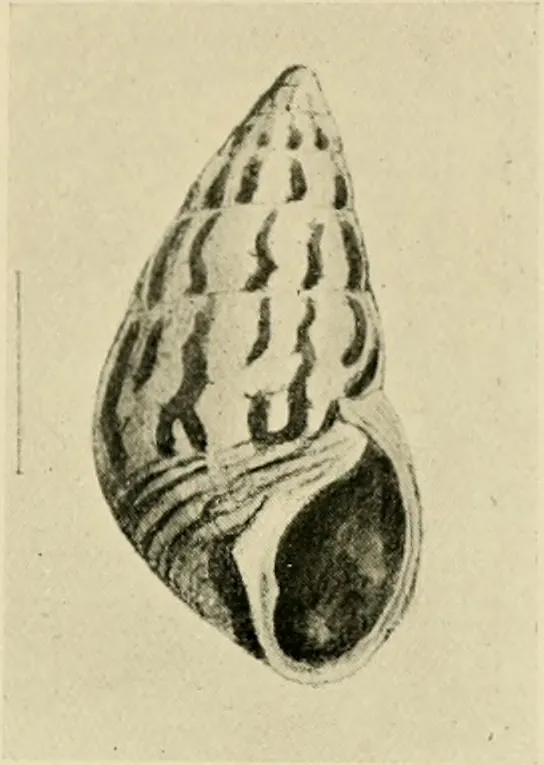
Drawing of a striped land snail shell

Land snails

96 species

Buliminus tigris, plate, 1903

95% endemic
  • The highest share of endemic species of any group of animals or plants on the island.
  • Two more endemic species were described in 2020.

The sea and the lagoon

253 species of reef-building coral and 730 species of coastal fish have been recorded around the archipelago.

Coral in the clear shallows of the reef at DihamriGerry & Bonni · CC BY 2.0

Reefs, turtles and dolphins

  • A natural-history tour in February 2025 recorded more than 119 fish species while snorkelling at Dihamri and Shuab.
  • Four sea turtles have been recorded: green, loggerhead, olive ridley and hawksbill.
  • Spinner and bottlenose dolphins are the ones visitors usually see, from the boat between Qalansiyah and Shuab.
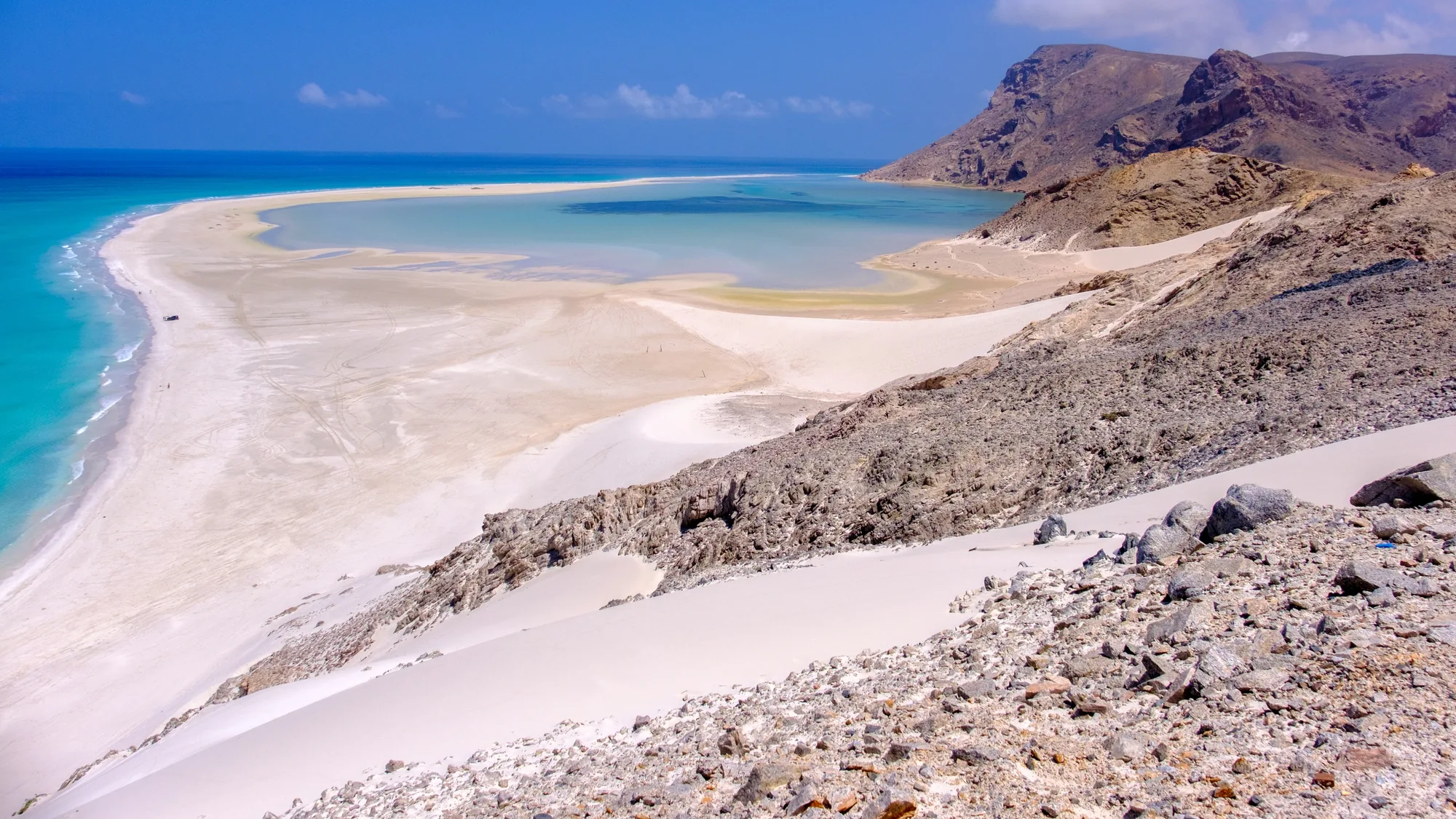
Detwah lagoon seen from the hills above QalansiyahHardscarf · CC BY-SA 4.0

Detwah Lagoon

  • A Ramsar-listed wetland where about 32 waterbird species have been recorded.
  • Its seagrass is a nursery for rays found nowhere else around the island.

Early drawings and photographs

Isaac Bayley Balfour spent 48 days on Socotra in 1880 and described more than 200 species new to science. The first systematic survey of the island's animals followed in 1898–99 and was published in 1903 as The Natural History of Sokotra and Abd-el-Kuri.

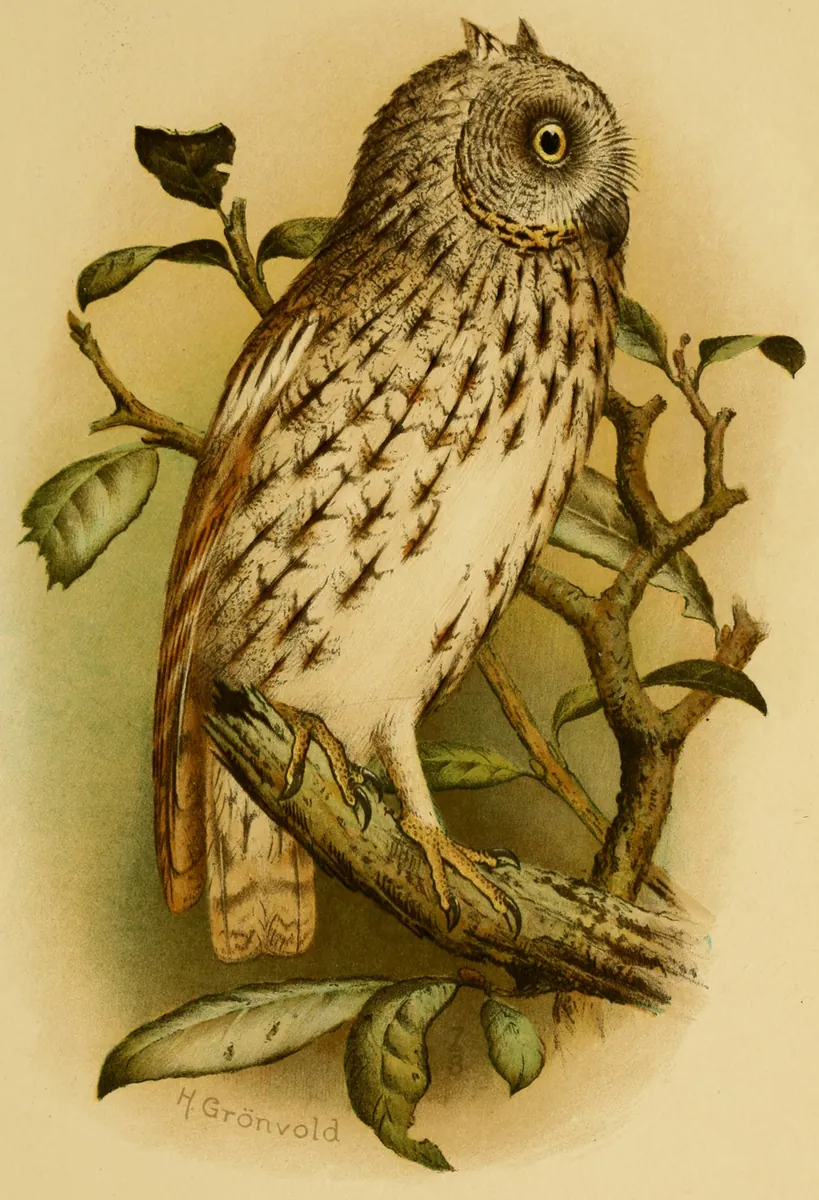
Illustration of a Socotra scops owl on a branch
Socotra scops owl, by Henrik Grønvold, 1903
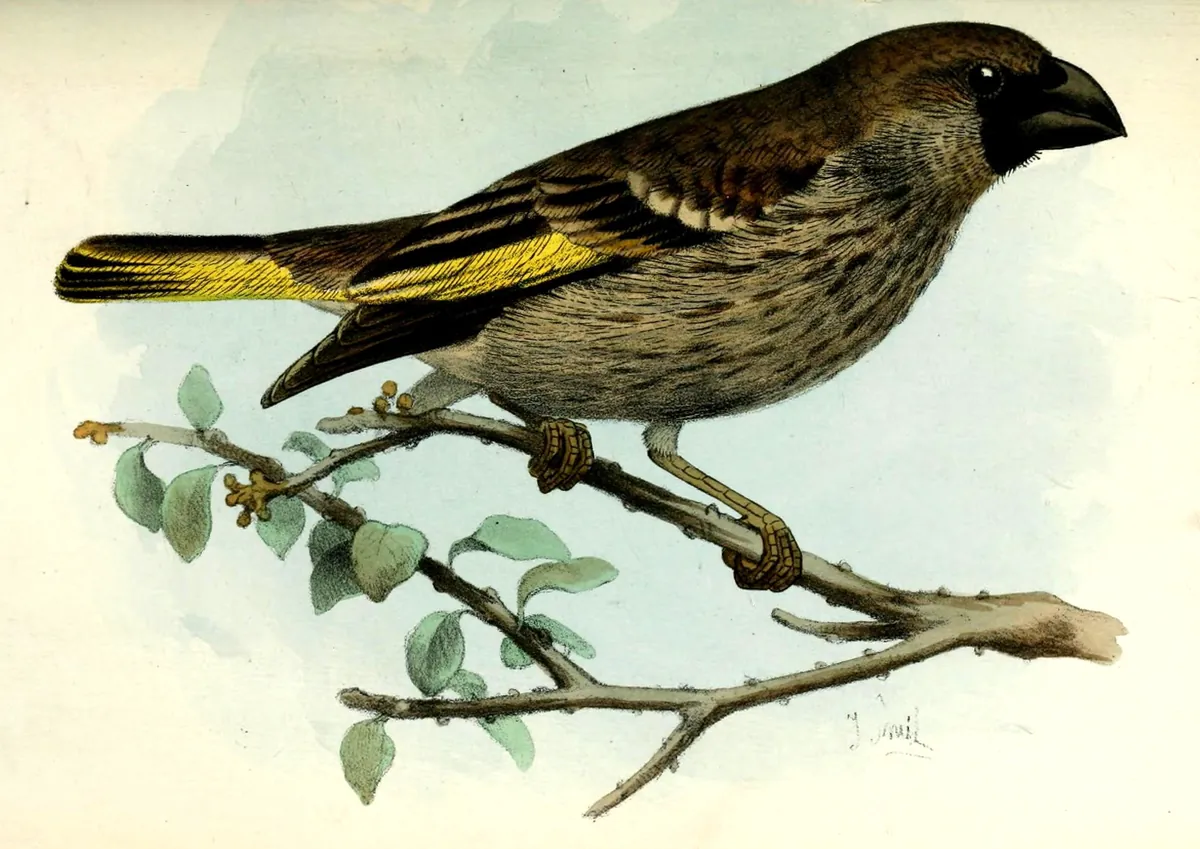
Illustration of a Socotra golden-winged grosbeak
Socotra golden-winged grosbeak, by Joseph Smit
Illustration of two Abd al-Kuri sparrows on a rock
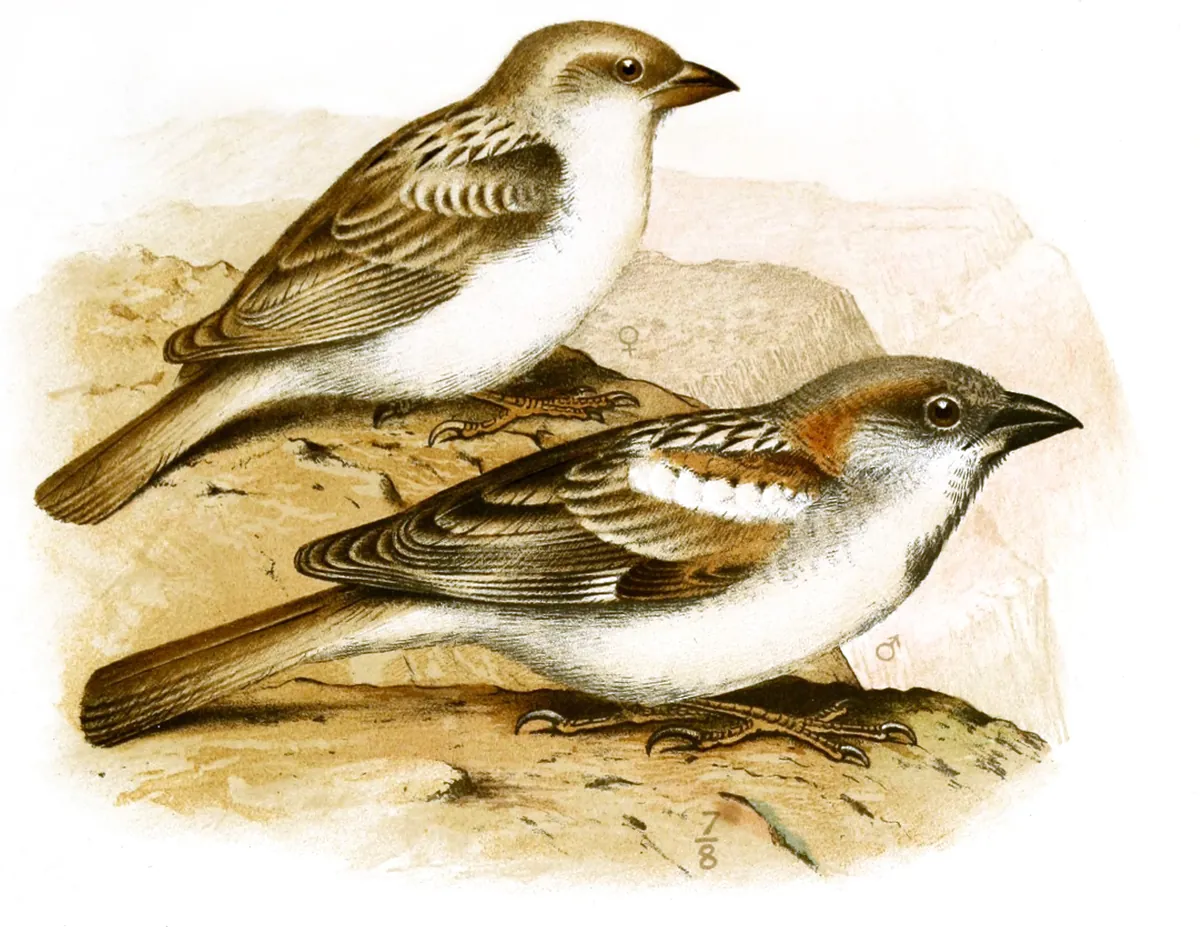
Abd al-Kuri sparrows, female above and male below, by Henrik Grønvold, 1903
Old photograph of a dragon's blood tree
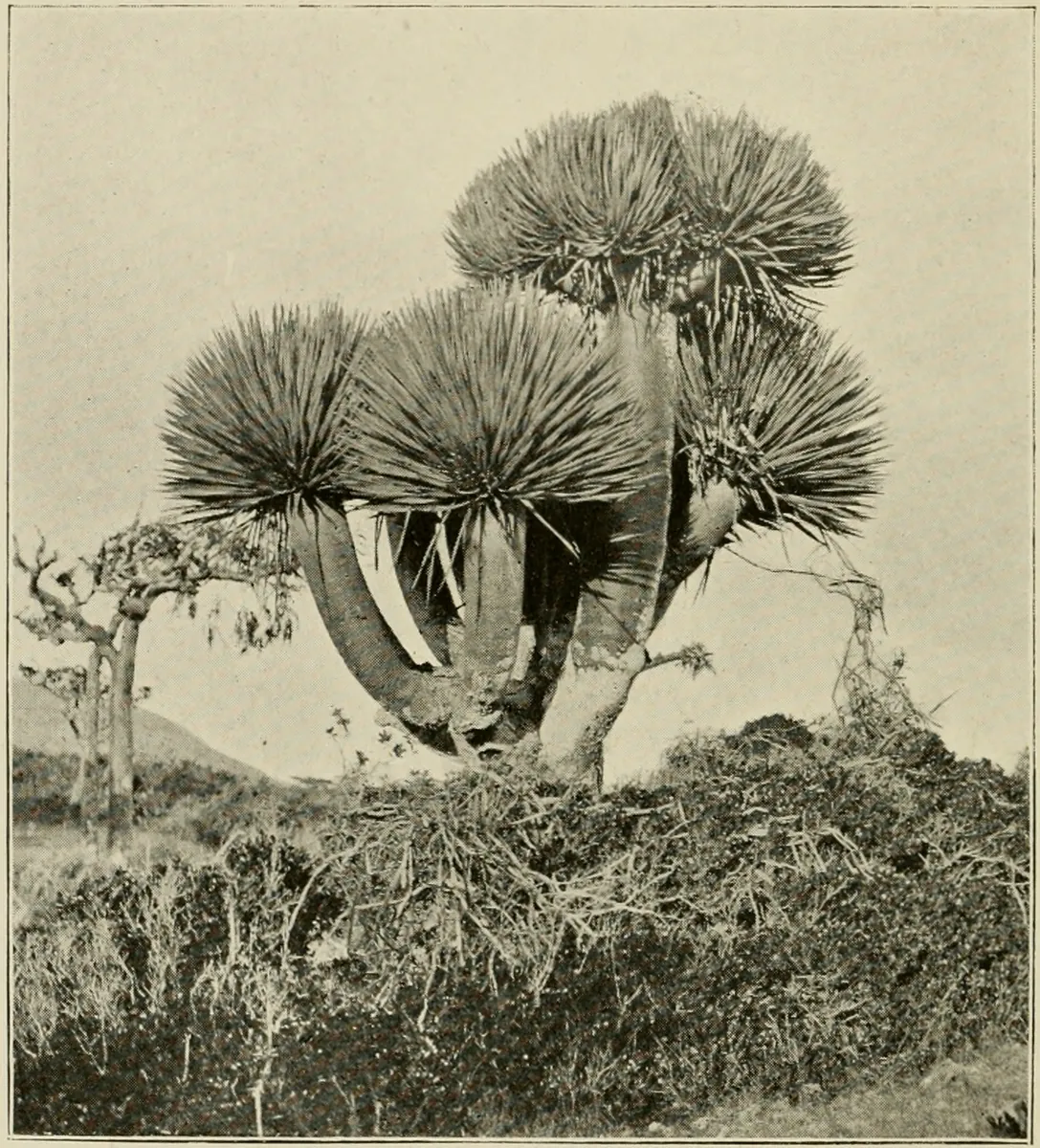
Dragon's blood tree, photographed on the 1898–99 expedition
Illustration of a Socotra sunbird above a Socotra warbler
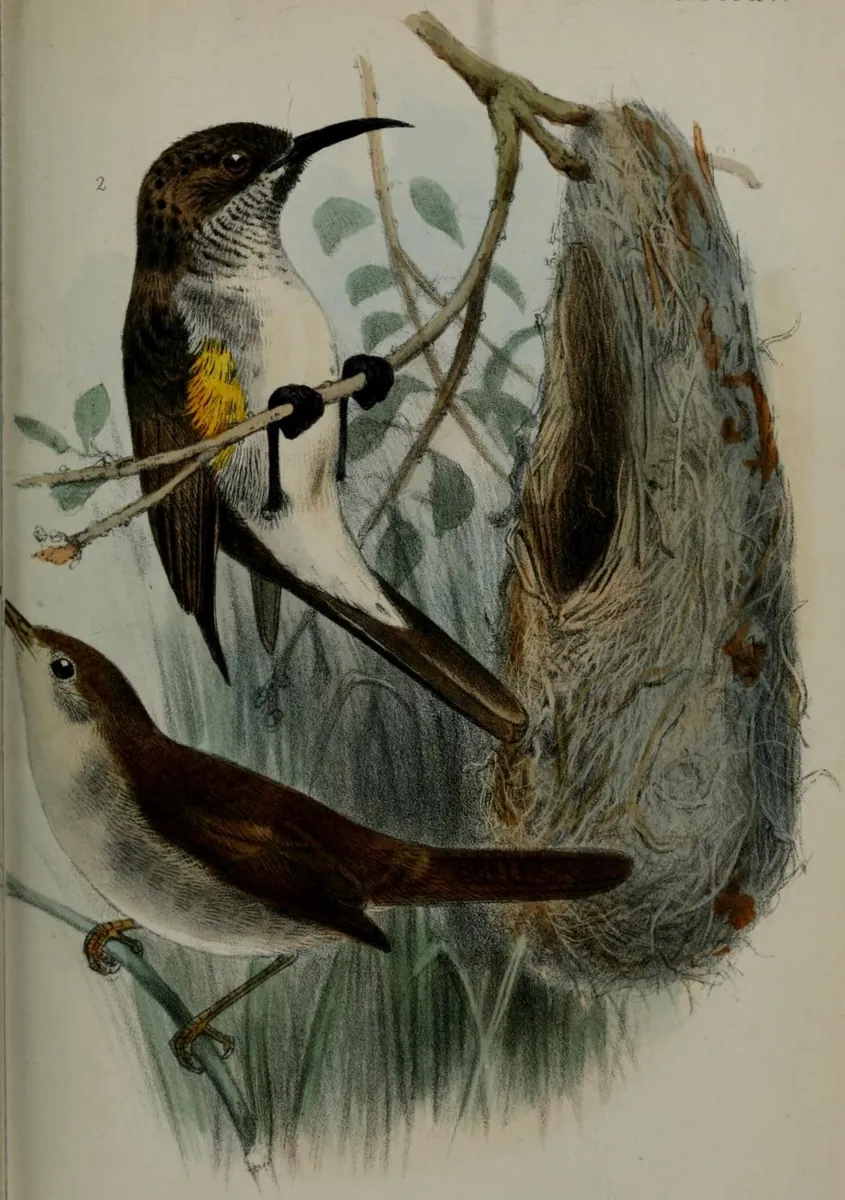
Socotra sunbird and Socotra warbler, by Joseph Smit
Botanical drawing of the leaves and flowers of Boswellia socotrana
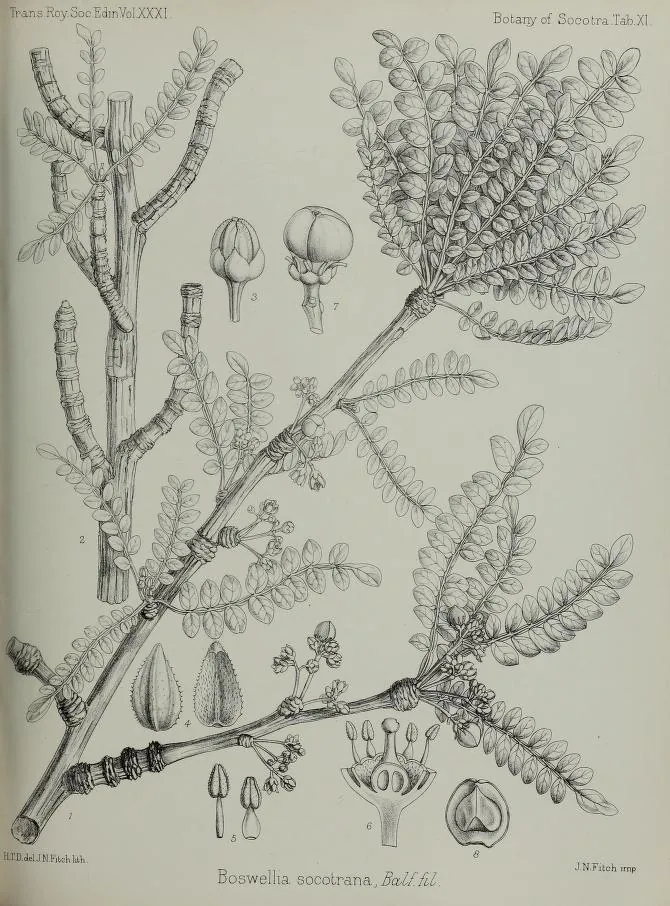
Boswellia socotrana, from Balfour's Botany of Socotra, 1888
Illustration of two Socotra sparrows on a branch
Socotra sparrows, by Joseph Smit
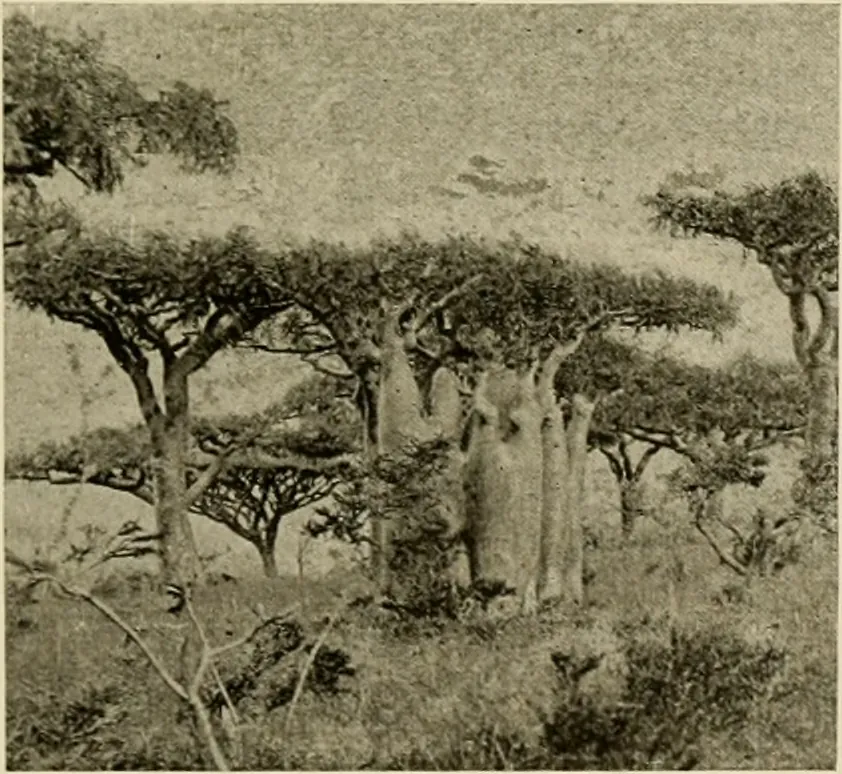
Old photograph of frankincense and bottle trees
Frankincense and bottle trees, photographed on the 1898–99 expedition
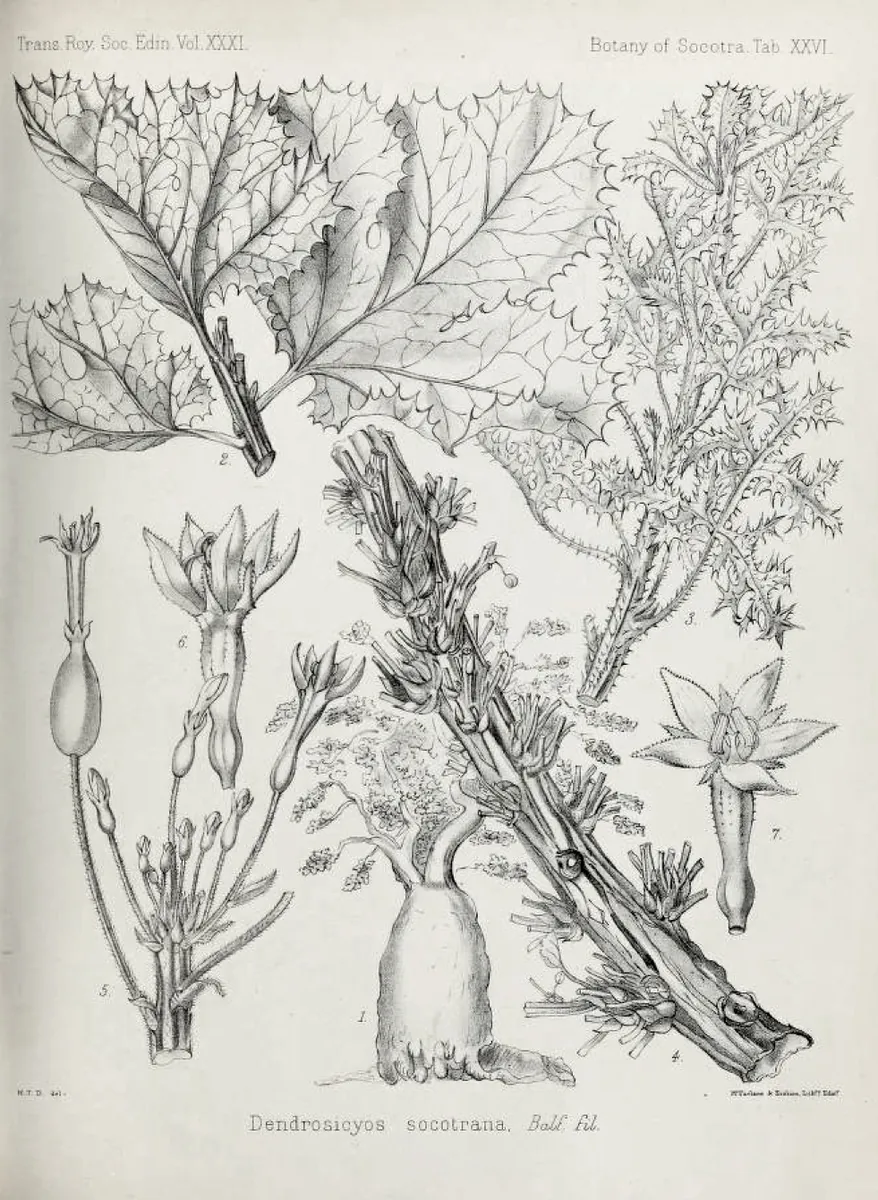
Botanical drawing of the cucumber tree's leaves, flowers and trunk
Cucumber tree, from Balfour's Botany of Socotra, 1888
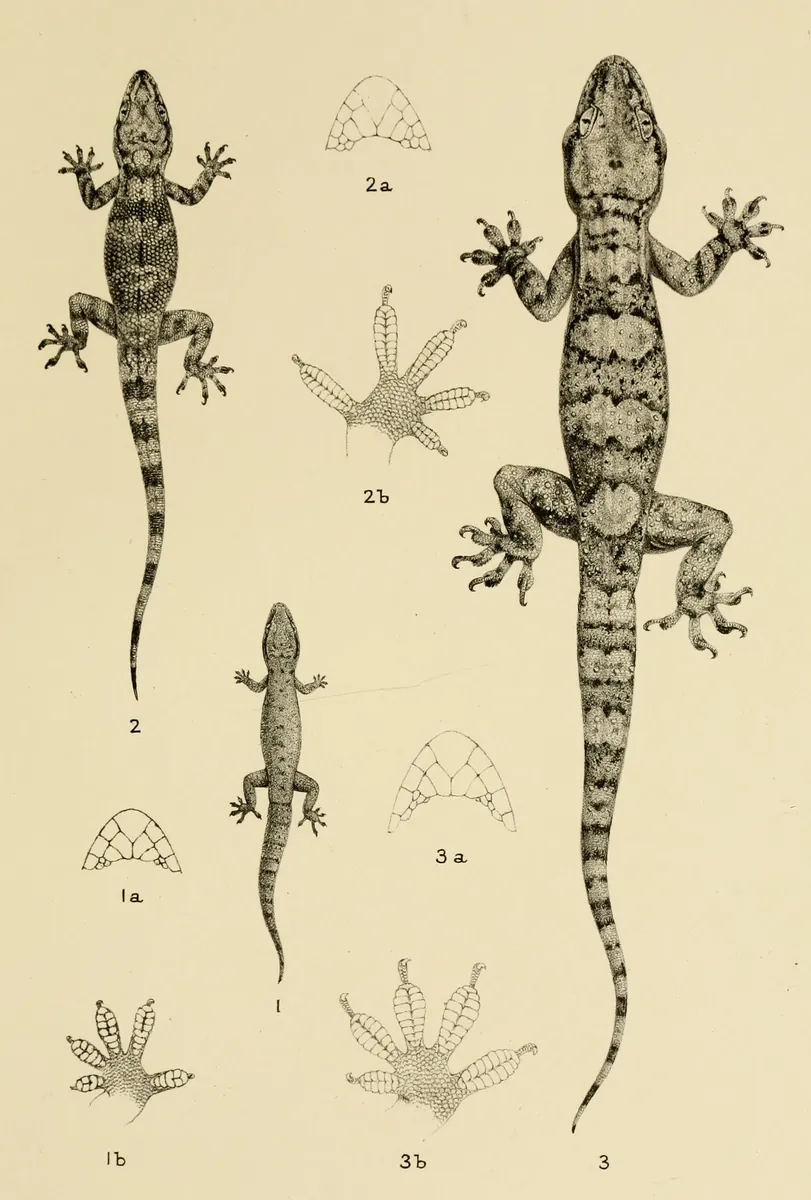
Illustration of three small geckos and details of their feet
Three Socotran Hemidactylus geckos, 1903

Seeing wildlife responsibly

More in the responsible travel guide.

Want to see Socotra's wildlife?

Every trip we list visits Firmihin and the Diksam plateau. Tell us what you would like to see and your dates, and we will suggest a trip.

Sources

Photographers and licences for every image are on the image credits page.