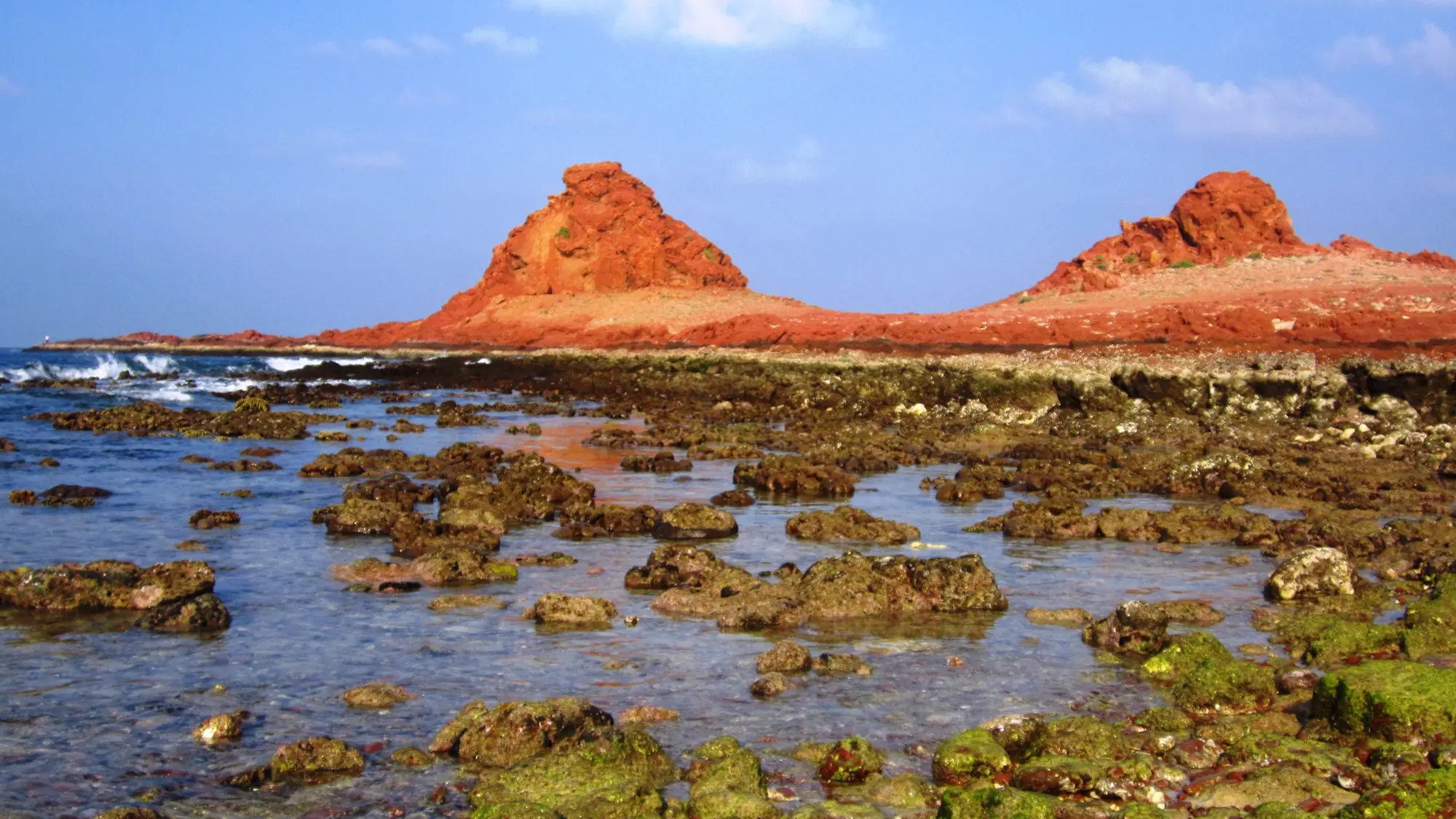
Dihamri is a rocky peninsula and marine protected area on Socotra's north-east coast. It is the island's main snorkelling site and has its only dive centre, beside a permanent campsite with shared toilets and showers. On eight-day trips it usually comes on day two, three or six, often with a night at the camp.
Dihamri, also written Di-Hamri or Dihamry, is a rocky peninsula on the north-east coast of Socotra, protected as a marine area. On maps the village is Dhi Hamri. It is the island's most accessible reef, and snorkellers go in from the beach.
The 2025 UNESCO/IUCN monitoring mission named Dihamri as one of three positive examples of community co-management on the island.
Snorkelling from the beach
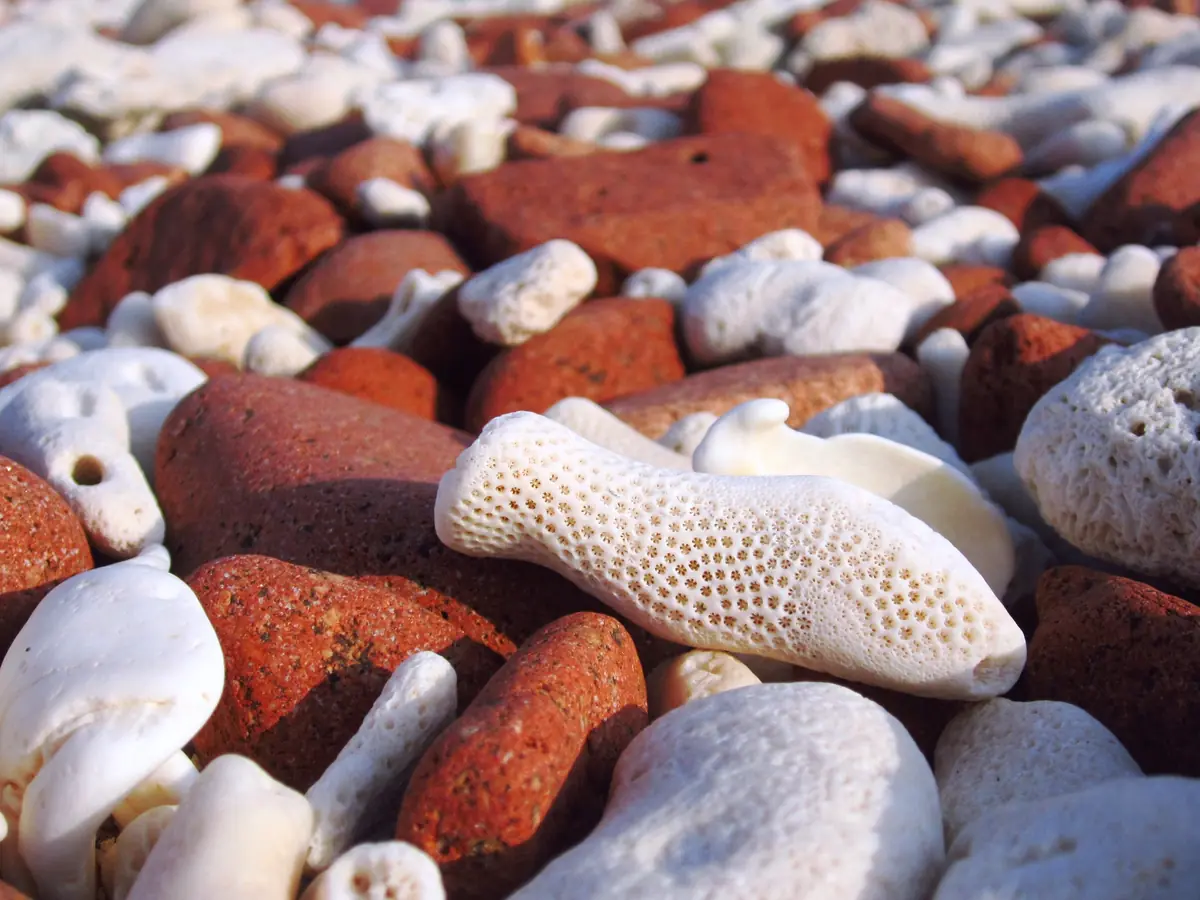
The beach at Dihamri is pebbles rather than sand. Reviewers say that getting in over the stones is difficult and that the current can be strong. Masks and fins can be hired here, or you can bring your own.
Snorkelling needs a calm sea, and it is one of the first things a swell stops. April has the lowest average wind of the year, about 11 km/h, against about 47 km/h in July. Several operators name February to April as the best window for snorkelling, and the seas in November and December are rougher.
What lives on the reef
A natural-history tour in February 2025 recorded more than 119 fish species while snorkelling at Dihamri and Shuab, along with octopus, turtles and rays. Operators who run boat dives on the Dihamri reef report turtles, rays, moray eels and large groupers. Four species of sea turtle have been recorded in Socotra's waters: green, loggerhead, olive ridley and hawksbill. What you see changes with the season and the sea, and no sighting is guaranteed.
Counts of coastal fish for the whole archipelago differ by source. The 2008 World Heritage documents give 730 species, a 2019 study recorded 682 and expected up to 875, and IUCN's 2025 Outlook estimates 830 to 890.
The reef after the 2015 cyclones
Cyclone Chapala struck Socotra on 1 and 2 November 2015, and Cyclone Megh followed a week later. Powerful waves and flash floods from the two storms damaged the island's coral reefs. A diver who reviewed Dihamri wrote that the storms destroyed a lot of the coral, which is found here in large slabs.
The 2008 World Heritage nomination recorded 253 species of reef-building coral around the archipelago. IUCN's evaluation of that nomination gave 283.
The camp and the dive centre
The campsite at Dihamri is one of six eco-campsites on Socotra, with Aomak, Detwah, Homhil, Rosh and Skand. It is a permanent camp with shared toilets and showers. Staff prepare the meals, and guests sleep in stone shelters or tents. The island's only dive centre is on the same site. Sources disagree about the certification needed to dive on Socotra, and prices per dive at Dihamri are not published, so check both before you travel. Trips often spend an afternoon in the fishing village.
Community co-management
The joint UNESCO/IUCN mission of May 2025 singled out Dihamri, with Homhil and Rosh, as a positive example of community co-management. At these sites it recorded rapid impact assessments, controlled visitation and a fair share of the benefits. Elsewhere on Socotra the mission found that community organisations and traditional councils play informal roles and lack formal authority. Yemen's 2022 report to UNESCO put the staff for marine enforcement at one or two people.
Fishing inside the reserve
The 2014/15 IUCN mission recorded tourism providers fishing inside marine protected areas to feed tourists. Dihamri is a marine protected area, so if a crew offers to catch fish for dinner, ask where it will be caught.
Small-scale fisheries around Socotra caught about 1,500 tonnes of fish a year in 1950 and about 3,700 tonnes a year in 2019. A 2023 study says that increase adds to overexploitation.
Wildlife here
Visiting
- On eight-day trips it usually comes on day two, three or six, often with a night at the camp.
- The beach is pebbles, not sand, and the current can be strong. Bring your own mask and fins, or hire them here.
- Usually combined with the east of the island: Homhil, Hoq Cave and the Arher dunes are on the neighbouring days.
There are no bookable tickets for Dihamri Marine Protected Area, here or anywhere else — Socotra has no independent travel, so every visit happens as part of an operator-led trip with a sponsored permit. Our expedition packages all include it.
Read next
Planning a trip that includes Dihamri Marine Protected Area? Tell us your dates and we will come back with what is actually available.
Message us on WhatsApp