Responsible Travel in Socotra: What Actually Helps
There are no visitor limits on Socotra, no recycling infrastructure and no enforced zoning. The things that actually reduce your impact are specific and small: no campfires near dragon trees, no camping inside the Detwah wetland, no off-road driving at Firmihin, carry your rubbish off the island, and choose an operator that works with the community-managed sites rather than around them.
Socotra's tourism is tiny by any global measure — a few thousand visitors a year, arriving on a single scheduled route from Jeddah. It is also roughly a thirty-fold increase on the year 2000, landing on an island with no waste treatment, no recycling, no visitor cap anywhere, and a conservation authority that in 2022 described its marine enforcement staffing as "one-two people full staff."
Both of those things are true at once, and the second one is why this page exists. Everything below is drawn from field reports and monitoring documents rather than general good intentions, because the generic advice — respect local culture, take only photographs — turns out to miss most of what is actually going wrong here.
Start with the arson
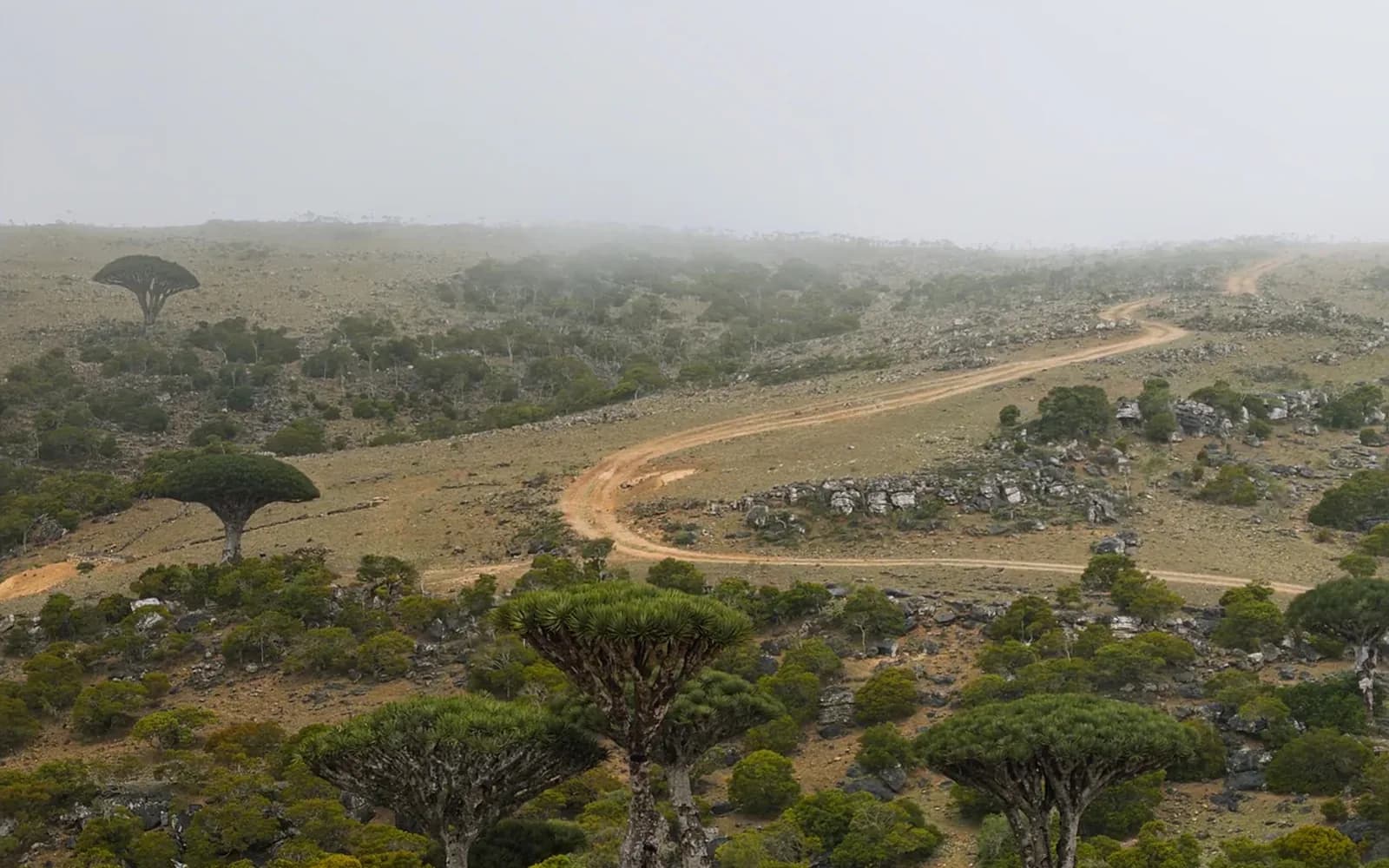
On 28 February 2024 someone set fire to the dragon's blood forest at Firmihin. Mature Dracaena cinnabari trees along the road were directly charred, the understory was destroyed, and researchers found at least four separate ignition points. The wood was still smoking when they arrived. It was not accidental. The perpetrators were never identified.
Among the motivations local people offered to the researchers who documented it: discontent with tourism expansion.
That is the sharpest single fact in the Socotra conservation record, and it reframes the whole subject. Firmihin holds more than 40% of the world's dragon's blood trees on about 2% of their suitable area — somewhere between 32,195 and 35,542 living individuals, depending on which survey you take. It also has 2,123 dead uprooted trees, and, on busy days, 50 to 100 vehicles. Residents have described visitors as treating the forest as an open-air toilet and are, in the researchers' phrasing, "strongly displeased with the intensive tourism traffic and the rubbish left by tourists."
The people who live beside the last great stand of the island's signature species are not neutral about the traffic going through it. That is the context for everything that follows.
Fires and firewood
This is the highest-value change a visitor can make, and it is almost never mentioned in trip briefings.
Field researchers recorded that "many tourists are proud to show campfires under Dragon's Blood Trees on their Instagram" — and, in the same breath, that there is "currently no awareness among tourists or tourism agencies regarding the potential impacts." The recommendation put forward was blunt: no fires within 20 metres of trees or understory, full stop.
The mechanism is not just the risk of ignition. Dracaena has shallow roots that run near the surface; a bonfire built on top of them cooks them. And firewood collection for tourist camps, in the words of one assessment, "depletes nutrients, destroys microhabitats in forest and creates competition for scarce firewood with local people" — an island where a fuel shortage in 2015 drove tree-cutting up to an estimated 60 trees per person per year.
Practical version: ask before you book whether your camps cook on gas. Most of the established operators do. If a fire is lit anyway, ask for it to be well away from any tree, and do not photograph it under a dragon tree — that image is the single most effective advertisement for the behaviour.
Where you sleep matters more than how you sleep
Detwah Lagoon is a Ramsar wetland of international importance. The 2025 UNESCO/IUCN mission found traditional low-impact palm shelters there being replaced by permanent buildings, and vehicles driving into the site.
The same mission found a new tourism camp at Erisel contravening the coastal construction ban, and, at Delisha, illegal land acquisition over more than 90% of the coastline with a hotel complex and agricultural projects built inside a nature sanctuary without authorisation.
None of this is regulated in any way you can rely on. The Conservation Zoning Plan still dates from a Presidential Decree of 2000; the 2025 mission found its boundaries "not demarcated or well understood locally" and its provisions "frequently violated without consequence." So the question to put to an operator is not "is the camp permitted" — the honest answer is that the permitting system barely functions — but which specific sites do you camp at, and what is the structure made of. Palm-shelter and tent camps that leave nothing behind are the traditional pattern and remain the right one. Our camping guide covers what the tiers actually look like.
The community-managed sites are the ones to ask for
The 2025 mission was not uniformly negative. It singled out three places as positive examples of community co-management, with rapid impact assessments, controlled visitation and equitable benefit-sharing: Di-Hamri, Homhil and Rosh.
These are the models that work, and they are structurally different from the rest of the island: the community holds an actual role rather than an "informal" one. Elsewhere, the mission found community organisations and traditional councils "lack formal authority and adequate integration."
At Rosh there is also a small, specific thing worth supporting — the last intact traditional wooden huri, recovered from a fisherman in 2021 and restored with traditional oils, now runs paid ecotourism trips. Money that reaches a restored boat and its crew is about as directly attributable as tourism spending on Socotra gets.
If your itinerary is flexible, asking for Di-Hamri, Homhil or Rosh time is a substantive request, not a symbolic one.
Waste, because there is nowhere for it to go
The island has rudimentary waste disposal and zero recycling infrastructure. Nothing you leave behind gets processed; it gets buried, burned or blown into a wadi.
The workable standard is that everything non-organic you bring, you carry back off the island in your bag — including batteries, wet wipes, blister packs and any packaging your snacks came in. Bring a filter bottle or purification tablets rather than a case of plastic bottles. This is unglamorous and it is genuinely the biggest measurable difference an individual traveller makes.
In the water, and on the rocks
Two documented problems, both easy to avoid.
The 2014/15 IUCN mission recorded tourism providers fishing inside marine protected areas to feed tourists. If a guide offers to catch dinner, it is worth asking where — Di-Hamri and Rosh are reserves.
And the Socotran skink is listed among threatened species with a tourism-specific pressure attached: "excessive collection by locals for tourist tips (prohibited but observed)." If someone brings an animal to you for a photo, the tip is what creates the market. Declining is the whole intervention.
Biosecurity is the third one, and it is invisible. 135 introduced species are now recorded on Socotra, quarantine capacity is, in IUCN's words, "currently not in place yet," and ten invasive ant species have spread markedly along the road network. Arriving with clean boots, clean tent pegs and clean camera bags is a real contribution on an island whose entire import channel is being expanded without a quarantine regime.
About the goats
You will be told that goats are destroying Socotra. The grazing pressure is real — IUCN now rates overgrazing as the most severe terrestrial threat, "Very High, throughout more than 50%" of the property, and a primary factor in the decline of both the dragon's blood tree and the frankincense trees. Dragon trees are not regenerating; the mature forest you photograph is, in ecological terms, an old-age population.
But the framing matters, and visitors get it wrong in a way that is quietly insulting to the people hosting them. Goats are livelihood for around 60% of surveyed households, cultural for 22% — ritual slaughter, dowries, standing — and kept as companions by 18%. The unsustainable pattern is recent: mid-twentieth-century settlement replaced rotating nomadic pasture with free-range grazing, and then the 2000 zoning plan placed roughly three-quarters of the island under strict protection, which in one researcher's phrase made pastoralists "an invasive species" in their own traditional domains.
The islanders are losing too. One shepherd reports that of the shrubs the herds depend on, "ninety percent have disappeared in recent years." Nearly nine in ten of the island's goats carry parasites.
So: it is a land-management failure with a colonial-shaped edge, not a story about careless herders. Read the dragon's blood tree guide for what this means for the trees themselves.
Questions worth asking before you book
Six that produce informative answers:
- Do the camps cook on gas, or on collected firewood?
- Which specific sites do we camp at — and is any of them inside the Detwah Ramsar area?
- Do we drive on tracks at Firmihin, or off them?
- Is Di-Hamri, Homhil or Rosh on the itinerary?
- What happens to our rubbish?
- How much of what I pay stays on the island?
You will not always get a good answer to the last one, and an operator who says plainly that they do not know is more trustworthy than one who quotes a percentage they cannot evidence. The booking guide covers how these conversations usually run.
The honest position
Tourism is not Socotra's largest problem. Unregulated construction, roads, overgrazing and invasive species all rate higher in the 2025 assessment, and the island's own government has told UNESCO more than once that tourism "does not represent a threat" to the site's value.
But that assessment was made when fewer than 200 people a year were arriving. Visitor numbers have grown roughly thirty-fold since 2000, and the one forest that matters most now sees a hundred cars on a busy day and was set on fire in 2024 by someone who, locals believe, had had enough.
Carrying capacity has a paper trail of its own. UNESCO asked Yemen for a comprehensive tourism carrying-capacity assessment, with a system to monitor tourism's impact, as early as 2013. In its 2020 report the State Party answered that the Ministry of Tourism had run promotion campaigns for Socotra, but that sustainable tourism planning had yet to be prioritised. No assessment has been completed since. And in the World Heritage Committee's July 2026 decision, tourism appears only as something local communities should benefit from; the ecological carrying capacity it asks Yemen to respect is applied to grazing, fuelwood and fisheries, not to visitors.
Your trip is part of that growth. It is defensible — the money matters in a place where around 60% of the population needs humanitarian assistance — but it is not neutral, and the parts of it that do damage are unusually specific and unusually easy to avoid. If you want the institutional background to all of this, the UNESCO listing guide sets out what is supposed to be protecting the island and why it currently is not.
Chat with a real person — free
Seif and the team reply on WhatsApp — trip questions, custom plans and booking help.
Ask Seif on WhatsAppCommon questions
Is tourism damaging Socotra?
Not as much as construction, roads, overgrazing or invasive species, all of which rate higher in IUCN's 2025 assessment. But tourism-specific damage is documented: fire incidents and off-road driving at Firmihin, camps built inside the Detwah Ramsar wetland, a tourism camp at Erisel breaching the coastal construction ban, and tour providers fishing inside marine protected areas.
Are campfires allowed under dragon's blood trees?
There is no enforced rule, which is exactly the problem. Researchers documenting the 2024 Firmihin fire recommended that fires be forbidden within 20 metres of trees or understory. Dragon trees have shallow surface roots that a bonfire will cook, and firewood collection for tourist camps competes with local households for scarce fuel. Ask whether your camps cook on gas.
What happened at Firmihin in 2024?
On 28 February 2024 mature dragon's blood trees along the Firmihin road were deliberately set alight, with at least four separate ignition points and destruction of the understory. One tree was completely destroyed. The perpetrators were never identified, and among the motivations local people offered researchers was discontent with tourism expansion.
What should I do with my rubbish on Socotra?
Carry all non-organic waste off the island in your luggage. Socotra has rudimentary waste disposal and no recycling infrastructure at all, so anything left behind is buried, burned or blown into a wadi. Bring a filter bottle or purification tablets instead of bottled water, and take batteries, wipes and packaging home with you.
Which Socotra sites are community-managed?
The 2025 UNESCO/IUCN mission singled out Di-Hamri, Homhil and Rosh as positive examples of community co-management, with rapid impact assessments, controlled visitation and equitable benefit-sharing. Elsewhere on the island, community organisations were found to hold only informal roles without formal authority.
Are the goats really destroying Socotra?
Overgrazing is rated by IUCN as the most severe terrestrial threat and a primary factor in the decline of both dragon's blood and frankincense trees, which are not regenerating. But goats are livelihood for around 60% of households, culturally significant for 22% and kept as companions by 18%. The unsustainable pattern dates from mid-twentieth-century settlement replacing rotating nomadic pasture, compounded by a 2000 zoning plan that put most of the island under strict protection.
Are there visitor limits or a carrying capacity on Socotra?
No. There are no visitor limits anywhere on the archipelago and no completed carrying-capacity assessment. UNESCO asked for one as early as 2013; in 2020 Yemen told UNESCO that sustainable tourism planning had yet to be prioritised, and in 2022 it said again that an assessment is needed. In practice, the number of flight seats is the only constraint on how many people arrive.
Should I tip for photos of wildlife on Socotra?
No. The Socotran skink is documented as facing pressure from “excessive collection by locals for tourist tips (prohibited but observed).” Paying for an animal to be brought to you creates the market for collecting it. Declining is the entire intervention.
How much of what I pay stays on Socotra?
There is no verified figure. Operators state that revenue reaches communities through women's cooperatives, hotels, restaurants and conservation projects, but this has not been independently verified. Asking is still worthwhile: an operator who says plainly that they do not know is more credible than one quoting a percentage they cannot evidence.
Keep reading
Birding on Socotra: The 11 Endemic Birds and Where to See Them
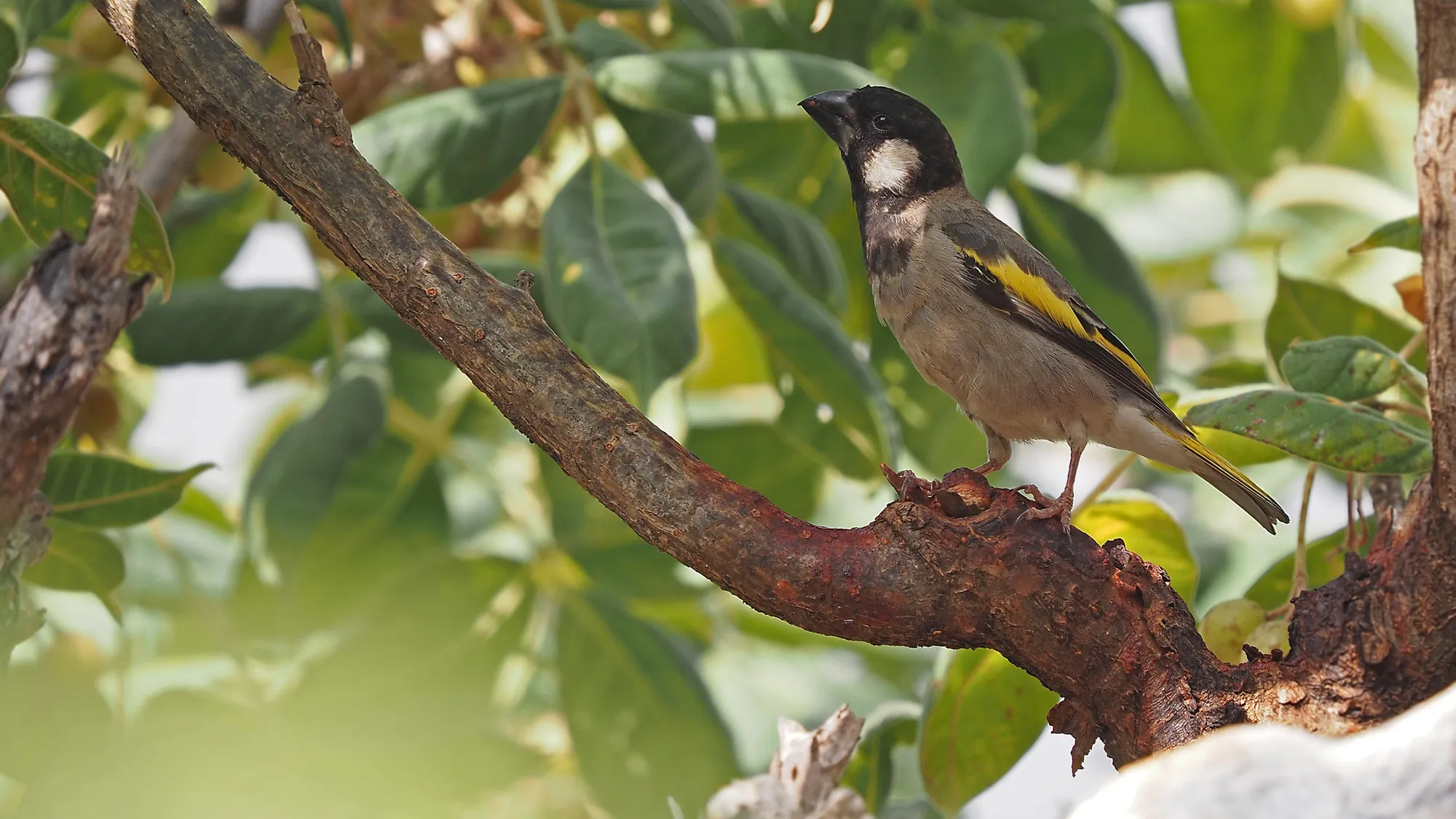
Eleven bird species live only on the Socotra archipelago. Where to look for them, the one standard trips cannot reach, and how each is doing on the Red List.
By TiS Authors8 min read
How to Get to Socotra in 2026–27: The Jeddah Flight, and Every Other Route
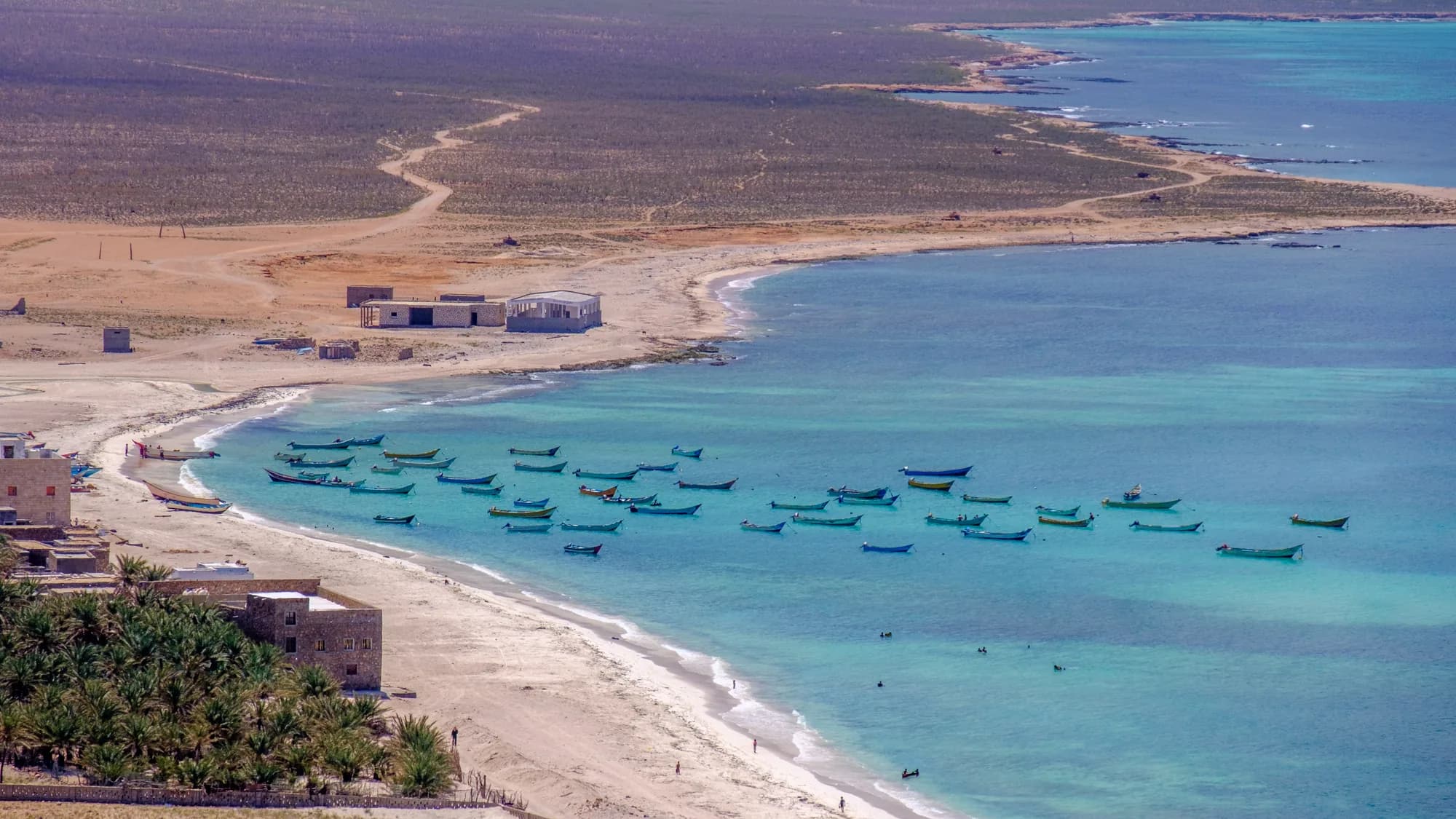
One direct international flight reaches Socotra, and even its timetable is disputed. The Jeddah flight as filed, what Yemenia has and has not confirmed, what it costs, and what became of the other routes.
By TiS Authors9 min read
Socotra Permit and Entry, 2026–27: It Is Not a Yemen Visa
Every Socotra trip runs on a permit your operator arranges, while governments describe a different document altogether. What the permit is, what it costs, who issues it, and the distinction almost nobody writes down.
By TiS Authors8 min read