Birding on Socotra: The 11 Endemic Birds and Where to See Them
Eleven bird species live only on the Socotra archipelago, according to the April 2020 checklist by Richard Porter and Ahmed Saeed Suleiman. Ten of them are found on Socotra itself, and the Diksam plateau, the Haghier mountains and Firmihin each hold seven or eight of them. The eleventh, the Abd al-Kuri sparrow, lives only on Abd al-Kuri, a separate island about 100 km to the west that standard trips do not visit.
Socotra has a short bird list and a high share of birds found nowhere else. Richard Porter's 2020 update put the archipelago list at 225 species, and AviBase counted 234 species in 58 families by 2025. Eleven of them are endemic, and most of those can be seen on the same route that every trip to the island already follows.
This guide covers which birds they are, where to look for them, how each one is doing, and the one species a standard trip will not reach. There are photographs of all of them on our wildlife page.
The eleven endemic birds
The number depends on which list you use. The 2008 World Heritage nomination counted six endemic birds. The 2020 OSME checklist counts eleven, after the Socotra white-eye was recognised as a separate species. A 2022 paper by the same authors gives twelve. The 2020 checklist is the one most birders use, and it is the one used here.
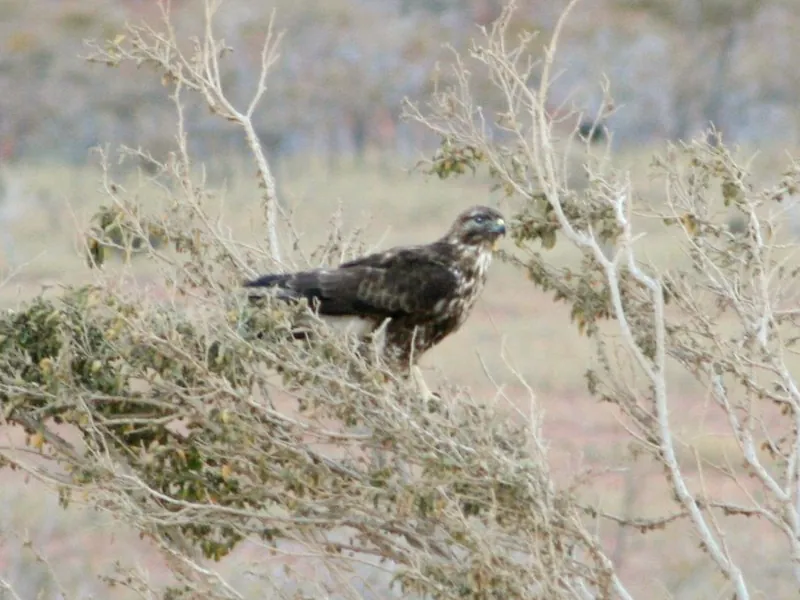 Socotra buzzardManuel Schwarz · CC BY 4.0
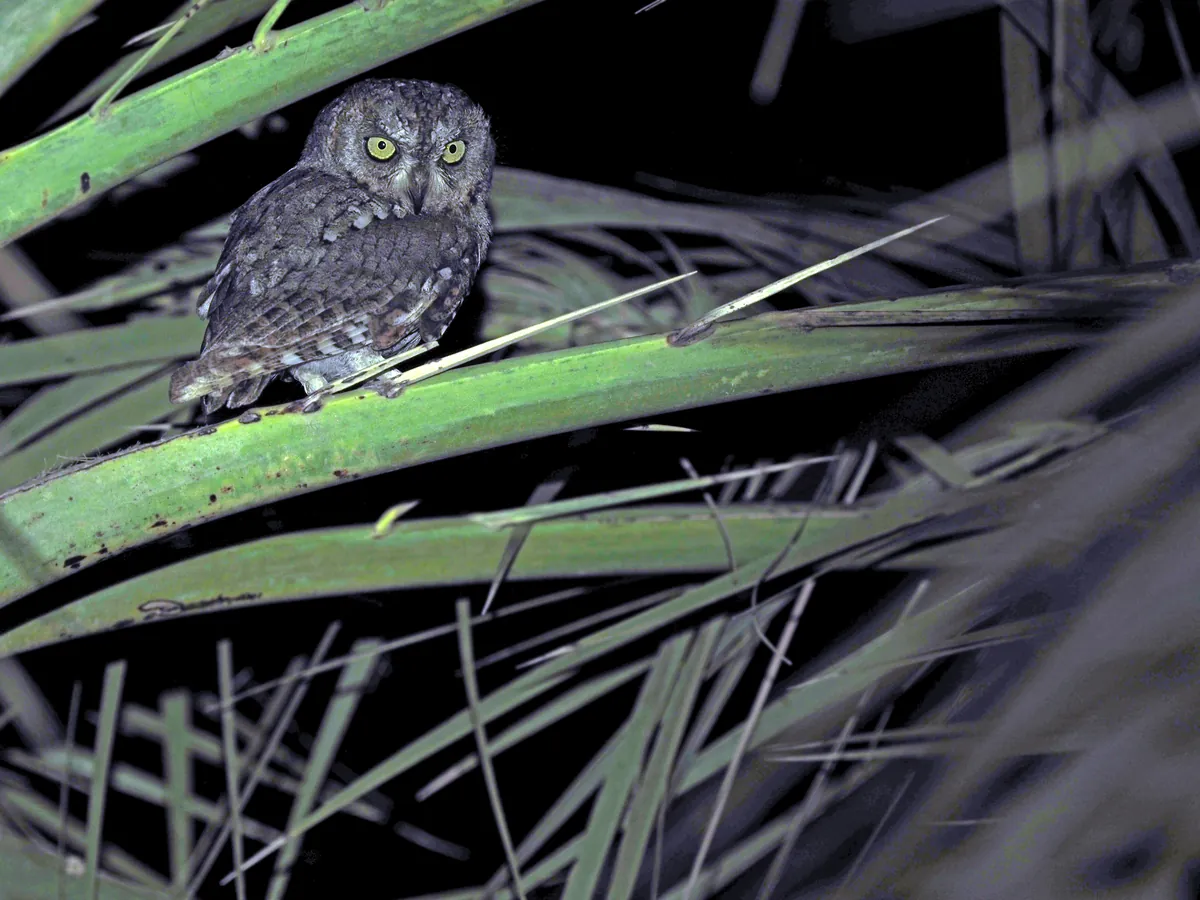 Socotra scops owlJames Eaton · CC0
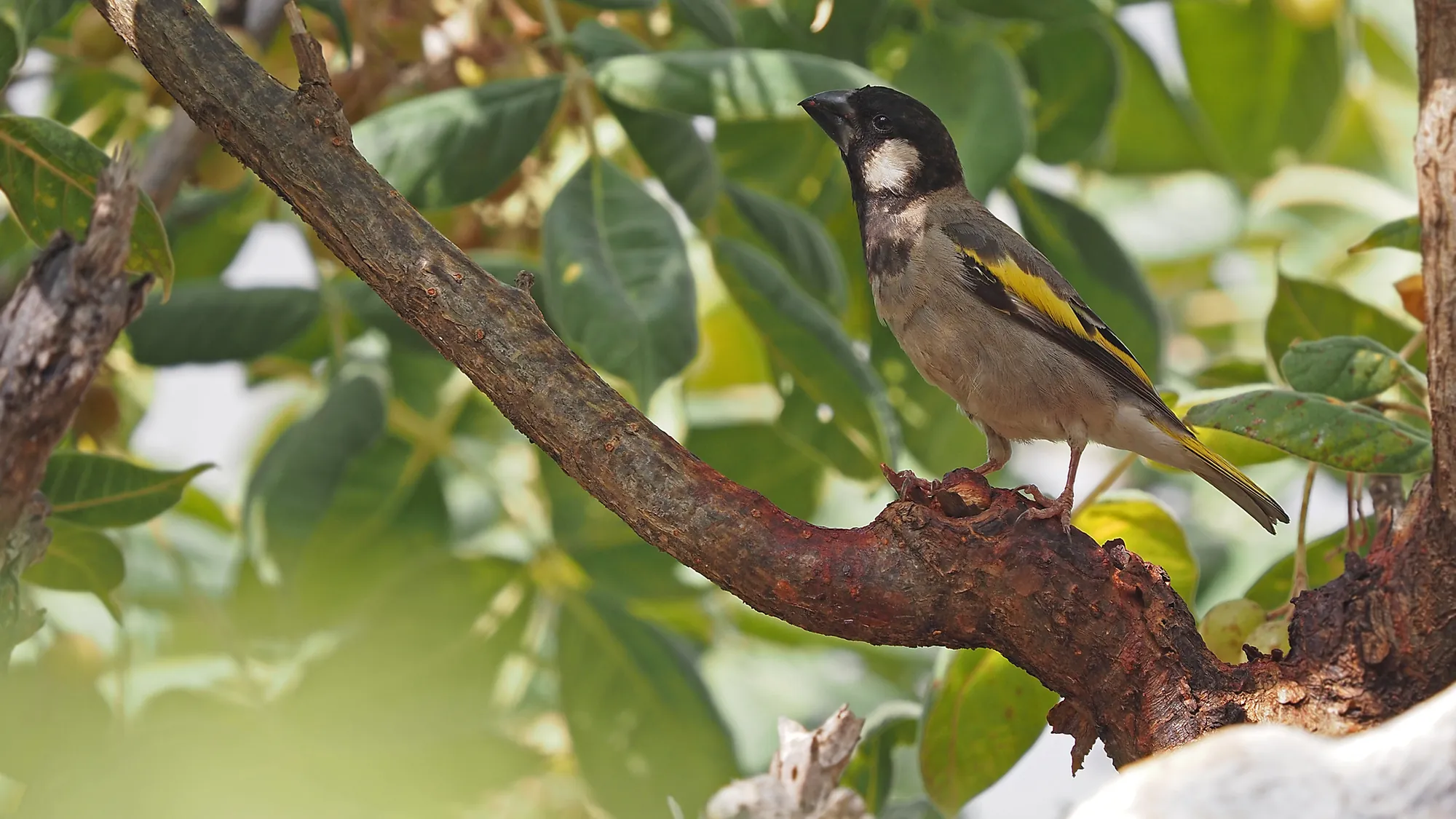
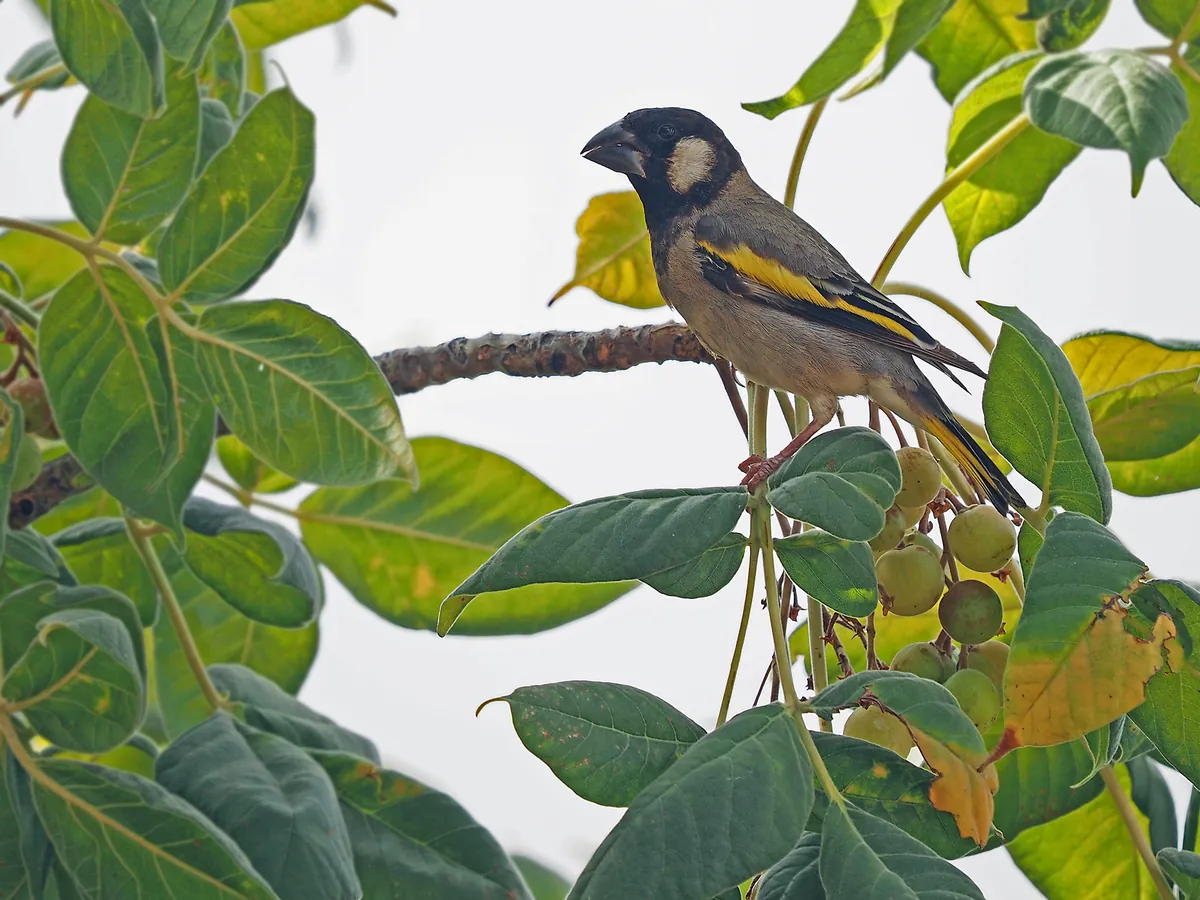 Socotra golden-winged grosbeakJames Eaton · CC0
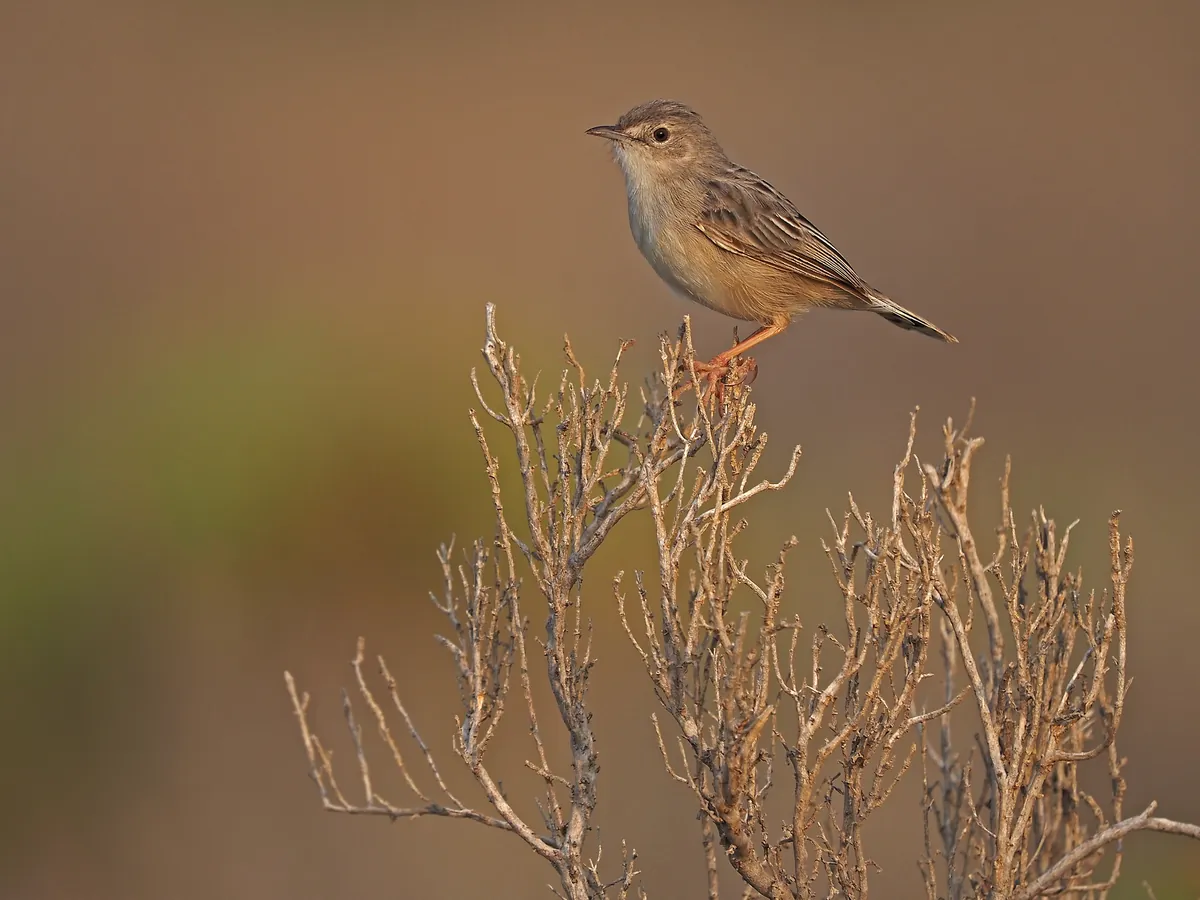 Socotra cisticolaJames Eaton · CC0
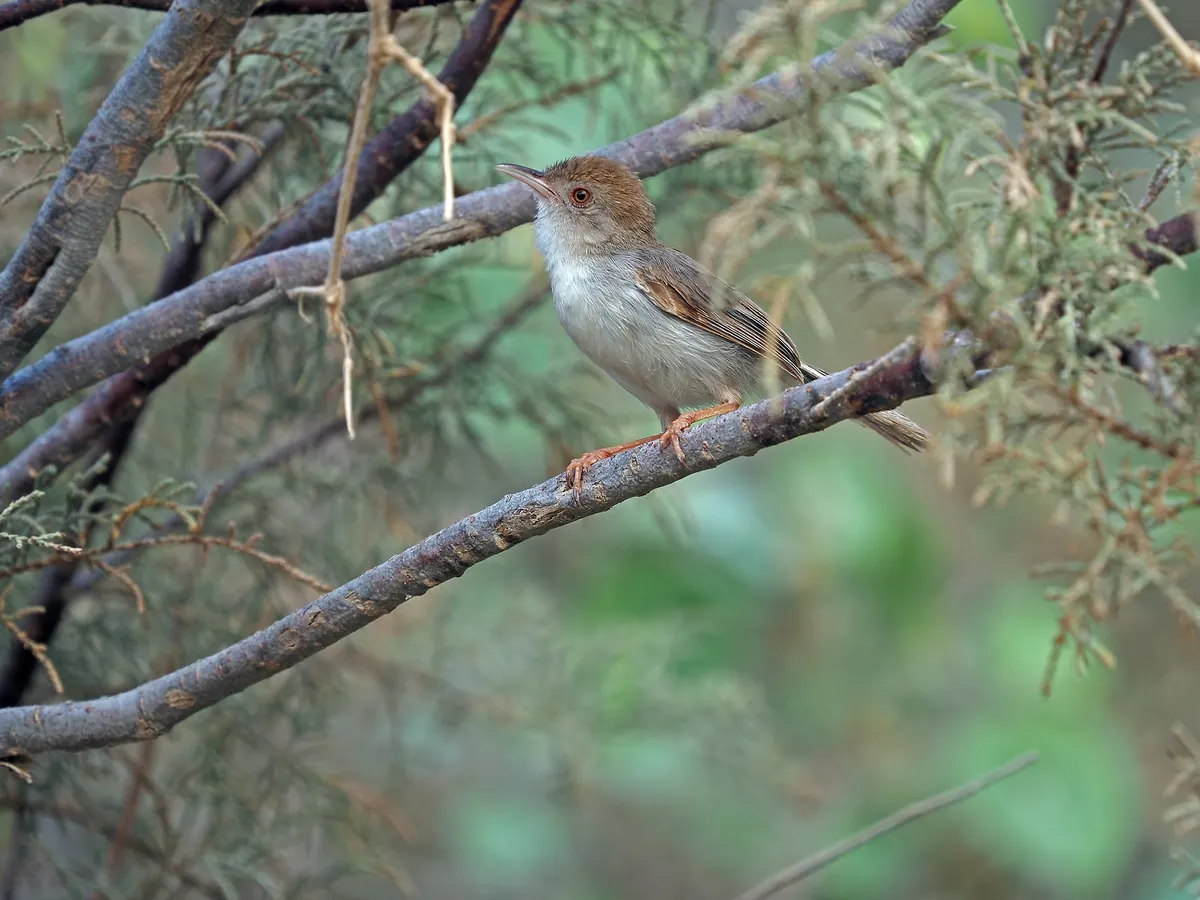 Socotra warblerJames Eaton · CC0
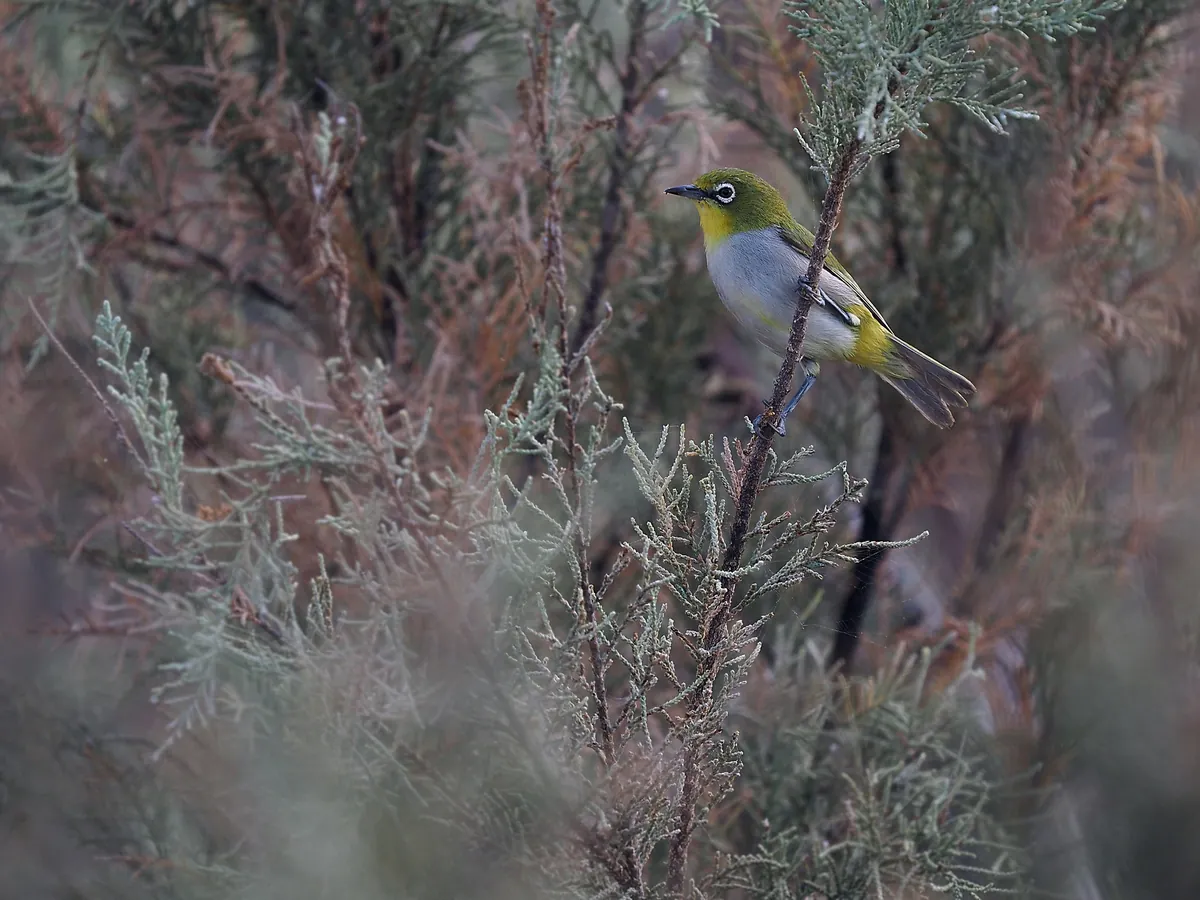 Socotra white-eyeJames Eaton · CC0
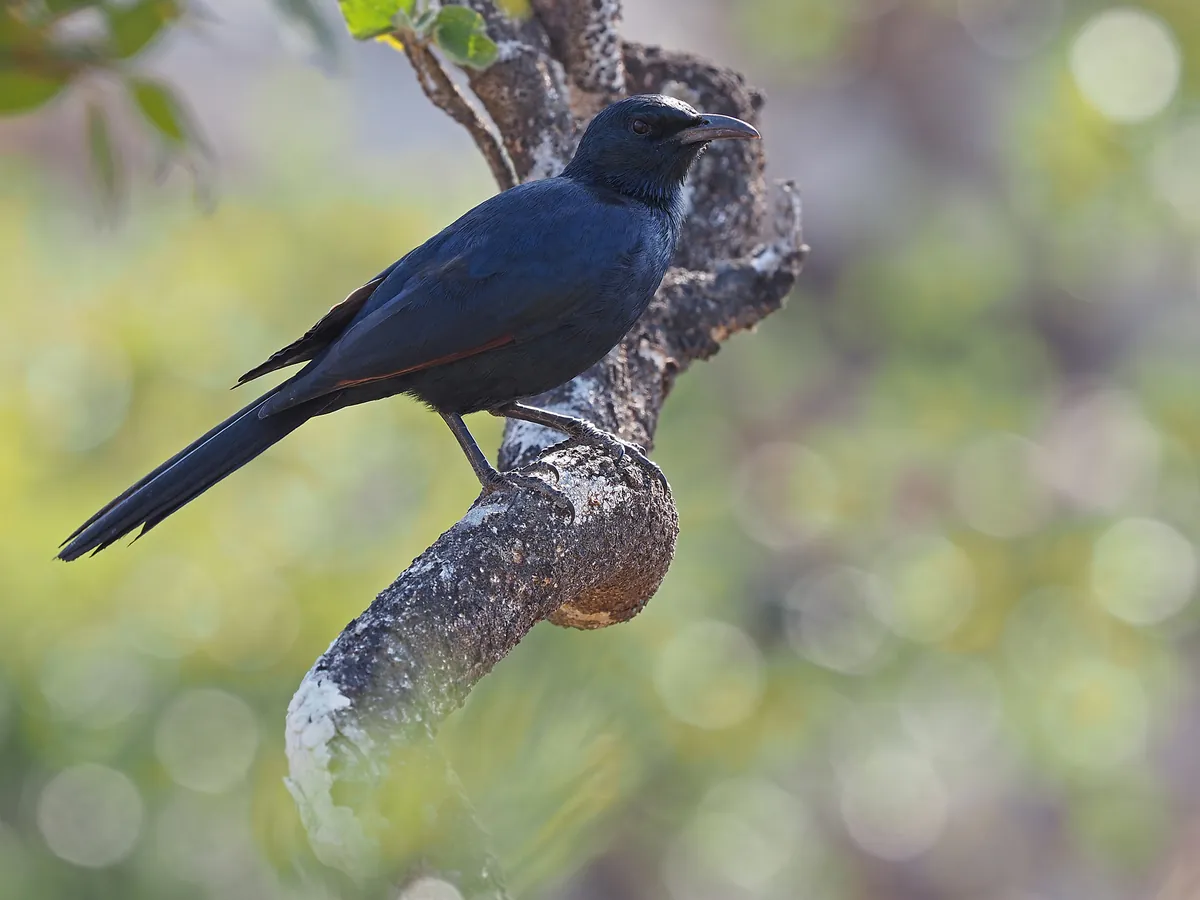 Socotra starlingJames Eaton · CC0
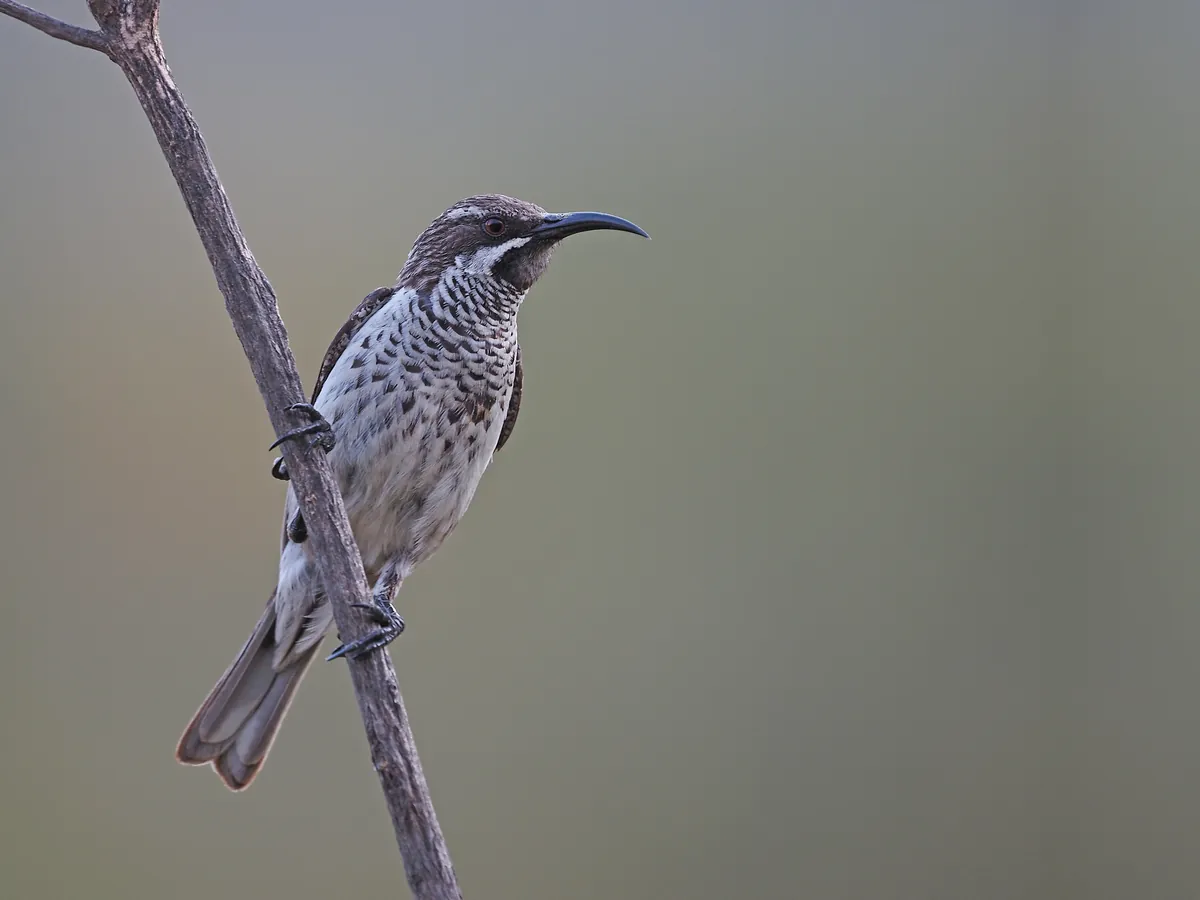 Socotra sunbirdJames Eaton · CC0
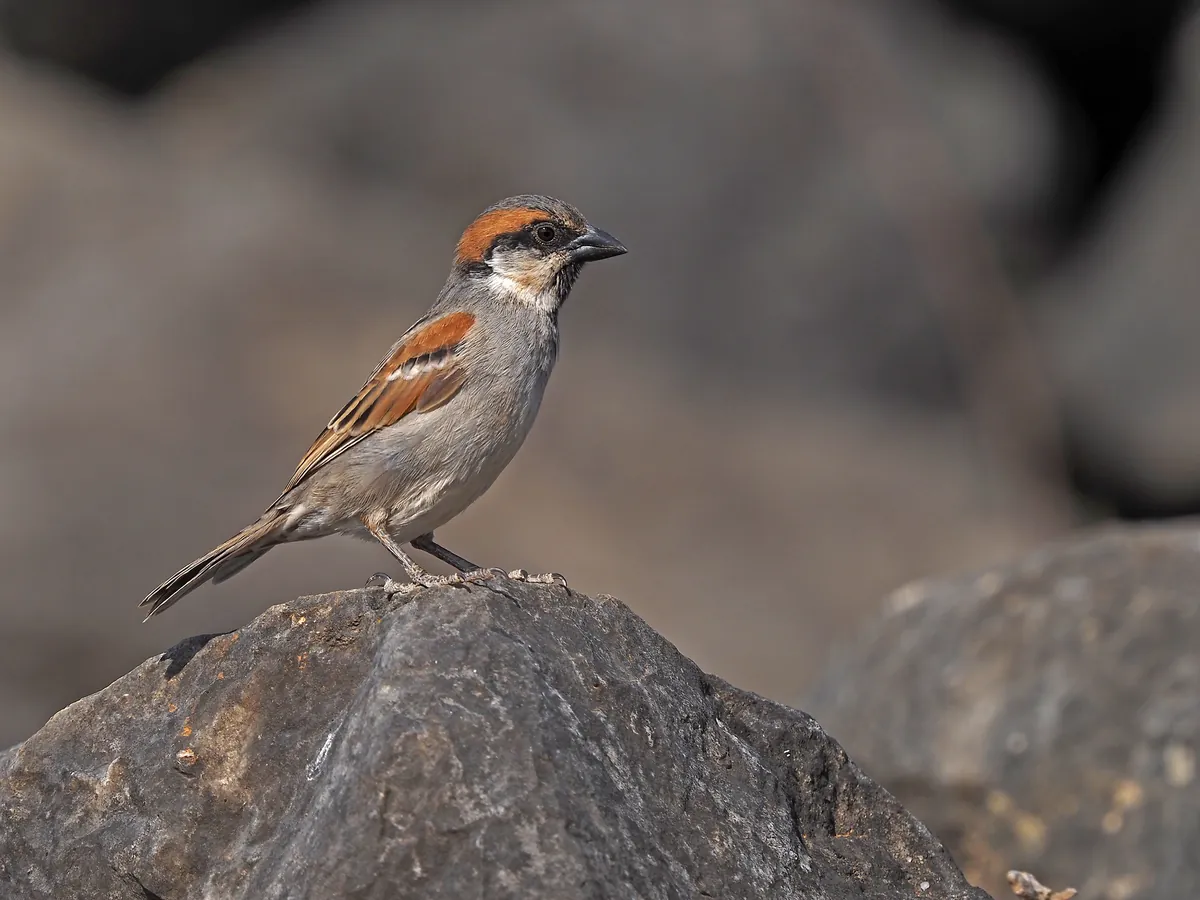 Socotra sparrowJames Eaton · CC0
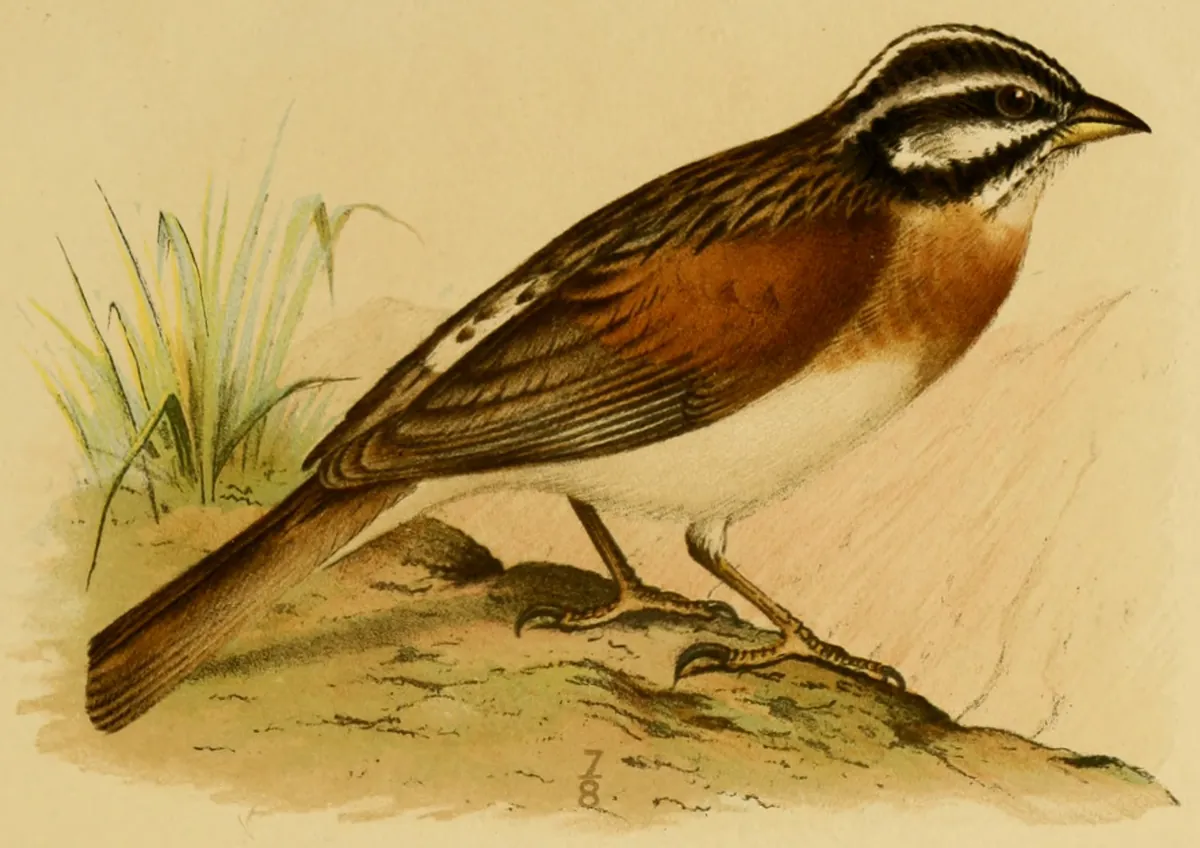 Socotra bunting (plate, 1903)Public domain
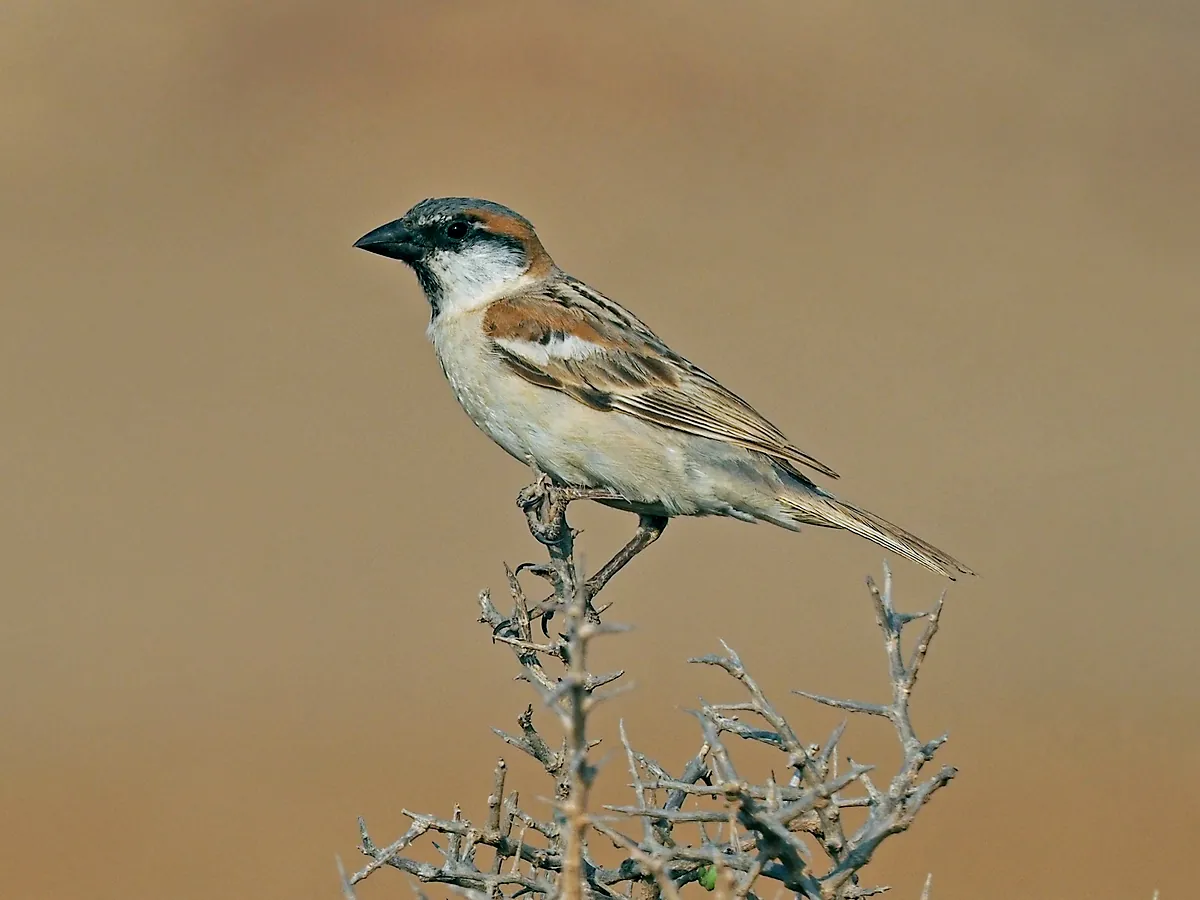 Abd al-Kuri sparrowJames Eaton · CC0
| Bird | Scientific name | Worth knowing |
|---|---|---|
| Socotra buzzard | Buteo socotraensis | Only described as a separate species in 2010 |
| Socotra scops owl | Otus socotranus | Active at night; split from the African scops owl |
| Socotra golden-winged grosbeak | Rhynchostruthus socotranus | Males have bright yellow patches on the wings and tail |
| Socotra cisticola | Cisticola haesitatus | Over a quarter of the population lives on the north coast plain |
| Socotra warbler | Incana incana | The only species in its genus |
| Socotra white-eye | Zosterops socotranus | Treated as a race of the Abyssinian white-eye until 2014 |
| Socotra starling | Onychognathus frater | Nests in hollow branches of dragon's blood trees |
| Socotra sunbird | Chalcomitra balfouri | Lives in shrubland from the lowlands to the mountains |
| Socotra sparrow | Passer insularis | Also found on the smaller islands of Samhah and Darsah |
| Socotra bunting | Emberiza socotrana | A bird of the mountains and uplands |
| Abd al-Kuri sparrow | Passer hemileucus | Found only on the island of Abd al-Kuri |
Where to look
In 2016 Porter and Suleiman mapped 21 Important Bird and Biodiversity Areas across the archipelago and counted how many of the endemics each one holds. Their figures are the best guide to where to spend your time.
- Jabal Ma'alah holds 9 of the 11, the most of any site.
- The Diksam plateau, the Haghier mountains and their north slopes, the Noged plain and the limestone plateau above Siko each hold 8.
- Firmihin holds 7, and has the highest breeding concentration of Socotra buzzards.
Diksam and Firmihin are on every trip we list, so most visitors already pass through ground that holds seven or eight endemics. What makes the difference is time there: an early start, a slow walk through the trees, and a driver who knows you want to stop.
Some species have narrower ranges:
- Socotra cisticola. More than a quarter of the world population lives on the north coast plain between the airport and Di Selmeho. You can start looking on the drive from the plane.
- Golden-winged grosbeak. Widespread in woodland and wadis, including Wadi Ayhaft and Firmihin.
- Socotra bunting. Found at mountain and upland sites, including the Haghier and Diksam.
- Socotra scops owl. Recorded at 10 of the 21 sites, across the centre and north of the island. It is active at night, so look and listen after dark.
The one you are unlikely to see
The Abd al-Kuri sparrow lives only on Abd al-Kuri, an island about 100 km west of Socotra. BirdLife International's 2022 assessment gives its entire world range as 244 km², with 250 to 999 mature birds and a falling population. It is listed as Vulnerable.
No standard Socotra itinerary goes to Abd al-Kuri, so at most ten of the eleven endemics are within reach on a normal trip. If a trip promises all eleven, ask how it plans to get to Abd al-Kuri. For a realistic benchmark, a natural-history tour in February 2025 recorded 8 of the 11 endemics in eight days, along with about 67 bird species in total.
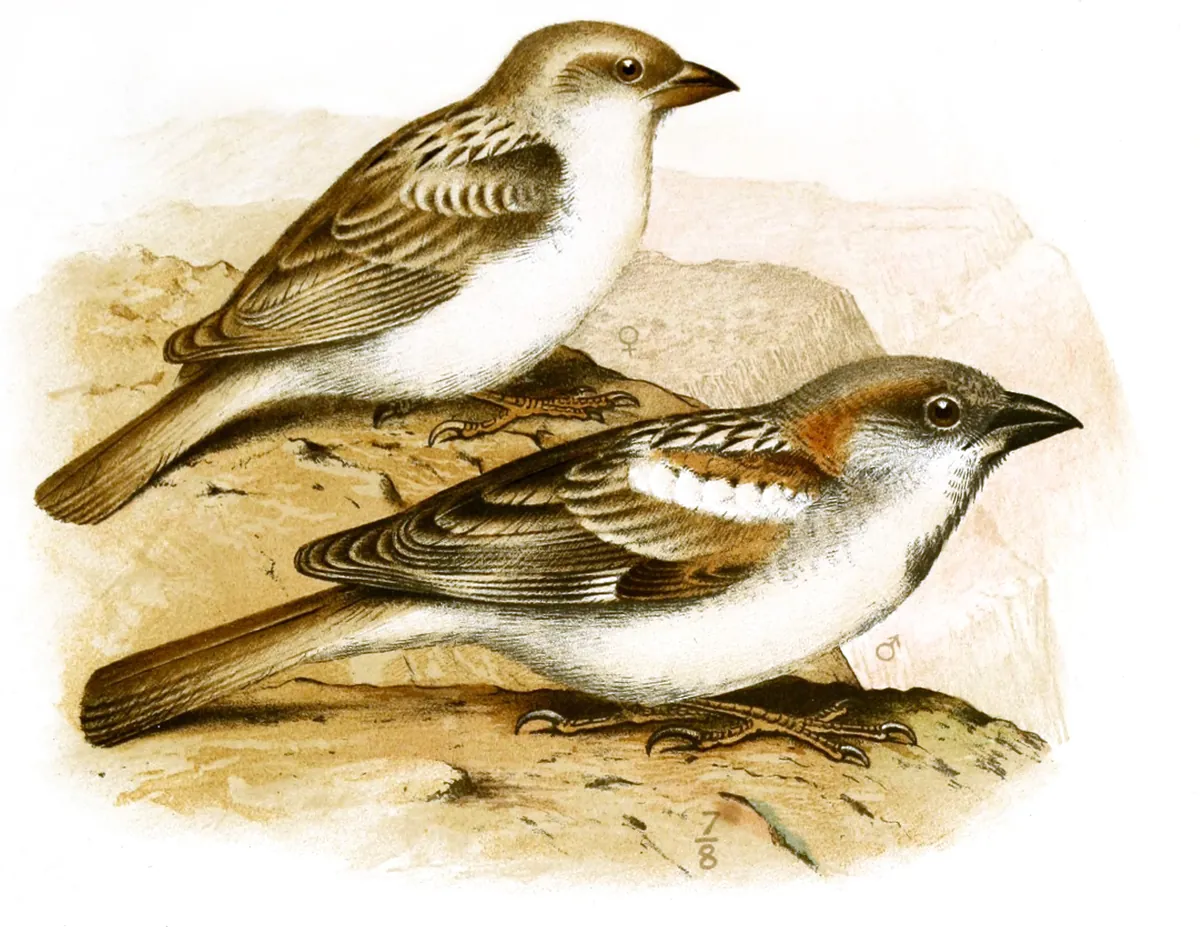 Abd al-Kuri sparrows, female above and male below, drawn in 1903Henrik Grønvold · Public domain
How the endemics are doing
These are the current global Red List assessments shown on BirdLife International's species factsheets on 10 September 2026.
| Bird | Category | Last assessed | Mature birds | Trend |
|---|---|---|---|---|
| Socotra buzzard | Vulnerable | 2022 | 250 to 500 | Decreasing |
| Abd al-Kuri sparrow | Vulnerable | 2022 | 250 to 999 | Decreasing |
| Socotra bunting | Near Threatened | 2017 | About 2,500 | Stable |
| Socotra cisticola | Least Concern | 2022 | About 6,000 | Stable |
The buzzard is the endemic in most trouble on Socotra itself. Naturalists knew it for more than a century, but it was only described as a separate species in 2010, and there are now no more than about 500 mature birds. The cisticola's listing has changed: a 2015 regional assessment for the Arabian Peninsula put it at Near Threatened, and the 2022 global assessment puts it at Least Concern.
Birds and the dragon's blood trees
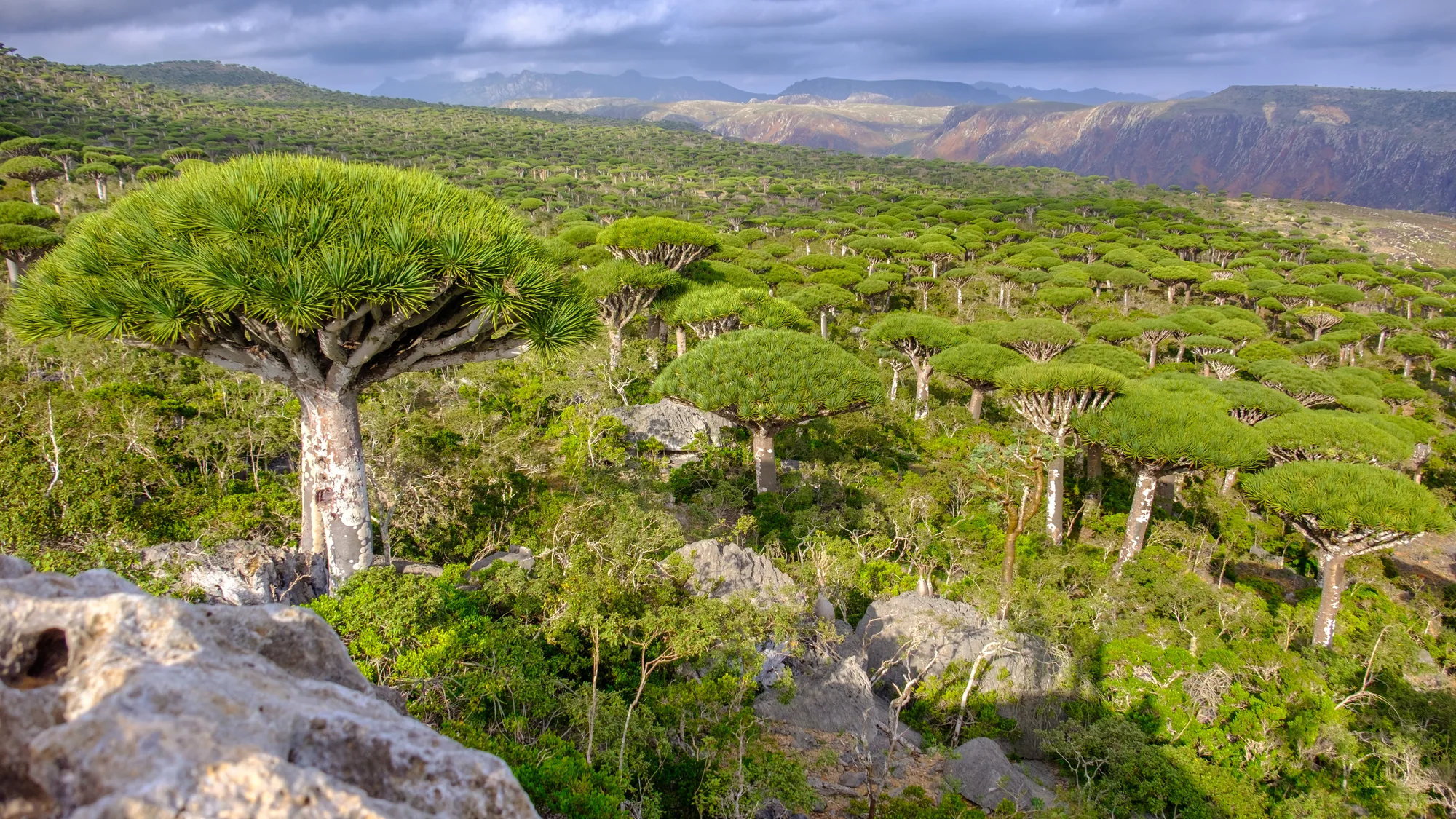 The dragon's blood forest at FirmihinHardscarf · CC BY-SA 4.0
The best birding sites and the best dragon's blood forests are largely the same places. Firmihin holds more than 40% of all the world's dragon's blood trees, and Diksam is where the island's tree nursery is. The Socotra starling nests in hollow branches of the trees and eats their berries, which helps to spread the seeds. If you are visiting the forests anyway, you are also in the right place for most of the endemic birds. Our dragon's blood tree guide covers the forests themselves.
Beyond the endemics
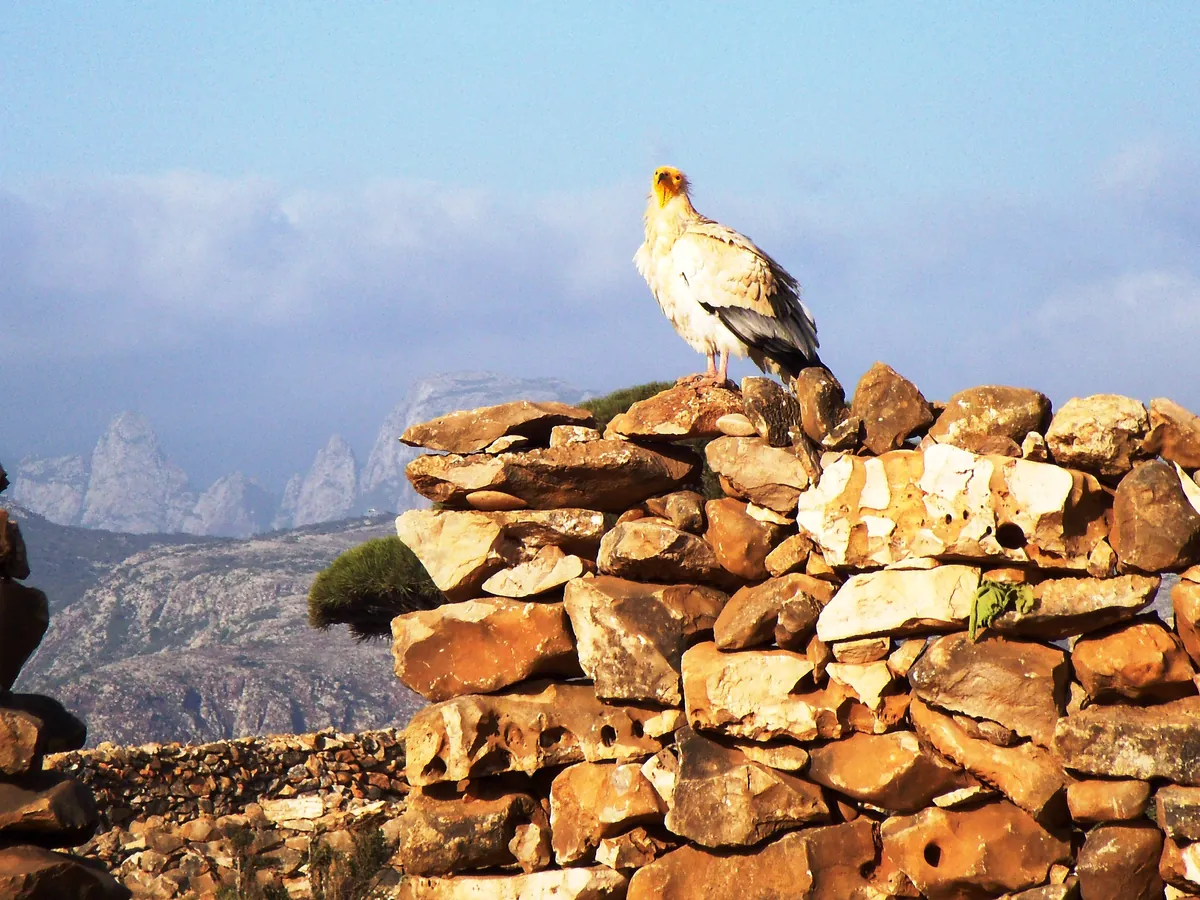 Egyptian vultureGerry & Bonni · CC BY 2.0
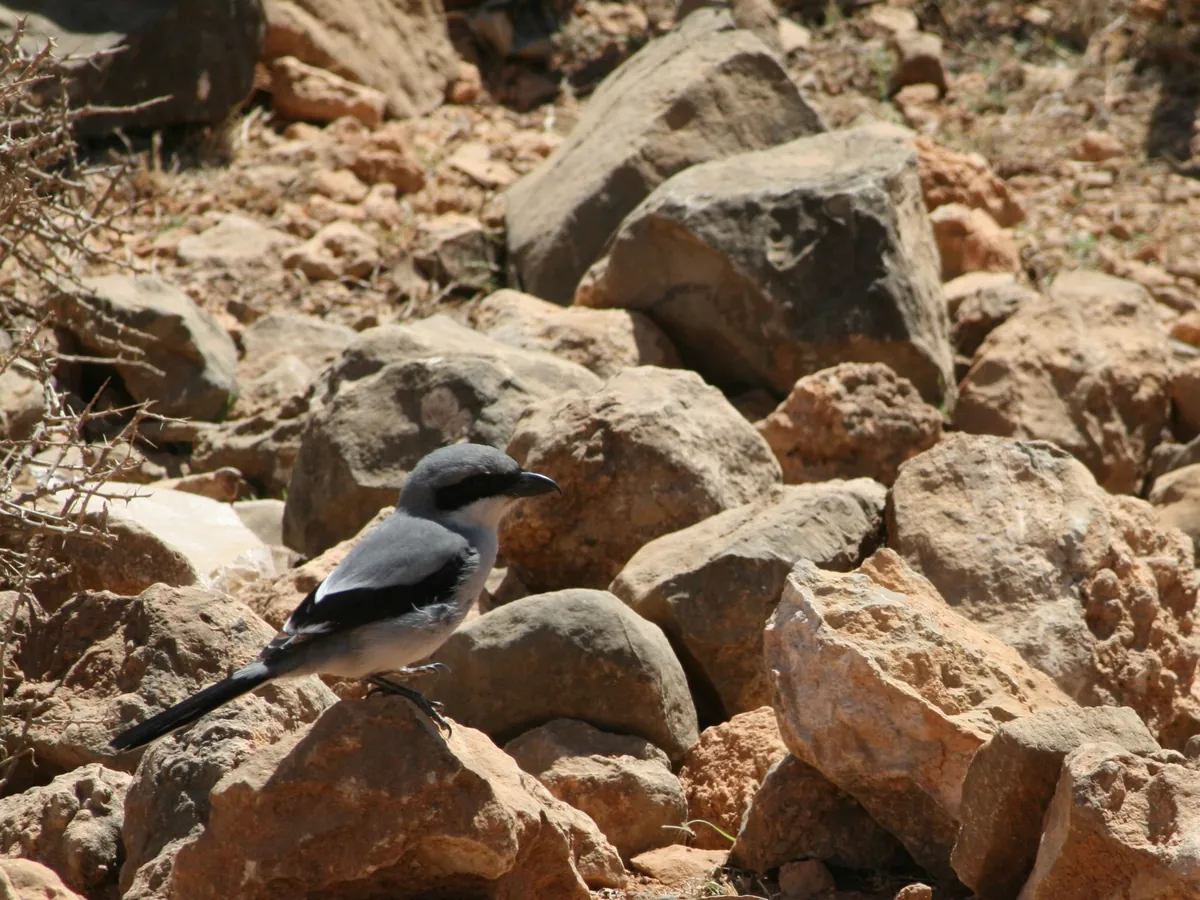 Socotra grey shrikeManuel Schwarz · CC BY 4.0
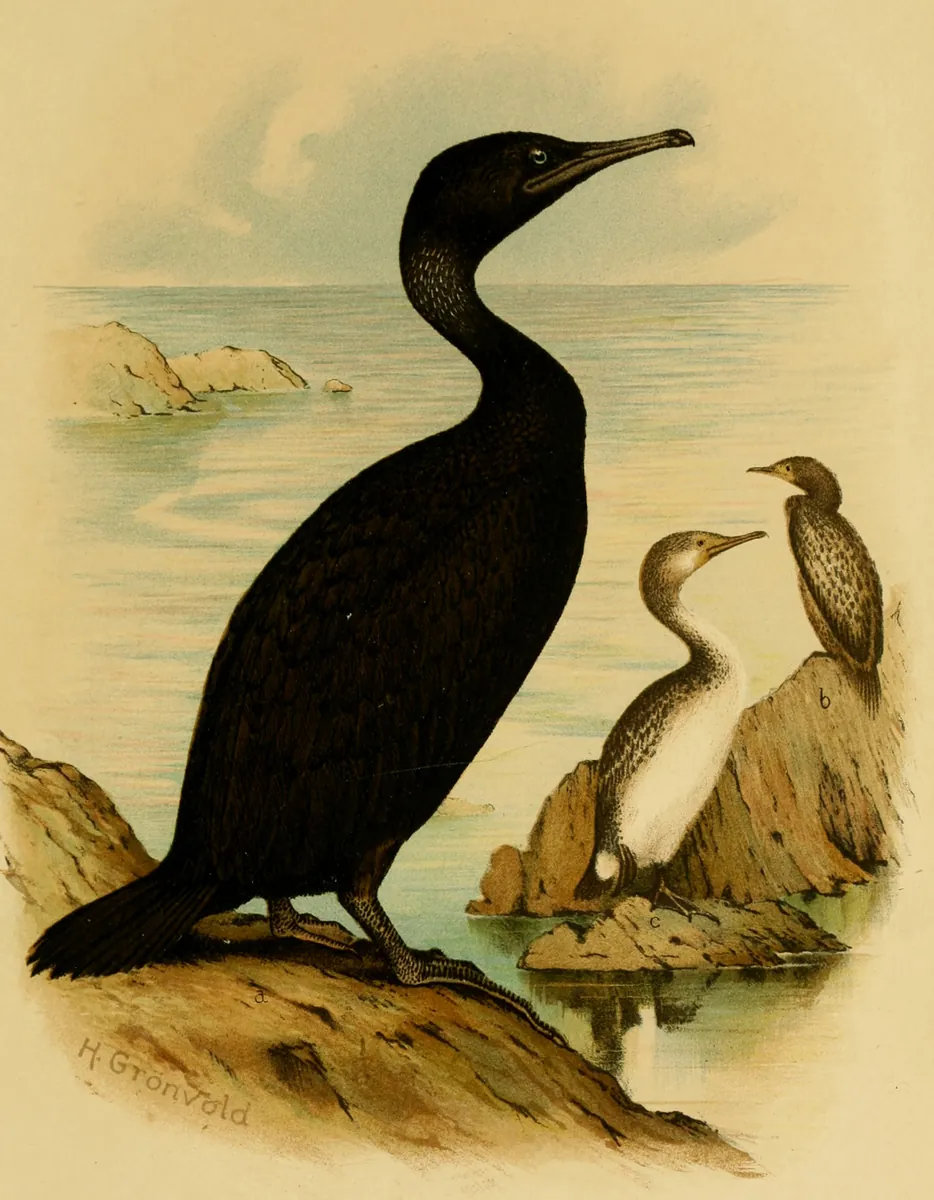 Socotra cormorant (plate, 1903)Henrik Grønvold · Public domain
Egyptian vulture. Endangered globally, and abundant on Socotra. It is the bird a non-specialist is most likely to notice. Roosts of more than 350 birds gather on the north slopes of the Haghier, more than 20 pairs breed in the Haghier, and birds feed and roost at Wadi Ayhaft. It is recorded at 12 of the 21 Important Bird Areas.
Socotra cormorant. Despite the name, it is not an endemic. It breeds on islands across the Gulf and the Arabian Sea. The archipelago's strongholds are Kal Farun, with about 2,500 pairs, more than 2% of the world population, and Sabuniya, with about 250 pairs. Up to 12,000 have been counted on the Falang to Momi coast. It also nests at Detwah Lagoon, where about 32 species of waterbird have been recorded.
Socotra grey shrike. Sometimes described as a twelfth endemic, but its status as a separate species was still under review in September 2026, so it is not counted here.
Jouanin's petrel. The only known breeding colony in the world is in the archipelago, with more than 4,000 birds. The species is Near Threatened.
When to go
No published source gives the best months for seeing each endemic. The travel season runs from October to April, when the flights operate, and the monsoon closes the island from about May to September. For weather and flights through the season, see our when to visit guide.
Practical notes
- Tell your operator that birds matter to you when you book, so that stops at Firmihin and Diksam can be timed for the morning.
- Bring binoculars. Most of the endemics are small birds in scrub and woodland.
- Watch for the cisticola early. The plain between the airport and Di Selmeho holds more than a quarter of its population.
- Stay up for the scops owl. It hunts at night, and has been seen catching moths at dusk.
Where this fits in a trip
Every trip on our packages page visits Firmihin and the Diksam plateau, and the 15-day expedition adds the Haghier mountains. The wildlife page has photographs of the endemic birds alongside the island's trees, reptiles and sea life.
Chat with a real person — free
Seif and the team reply on WhatsApp — trip questions, custom plans and booking help.
Ask Seif on WhatsAppCommon questions
How many endemic birds does Socotra have?
Eleven, on the April 2020 checklist of the birds of the Socotra archipelago by Richard Porter and Ahmed Saeed Suleiman. Other lists give different numbers, from six in 2008 to twelve in 2022, so check which list a figure comes from.
Can you see all of Socotra's endemic birds on one trip?
Not on a standard trip. Ten of the eleven live on Socotra itself, but the Abd al-Kuri sparrow is found only on Abd al-Kuri, about 100 km to the west, which standard itineraries do not visit. A natural-history tour in February 2025 recorded 8 of the 11 in eight days.
Where is the best birding on Socotra?
Jabal Ma'alah holds 9 of the 11 endemics. The Diksam plateau, the Haghier mountains, the Noged plain and the plateau above Siko each hold 8, and Firmihin holds 7. Diksam and Firmihin are on every trip we list.
Is the Socotra cormorant endemic to Socotra?
No. Despite its name, it breeds on islands across the Gulf and the Arabian Sea. It does breed in the archipelago, including at Kal Farun, Sabuniya and Detwah Lagoon, and it is globally Vulnerable.
Which Socotra bird is most at risk?
The Socotra buzzard and the Abd al-Kuri sparrow were both assessed as Vulnerable in 2022, and both populations are falling. The buzzard has 250 to 500 mature birds, and the sparrow's whole range is about 244 km² on one island.
When is the best time to go birding on Socotra?
No published source gives the best months for each endemic. Trips run from October to April, when the flights operate, so plan within that season.
Is the Socotra grey shrike an endemic species?
Not yet. Its status as a separate species was still under review in September 2026. If it is accepted, it will become the archipelago's twelfth endemic bird.
How many bird species have been recorded on Socotra?
Richard Porter's 2020 update put the archipelago list at 225 species. AviBase counted 234 species in 58 families by 2025.
Where can I see Egyptian vultures on Socotra?
They are abundant across the island. Roosts of more than 350 birds gather on the north slopes of the Haghier mountains, and they also feed and roost at Wadi Ayhaft.
Keep reading
Socotra Permit and Entry, 2026–27: It Is Not a Yemen Visa
Every Socotra trip runs on a permit your operator arranges, while governments describe a different document altogether. What the permit is, what it costs, who issues it, and the distinction almost nobody writes down.
By TiS Authors8 min read

How to Get to Socotra in 2026–27: The Jeddah Flight, and Every Other Route
One direct international flight reaches Socotra, and even its timetable is disputed. The Jeddah flight as filed, what Yemenia has and has not confirmed, what it costs, and what became of the other routes.
By TiS Authors9 min read
Socotra's UNESCO Listing: What It Protects, and What Went Wrong
Socotra's World Heritage listing is quoted everywhere and read almost nowhere. Here is what was actually inscribed in 2008, what Yemen promised, what inspectors found in May 2025, and what the Committee asked for in July 2026.
By TiS Authors11 min read