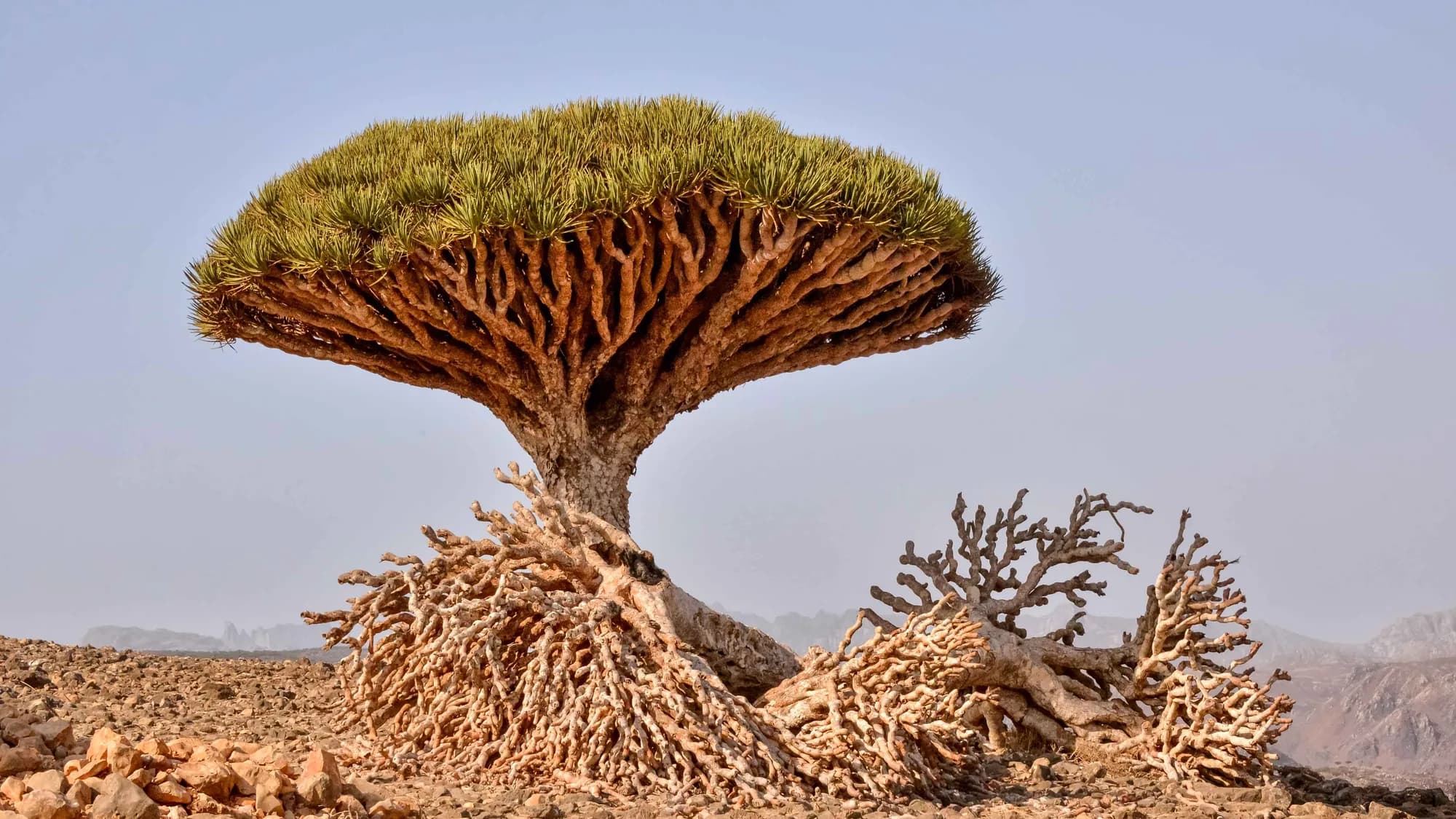
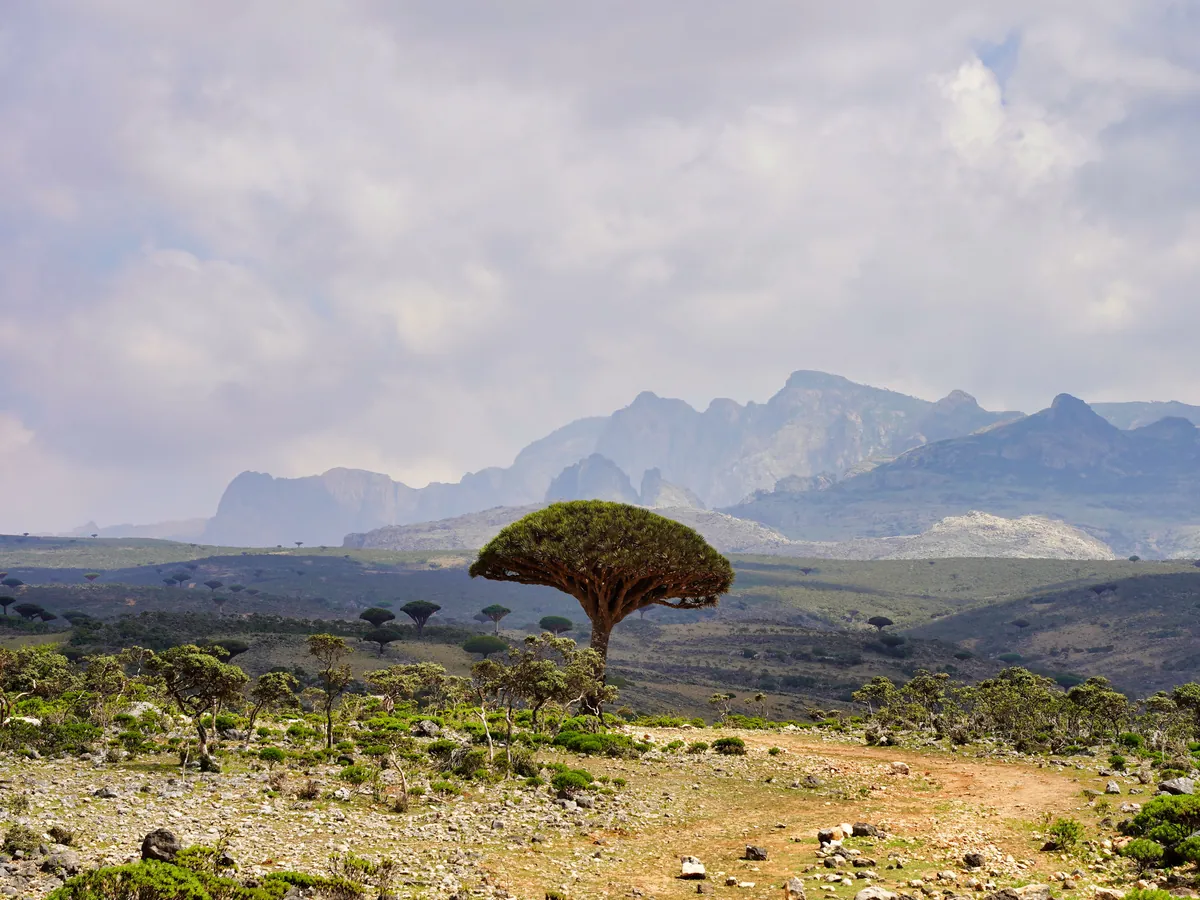
Diksam is a limestone plateau at around 700 metres in the centre of Socotra, with ancient dragon's blood trees and deep canyons, including Wadi Dirhur below it. It is the view on most Socotra photographs, and the road up from Hadibo is one of the island's only paved routes. It is usually day two or day five of an eight-day circuit, often with a highland camp, and it is colder and windier than the coast after dark.
Diksam sits at around 700 metres, a plateau of ancient dragon's blood trees cut by deep canyons; operators describe a gorge there with walls up to 700 metres. It is the view that appears on most Socotra photographs, and the road up from Hadibo is one of the island's only paved routes.
It is also where the 2025 UNESCO mission recorded some of its most specific findings.
The nursery
The Diksam nursery, established in 2006, raises dragon's blood seedlings under protection. It exists because the wild population is not regenerating: grazing pressure removes seedlings almost everywhere they are not fenced. Set against the scale of loss the numbers are sobering — Yemen's own 2022 report to UNESCO recorded restoration totalling 400 dragon blood plants, 300 frankincense and 20 mangroves.
The canyon
Wadi Dirhur cuts down off the plateau. One operator describes it as the largest canyon on Socotra and 400 metres deep. There are freshwater pools on the floor, and the descent from the rim is a real walk rather than a viewpoint stroll — no source publishes a time for it, so ask your guide rather than trusting an itinerary that quotes one. From the rim, the standard Socotra photograph is the plateau's dragon trees with the canyon dropping away behind them.
What the 2025 mission found here
Major asphalt road construction without impact assessments, and habitat fragmentation in core areas. And on the Diksam–Shibehon plateau, a large walled tract of dragon's blood woodland enclosing 50 to 100 mature trees behind a private road — an enclosure that triggered tribal disputes.
IUCN puts island-wide road construction at more than 900 km since 2001, against a network measured at 426.5 km in 2012. Back in 2012 the mission had already called roading "the most critical factor influencing the World Heritage status of Socotra."
Getting there and onward
The road from Hadibo up to Diksam is described by travellers as modern and paved. The track onward from Diksam to Firmihin is not: it is unpaved and rough, and operators describe it as needing a capable 4x4 and a driver who knows it. We do not publish driving times for either leg — the figures that circulate could not be attributed to any source.
Camping and the night sky
There is an established campsite on the plateau at around 700 metres, and this is one of the two or three places on Socotra people specifically come to sleep. The altitude, the distance from Hadibo's lights and the dry air make it one of the darkest accessible skies you are likely to stand under. It is also cold and windy after dark in a way the coastal camps are not — a fleece and a windproof layer, even in a season most people picture as hot.
Why the roads argument keeps coming back here
Diksam is where the road question is most visible, because the plateau is where new construction cuts through core habitat rather than skirting it. The 2012 IUCN mission called the road network "the most critical factor influencing the World Heritage status of Socotra" and found it built "merely on engineering and security related perspectives with almost total absence of proper environmental and socio-economic criteria." A local leader told that mission: "Roads have their positives, but you need not be an expert to see what destruction they have done to our island."
That was thirteen years before the 2025 mission recorded fresh asphalt work here without impact assessments.
Wildlife here
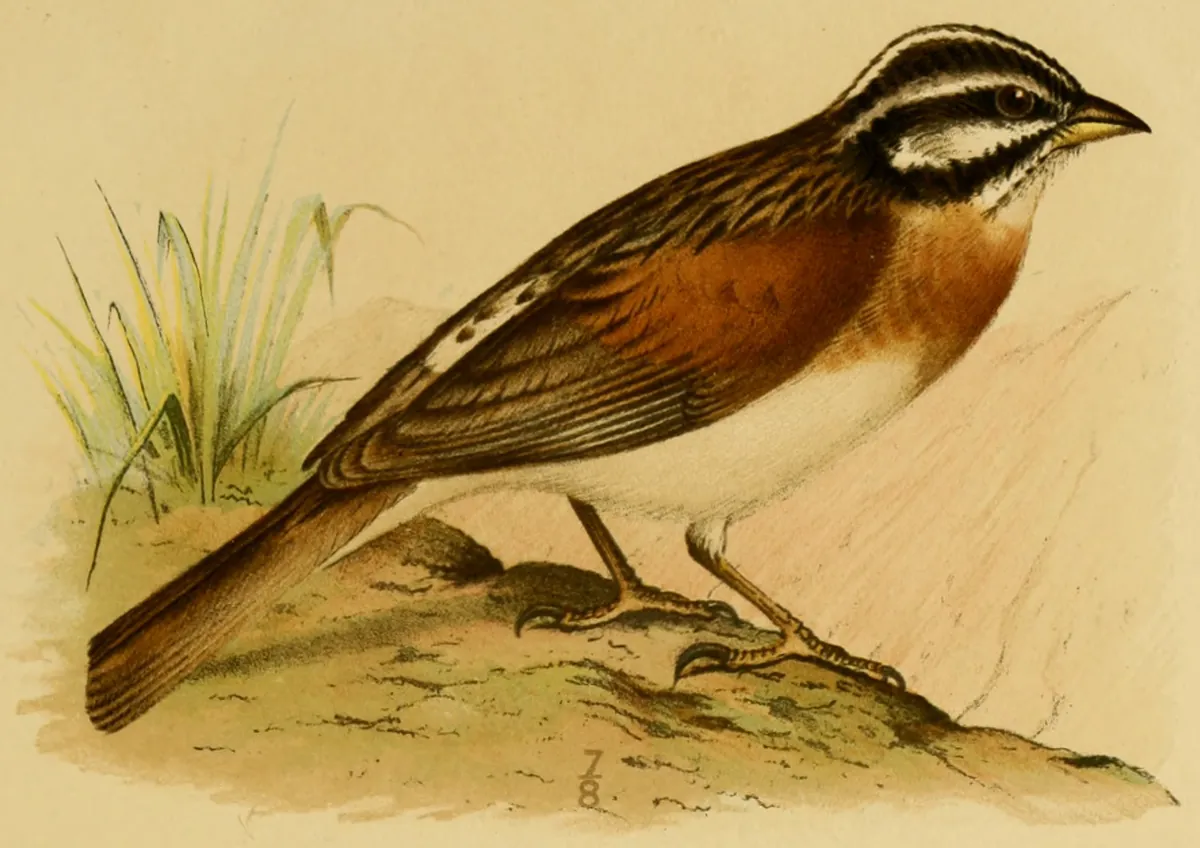
Diksam Plateau is one of the best sites on the island for its endemic birds. See the birds and the birding guide.
Visiting
- Usually day two or day five of an eight-day circuit, often with a highland camp and stargazing.
- Almost always combined with the Wadi Dirhur canyon below and Firmihin beyond.
- The plateau is meaningfully colder after dark than the coast, and windier. A fleece is not optional up here.
There are no bookable tickets for Diksam Plateau, here or anywhere else — Socotra has no independent travel, so every visit happens as part of an operator-led trip with a sponsored permit. Our expedition packages all include it.
Read next
Planning a trip that includes Diksam Plateau? Tell us your dates and we will come back with what is actually available.
Message us on WhatsApp