 Rod Waddington from Kergunyah, Australia · CC BY-SA 2.0
How Booking Socotra Actually Works, and How to Not Get Burned
You cannot book Socotra online. Flight seats go to licensed local operators and the entry permit has to be sponsored by one, so an operator assembles the whole trip. Payment is almost always a bank transfer, usually a deposit up front with the balance in cash on arrival. A bank transfer cannot be charged back, and there is no regulator to fall back on. Get the deposit amount, what it secures and the refund position in writing before you send anything.
Almost every practical question about Socotra has an answer somewhere. This one does not, and it is the question that stops people booking: I have to wire thousands of dollars to someone I found on Instagram, in a country at war, with no way to get it back. How do I know this is real?
It appears in traveller forums over and over. We counted it among the most frequent objections raised about the destination, alongside the fear of being stranded and the suspicion of being overcharged. Nobody selling Socotra addresses it, for the obvious reason that they are the stranger in question.
So here is what the structure actually is, what we found when we looked at twenty-one operators, and what to check.
Why you cannot just book it
Three things lock together.
The permit. Entry requires a Socotra permit, and it is sponsored by a licensed local operator. You cannot apply for it yourself. This single fact makes independent travel impossible and makes an operator relationship compulsory rather than optional.
The flight. Seats are not sold through normal airline distribution. They are released to licensed operators, who allocate them to their clients. This is why you will not find the route on a comparison site, and why "just book the flight and sort the rest out there" does not work.
The season and the rotation. The flight runs roughly weekly in a season that runs October to April. Capacity per rotation is small, and the permit needs around three weeks of lead time.
The consequence is that the trip, the seat and the paperwork arrive as one bundle, assembled by one operator, paid for in advance, before you have met anyone.
What we found looking at twenty-one operators
We compiled the operator landscape from the operators' own websites and public listings. Three patterns stood out, and all three matter to you.
Most publish no payment method at all. The majority of the twenty-one state nothing about how you pay: no terms, no deposit structure, no refund position. You find out after you have started a conversation. One operator does state it explicitly, and asks for an advance deposit by Western Union. One routes bookings through a mainstream booking platform, which is the outlier.
"Local" is a claim, not a verified fact. A large share describe themselves as locally owned, and in most cases there is no way to confirm it from outside. Several resolve to something more complicated on inspection: hybrids with European partners, joint ventures, and in at least one case a confirmed foreign reseller registered in Europe while marketing itself in the language of a local operator. Some self-descriptions contradict themselves on their own websites.
This is not an accusation of dishonesty. Operating a business on Socotra genuinely involves foreign partners, and there are sound reasons for it. But if you are choosing on the basis of "I want to support a local business", the label alone will not tell you.
Two governments have warned about permit fraud on this route. That is worth knowing before someone offers to sell you a permit directly.
The account-name problem
You will transfer money and find the receiving account is in a personal name, or a different company, or a bank in a third country.
Anywhere else this is a textbook red flag. Here it is close to normal. Yemeni banking is severely constrained by the conflict and by sanctions compliance at correspondent banks, so operators route payments through personal accounts, relatives, or intermediaries in the Gulf or Europe. Nearly everyone doing legitimate business does some version of this.
Which is precisely the problem: the signal that would normally protect you has been rendered useless by the environment. You cannot use it, so you have to use other things.
What to actually check
None of these are exotic. They are ordinary due diligence, applied somewhere it is genuinely load-bearing.
Get a human name and use it. Not an inbox, not a WhatsApp number, a person. Ask who your guide will be. Operators with a real operation answer immediately; the answer is their strongest asset.
Find them in third-party reviews with named staff. Reviews that name the guide and describe specific days are hard to fabricate at volume. A wall of five-star reviews with no detail is not evidence of anything.
Ask the January 2026 question. What happened to your clients when the airport closed in January, and who paid for the extra nights? An operator who was running trips then has a real answer. It is the single most revealing question you can ask, because it is specific, recent, and cannot be answered with a brochure line.
Get the terms in writing before you send money. The deposit amount, what it secures, the balance and when it is due, the cancellation position, and what happens if the flight does not operate. If any of that is answered vaguely, that is your answer.
Ask what is included. Confirm explicitly whether the permit fee, the Socotra flight, airport taxes and park or community fees are inside or outside the quoted price. Operators differ, and this is where a cheap quote becomes an expensive one.
Start smaller if you can. Where an operator will accept a modest deposit to secure the seat, with the balance in cash on arrival, your exposure is a fraction of the trip cost. That structure is common and it is worth asking for.
Keep everything. Screenshot the WhatsApp thread, save the emails, keep the transfer receipt. There is no chargeback and no regulator, so your record is the only thing you have.
Paying a deposit safely
Payment usually comes in two parts. You pay a deposit in advance, normally by bank transfer, and it secures your seat on the flight. You often pay the balance in cash, in US dollars, when you arrive. Deposits vary. A deposit that only holds a flight seat is around USD 200. Some operators take the whole trip in advance instead. Cards are not accepted on the island, so any card payment happens before you travel.
The money for the flight may not go to your operator or to the airline. Travellers report paying air-services companies whose names match neither, and some have seen their bank app warn that the account name does not match.
Get the payment details in writing. They should come from the person you have been dealing with, and give the exact name on the account, the bank, and the country the bank is in.
Ask whose account it is. If the name does not match the company, ask why before you pay. Mismatches are common on Socotra, so what you are looking for is a clear reason, in writing.
Check which fees are the airline's. Yemenia's FAQ lists USD 20 to change a booking, USD 100 if you do not cancel at least 72 hours before departure, and USD 100 for a no-show. It does not say whether these apply to the Socotra route. The terms of two operators charge USD 300 for a change or cancellation and attribute it to airline policy. That figure does not appear in Yemenia's published terms.
Deal only with the operator you have agreed the trip with. If anyone else offers to sell you a permit or a flight seat, do not pay them.
Ask whether your money is protected if the business fails. UK and EU package travel rules require this of the businesses they cover. Almost no Socotra operator publishes any financial protection.
What paying by card can and cannot do
A card payment can give you a way to dispute a charge, but the protection is limited. The rules below are the UK ones. If your card was issued elsewhere, ask your card issuer what applies.
- UK Finance states that chargeback is not a legal right. It is a process under the card schemes' own rules, and it can be used for debit and credit card payments.
- The time limit is usually 120 days, counted from the payment or from when the service was due. For a trip paid months ahead, ask your card issuer which date applies.
- Visa lists a service that was not provided, and a seller that has gone out of business, among the reasons for a chargeback.
- Section 75 of the Consumer Credit Act 1974 is a legal right, but only for credit cards. It covers purchases over £100 and up to £30,000 where there is a direct relationship between you, the card issuer and the business you paid. You can claim up to six years later.
- Visa points holiday bookings towards ATOL, but ATOL does not cover a booking made directly with a Yemeni operator.
None of the UK or EU consumer bodies we checked publishes guidance on disputes with a business outside the UK and the EU, so do not rely on a chargeback working against an operator on Socotra.
This is general information, not legal or financial advice. Your card issuer can tell you whether a particular payment could be disputed. How much cash to carry for the balance and the rest of the trip is covered in what Socotra actually costs.
The honest position on recourse
There is almost none.
A bank transfer has no chargeback. There is no travel regulator in Yemen you can escalate to, and no consular assistance, because no Western government maintains a presence there. If a booking goes wrong, you are relying on the operator's reputation and their desire to keep it.
That is not a reason not to go. It is a reason to spend the effort at the front, where it works, rather than assuming a mechanism will catch you later. Most people who book Socotra have an excellent trip with an operator who does exactly what they promised. The point is that you should choose as though there is no safety net, because there is not one.
Where a Western agency fits
Several European agencies sell Socotra and subcontract the ground handling to the same local operators. You pay a premium, and often a substantial one.
What the premium buys is a contract under a legal system you can use, a company you can pursue, and in some jurisdictions statutory package-travel protection including insolvency cover. Whether that is worth several hundred dollars or more is a personal call. If the recourse question is what has been stopping you, it is the honest answer to it.
What we do
We publish our prices, we say what is included and excluded, and we answer in writing before you commit to anything. Enquiries go to a person rather than a form, and we will tell you when something is genuinely unresolved rather than inventing a reassuring answer.
For what a trip actually costs and what shapes the price, see our expedition packages. For the season and the flight rotation that decides your dates, see when to visit. And for the insurance and advisory position, which is the other half of the risk picture, see is Socotra safe.
Chat with a real person — free
Seif and the team reply on WhatsApp — trip questions, custom plans and booking help.
Ask Seif on WhatsAppCommon questions
Why can't I book Socotra online?
Flight seats are released to licensed local operators rather than sold through airline channels, and the entry permit has to be sponsored by one of those operators. So the trip, the seat and the paperwork arrive as a single package that only an operator can assemble. That is the structure, not a marketing choice.
How do I actually pay?
Almost always a bank transfer, usually with a deposit up front and the balance in cash on arrival. Of 21 operators we looked at, most publish no payment method at all, one explicitly asks for an advance deposit by Western Union, and one routes its bookings through a mainstream platform.
Why doesn't the receiving account name match the company?
It often will not, and that alone is not proof of anything. Yemeni banking is heavily constrained, so operators frequently receive through a personal account, a family member, or an intermediary in another country. It is normal here and it would be a red flag almost anywhere else, which is exactly what makes it hard to judge.
How do I know an operator is legitimate?
Look for a named human being who answers, a documented history of trips with named guides in third-party reviews, willingness to answer specific questions in writing, and a clear position on what happens if the flight is cancelled. Vagueness on any of those is the signal.
How much deposit is normal?
It varies widely and several operators publish nothing. Where terms are stated, a deposit that secures the flight seat is common, with the balance paid on the island. Ask for the deposit amount, what it secures, and the refund position in writing before you send it.
What happens to my money if the flight is cancelled?
This is the question to ask, and the answer varies by operator. In January 2026 the airport closed and several hundred visitors were stranded for about a week. Ask directly what happened to that operator's clients, who paid for the extra nights, and what their written policy is.
Is there any consumer protection?
Effectively none of the kind you are used to. There is no chargeback route on a bank transfer, no regulator you can escalate to, and no consular assistance in Yemen. Whatever protection you have comes from choosing carefully at the start.
Should I book through a Western agency instead?
It costs more and buys you a contract under a legal system you can actually use. Several European resellers sell Socotra and subcontract to the same local handlers. Whether the premium is worth it depends on how much the recourse matters to you.
Is it safer to pay a Socotra deposit by card?
It can give you a way to dispute the payment, but a narrow one. In the UK, chargeback is not a legal right: it runs on card-scheme rules, usually within 120 days. Section 75 covers UK credit card purchases over £100 and up to £30,000 where there is a direct relationship between you, the card issuer and the business you paid. No UK or EU consumer body we checked publishes guidance on disputes with businesses outside the UK and EU. A bank transfer has no chargeback.
Keep reading
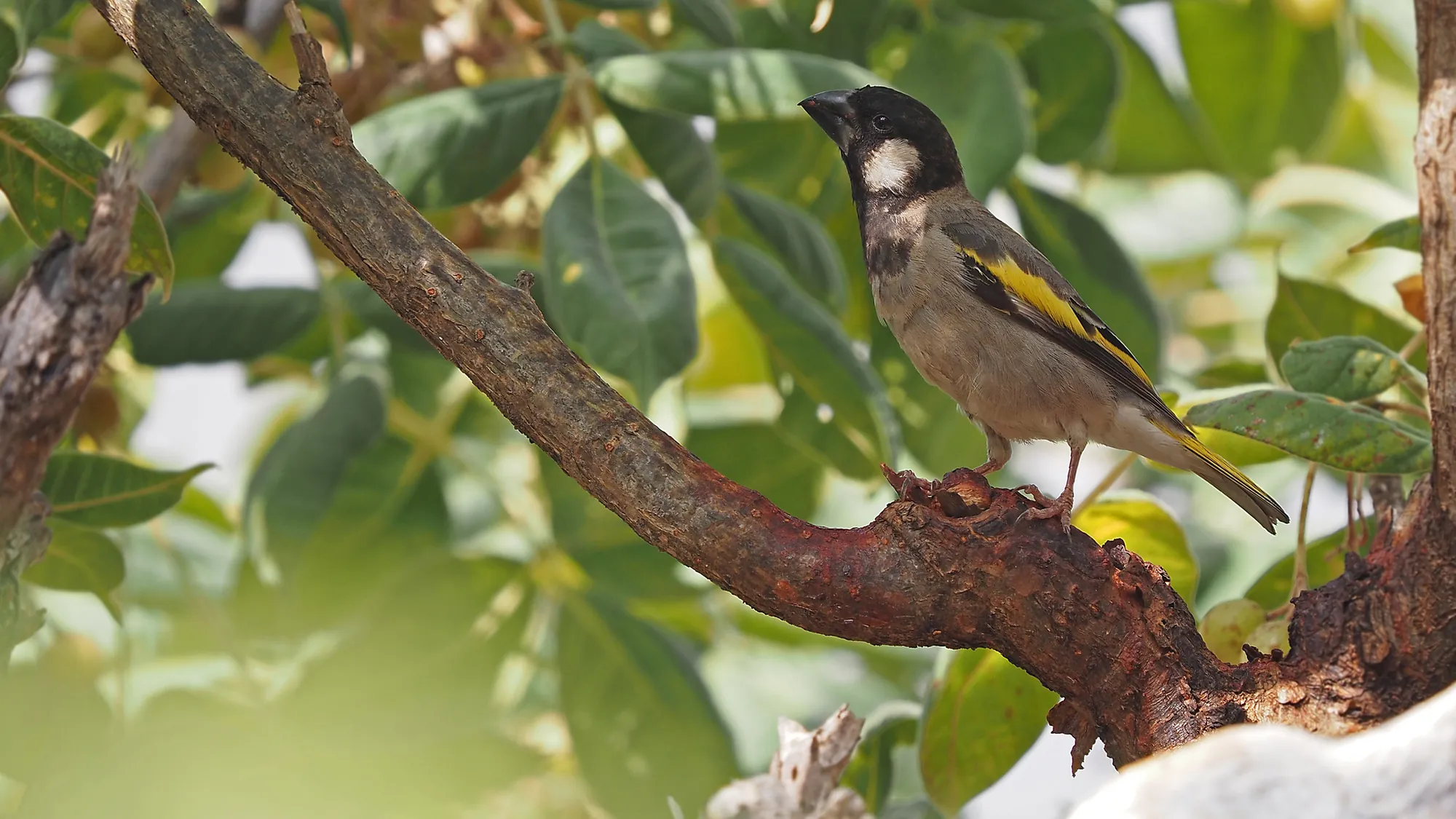
Birding on Socotra: The 11 Endemic Birds and Where to See Them
Eleven bird species live only on the Socotra archipelago. Where to look for them, the one standard trips cannot reach, and how each is doing on the Red List.
By TiS Authors8 min read
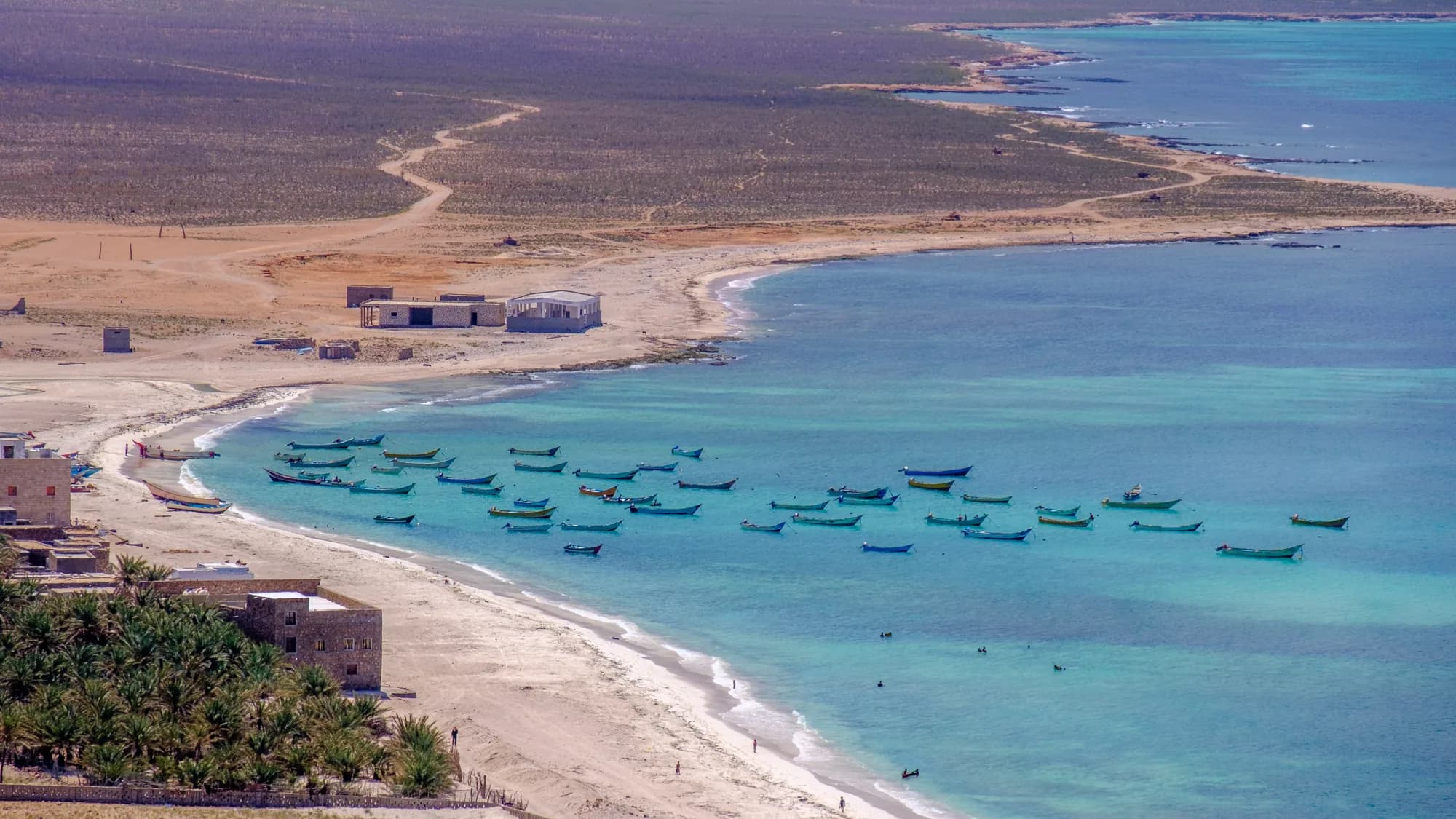
How to Get to Socotra in 2026–27: The Jeddah Flight, and Every Other Route
One direct international flight reaches Socotra, and even its timetable is disputed. The Jeddah flight as filed, what Yemenia has and has not confirmed, what it costs, and what became of the other routes.
By TiS Authors9 min read
Socotra Permit and Entry, 2026–27: It Is Not a Yemen Visa
Every Socotra trip runs on a permit your operator arranges, while governments describe a different document altogether. What the permit is, what it costs, who issues it, and the distinction almost nobody writes down.
By TiS Authors8 min read