Camping on Socotra: What the Camps Are Actually Like
Almost everyone who visits Socotra sleeps in a tent: hotels are almost all in Hadibo, and basing yourself there means drives of around two hours each way to most sites. Operators normally supply tents, mattresses, bedding and all meals. Most publish nothing about facilities; shared toilets and showers are documented at Dihamri, Detwah, Homhil, Amaq and an eco-lodge near Hadibo, so ask about the specific camps on your itinerary.
Camping on Socotra is not the adventurous option. It is the normal one.
This surprises people, because on most islands a tent is a choice made by travellers on a budget. Here the arithmetic is different. Hotel stock sits almost entirely in Hadibo, on the north coast, and the sites worth seeing are scattered across a landscape with two paved roads. Basing yourself in a hotel means driving roughly two hours out and two hours back, every day, on tracks where the going is slow. Camping is what makes the island navigable.
It is also, by most accounts, the better experience. The dark on Socotra is genuinely dark.
The three formats
A moving camp is the standard. Your crew sets up at a different place each night, following the circuit round the island: a beach, a plateau, a lagoon. You are never in one place long, and you see the most.
Fixed camps mean sleeping in two or three established sites and driving out from each. One operator sells an upgraded camp at Firmihin, Arher and Detwah, set up ahead of the group, with stand-up canvas tents, inflatable mattresses, canvas toilet and shower tents and solar power. You pack down less and drive more.
Hotel-based is possible and mostly not recommended. It buys you a private bathroom at the cost of four hours in a vehicle most days.
What is actually provided
For a standard camping trip, expect the operator to supply tents, sleeping mats, bedding, all meals cooked by a crew cook, drinking water, and the 4x4 and driver that carry it. You bring clothes, a torch, a power bank, and personal kit.
That is the norm rather than a guarantee. A small number of cheaper itineraries expect you to bring your own sleeping bag, and the difference is not always obvious from a price. Ask.
The facilities question, answered honestly
This is the thing people actually want to know, and it is the thing the market is least willing to say.
Most Socotra operators publish nothing at all about camp facilities. Where they do, accounts contradict each other. So rather than give you a confident summary that would be partly invented, here is what can be confirmed and what cannot.
Confirmed shared toilet and shower facilities: Dihamri, in the marine protected area on the north coast. Detwah, near Qalansiyah. Homhil, on the plateau. Amaq (Aomak), on the south coast. An eco-lodge near Hadibo, which is a lodge rather than a camp and has shared bathrooms.
Not published by anyone: Arher, Firmihin, Skand and Rosh. That does not mean there are no facilities, only that no source states them. For the Diksam plateau the sources conflict: one lists a toilet and shower, and a traveller review found neither.
The fixed luxury camps at Firmihin, Arher and Detwah advertise canvas toilet tents, open-sky or canvas showers, a solar generator with fuel backup, and dining set up for eight to ten people. Published as a retail supplement: around USD 1,150 single occupancy and USD 1,850 double on top of the trip price. Both the facilities and the figure come from a single operator, so treat them as indicative until yours confirms in writing.
On connectivity, be sceptical. One operator advertises Starlink at these camps. Three others selling materially similar luxury camps in the same locations describe solar lighting, candles, oil lamps and fires — and one states explicitly that this is all there is. No review, photograph or independent report confirms it as a standing facility at any camp. What is better attested is that satellite terminals carried by operators do work on the island in windows — so it is a service some crews can provide, not something a camp has.
On mobile: the network travellers report actually working is Etisalat, which is the Emirati carrier rather than a Yemeni one, and even that is patchy away from the towns. Plan for no connectivity, ask your operator specifically whether a terminal travels with the group, and treat anything that works as a bonus.
Where a camp has no facilities, the arrangement is a spade and a walk. That is worth knowing before you arrive rather than after.
What to ask before you book
Four questions, and they are worth asking in writing:
- Which specific camps am I sleeping at, by name, on which nights? Itineraries often name regions rather than sites.
- At each of those, is there a toilet and a shower? Not "do the camps have facilities" in general.
- What is supplied and what do I bring? Specifically the sleeping bag.
- Is there any charging? If you are shooting, the answer shapes how many batteries you carry.
An operator who answers these clearly is telling you something useful about how they run trips.
Practical kit
A head torch matters more than anything else on this list. There is no lighting anywhere, the ground is uneven, and you will want your hands.
A large power bank, larger than feels sensible. Charging is scarce and the island runs on cash and cameras.
Wet wipes and a quick-dry towel, which between them solve most of the shower problem.
A fleece and a windproof layer. The coast is warm at night. The plateaus, particularly around Firmihin and Diksam, are not, and the wind on the high ground is constant.
Sandals plus proper shoes. You will be in and out of water and then on sharp limestone within the same day.
Cash in US dollars, in good condition. There are no working ATMs on the island and no card acceptance anywhere, and worn or torn notes are refused. This catches people out more than camping does.
The nights
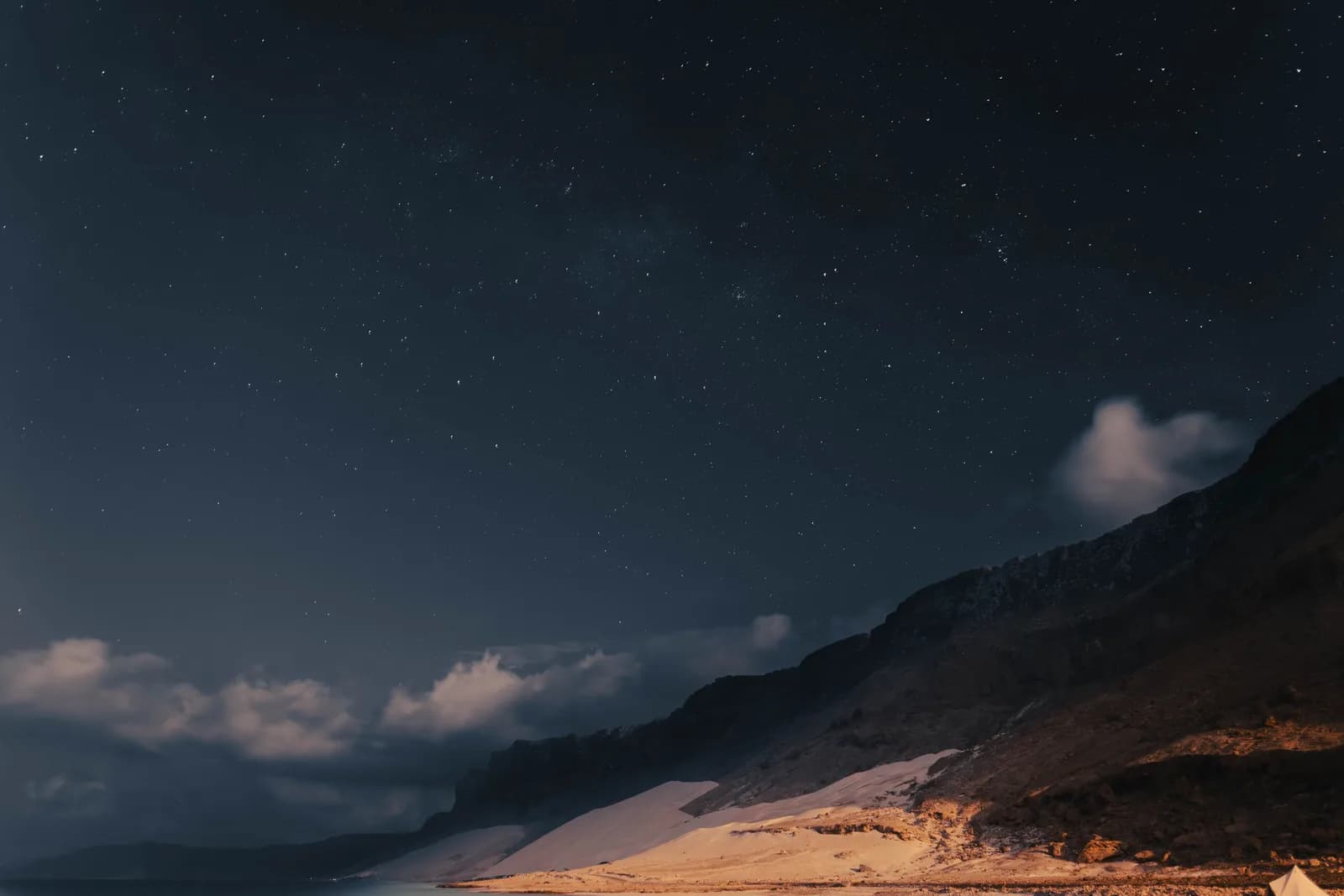
The reason people come back to this is the sky. Socotra has almost no light pollution and very little humidity in season, and the camps on the south coast in particular have a reputation for it. If you have any interest in photographing stars, this is the place to have brought the right lens.
At Arher you sleep between tall white dunes and the sea, with a freshwater stream running out at their base. At Firmihin the dragon's blood trees stand against the Milky Way, which is the photograph that sells the island. At Detwah you wake up on white sand beside a shallow turquoise lagoon.
None of those camps have a shower we can confirm. Both facts are true at once, and you should know both.
Season and comfort
Camping is only relevant from October to April, because the island is effectively closed the rest of the year: the southwest monsoon brings winds strong enough to make tents impossible and flights unreliable.
Within the season, the shoulder months are cooler at night and the midwinter period is the most comfortable for sleeping. Late in the season the days get hot enough that shade during the middle of the day becomes a real consideration.
More on the timing in when to visit, and the camps themselves sit inside the standard routes described under camping.
Who the camps are run by
The camp is not a business you book. It is your operator's crew, and on Socotra that crew is usually three or four people: a driver who is also the fixer, a guide, and a cook. On trekking itineraries add a cameleer.
This matters more than it sounds. The quality of a Socotra trip is almost entirely the quality of those three people, because there is no infrastructure between you and them. There is no reception desk to complain to, no second restaurant, no alternative vehicle. Reviews that name individual guides are worth more here than reviews that rate a company.
It also shapes the money. Tips go directly to that crew and are a meaningful part of their income. Published guidance ranges from around fifty to a hundred dollars for the whole trip to roughly ten per cent of the package price, which is a wide enough spread that you should ask your operator what is customary for them rather than working from a number you read online.
Travelling as a woman
For a woman travelling with an all-male crew, the questions that matter are practical: where everyone sleeps, how washing works and who you can talk to. The answers vary by operator, so ask before you book.
Tents. Operators normally provide the tent, mattress and bedding. At least one operator uses two-person tents on group trips, and a traveller has reported a tent too small to sit up in. At the top of the range, one operator sells stand-up canvas tents on private tours, with canvas toilet and shower tents, for a supplement of around USD 1,150 for one person.
Where the crew sleeps. Operators do not publish crew sleeping arrangements. One traveller's review describes a crew who had no tent and slept outside or in the car.
Washing and toilets. Shared toilets and showers are confirmed at Dihamri, Detwah, Homhil and Amaq. Most itineraries include a shower at least every other day, but one operator warns that a trip can go up to three days without toilets or showers. Some operators bring a portable toilet tent with a shower for groups. A review describes promised portable toilets that were not there, so get this in writing. A hotel-based itinerary gives you a private bathroom each night, at the cost of long daily drives.
The crew. Travellers report that most drivers, cooks and cameleers speak little or no English. Look for reviews by women that name your guide.
Staying in touch. Most camps have no phone signal. Some crews carry a satellite terminal. Leave your itinerary, with camp names and dates, with someone at home.
Dress and conduct. Socotra is a conservative Muslim society, so dress modestly. Do not photograph military sites or the airport, and ask before you photograph people.
Questions to ask before you book
- Will I have a tent to myself, and does that cost extra?
- How big is the tent?
- Where does the crew sleep?
- Which nights have a toilet and a shower, and does a toilet tent travel with the group?
- Who will my guide be, and who on the crew speaks English?
- Will other women be on the trip? Can you arrange a woman guide, and have you done so before?
- Does a satellite terminal travel with the group, and how do I contact your office during the trip?
- What should I wear at the swimming spots?
For the travel advisories and insurance, see is Socotra safe.
What you eat
The cook on your crew makes three meals a day, and they are included in the price. Some operators advertise gourmet meals. Travellers more often describe the food as fish and rice, and operators' itineraries list much the same: fish, chicken, rice, flatbread, salad or cooked vegetables, soup and fruit. Fish is the local catch. Rice, flour and tea are imported staples, brought in by sea through the island's only seaport.
When travellers praise the food, they name the seafood: crab, lobster, oysters and squid. They mention the tea too: sweet tea, karak tea and tea from a thermos.
Menus vary with the operator and the price. At the top end, one operator buys lobster and octopus directly from local fishermen. A specialist fishing camp lists pasta, bread baked daily, beans, eggs, lamb, honey and lobster in season. One traveller's advice is to bring any food you cannot do without for a week.
Most established operators cook on gas rather than on collected firewood, which is scarce on the island.
Diets. Vegetarian meals are normally available, but vegetarian and vegan diets both need arranging in advance. Tell your operator when you book. If you have an allergy or another dietary need, give the details in writing and ask what the cook can do.
Water. Drinking water is normally included in the price, and bottled water is sold in Hadibo and Qalansiyah. Bring a refillable bottle to cut down on plastic. Waste handling on the island is limited, and the responsible travel guide covers filter bottles and what happens to rubbish.
In Hadibo. The town has small restaurants, cafés, street food, general stores and a fish market in the mornings, and you can buy camping provisions there. A street meal costs around USD 2 to 5 and a local restaurant meal around USD 4 to 8. What Socotra actually costs covers cash and prices.
Seafood and reserves. A 2014/15 IUCN mission recorded tour providers fishing inside marine protected areas to feed tourists. If your crew offers to catch dinner, ask where. Dihamri and Rosh are reserves.
Alcohol. It is not available on the island. The rules on bringing it in are unconfirmed, so do not pack any without written confirmation from your operator.
Health. On 26 August 2026 the US CDC issued a notice about paratyphoid fever in travellers returning from Yemen. Prevention depends on safe food and water, and the typhoid vaccine does not protect against it. Vaccines and other health advice are covered in insurance and health.
A note on the conservation side
Socotra is a UNESCO World Heritage site and the camping infrastructure is genuinely light, which is a large part of why the island still looks the way it does. It also means the impact of each visitor is proportionally visible.
Take rubbish off the island rather than leaving it with the camp, keep to existing tracks, and do not take plant material of any kind. The endemic flora is the reason the archipelago is protected, and some of the species you will walk past exist in very small numbers.
Chat with a real person — free
Seif and the team reply on WhatsApp — trip questions, custom plans and booking help.
Ask Seif on WhatsAppCommon questions
Do I have to camp on Socotra?
Effectively, yes, if you want to see the island. There are hotels in Hadibo and a hotel-based itinerary is possible, but it forces drives of around two hours each way to reach most sites and back every day. Almost every operator camps.
Do the camps have toilets and showers?
Some do and some do not, and most publish nothing either way. We can confirm shared facilities at Dihamri, Detwah, Homhil and Adeeb's eco-lodge near Hadibo. For everywhere else, ask your operator about the specific camps on your itinerary rather than accepting a general answer.
Do I need to bring a tent and sleeping bag?
Usually not. Operators normally supply tents, mattresses, bedding and all cooking. Confirm before you pack, because what is included varies and a few budget itineraries expect you to bring a sleeping bag.
Is there electricity at the camps?
Assume not. A few camps offer battery charging and the fixed luxury camps run solar. Bring a large power bank, and more capacity than you think you need if you are shooting photographs.
Is there phone signal or internet?
Assume not. There is patchy mobile signal around Hadibo and Qalansiyah and effectively nothing at the camps. One operator advertises Starlink at its three fixed luxury camps, but three competitors running comparable camps in the same places describe solar light, candles and oil lamps only — one explicitly saying that is all there is — and no independent report confirms it working. Tell people at home you will be offline for the week.
What is the toilet situation really?
At camps with facilities, a shared block, often Arabic-style. At camps without, it is a spade and distance from the site. This is the single most common thing travellers wish they had known, which is why it is stated plainly here.
Is camping safe for solo women?
Most women who have written about camping trips on Socotra describe calm trips and respectful crews, but accounts vary with the operator and the guide. No operator publishes a woman guide, a women-only departure or a written policy for solo women, so ask about the crew, your tent and the washing arrangements before you book.
How cold does it get at night?
The coast stays warm. The interior plateaus at altitude are meaningfully cooler after dark and can be windy, so a fleece and a windproof layer matter even in a season most people picture as hot.
What is the food like on a Socotra camping trip?
Travellers often describe it as fish and rice. Operators list fish, chicken, rice, flatbread, salad or cooked vegetables, soup and fruit, cooked by the crew three times a day and included in the price. Travellers who praise the food name the seafood, such as crab, lobster, oysters and squid. Vegetarian meals are normally available, but vegetarian and vegan diets both need arranging in advance. Drinking water is normally included.
Keep reading
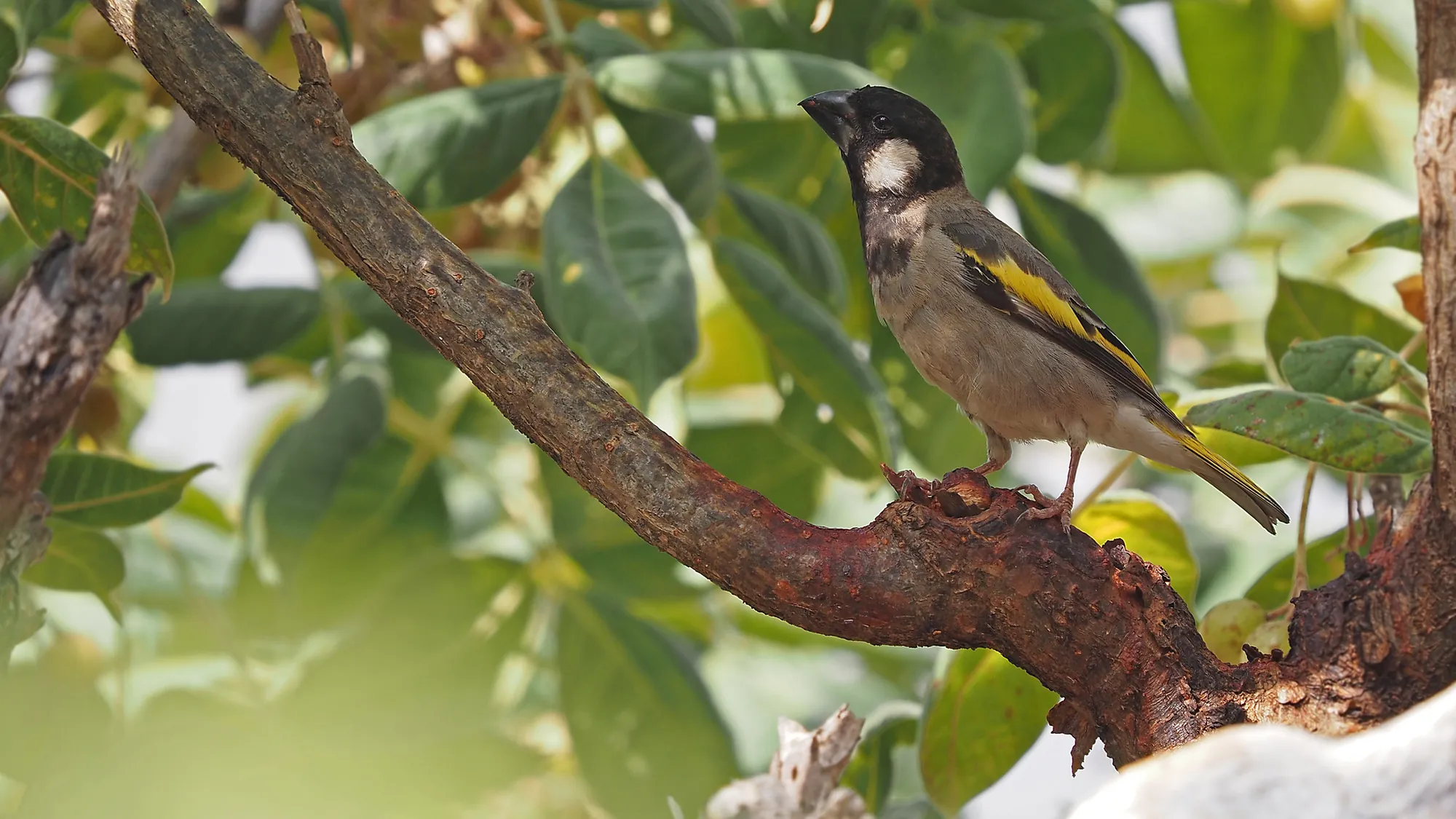
Birding on Socotra: The 11 Endemic Birds and Where to See Them
Eleven bird species live only on the Socotra archipelago. Where to look for them, the one standard trips cannot reach, and how each is doing on the Red List.
By TiS Authors8 min read
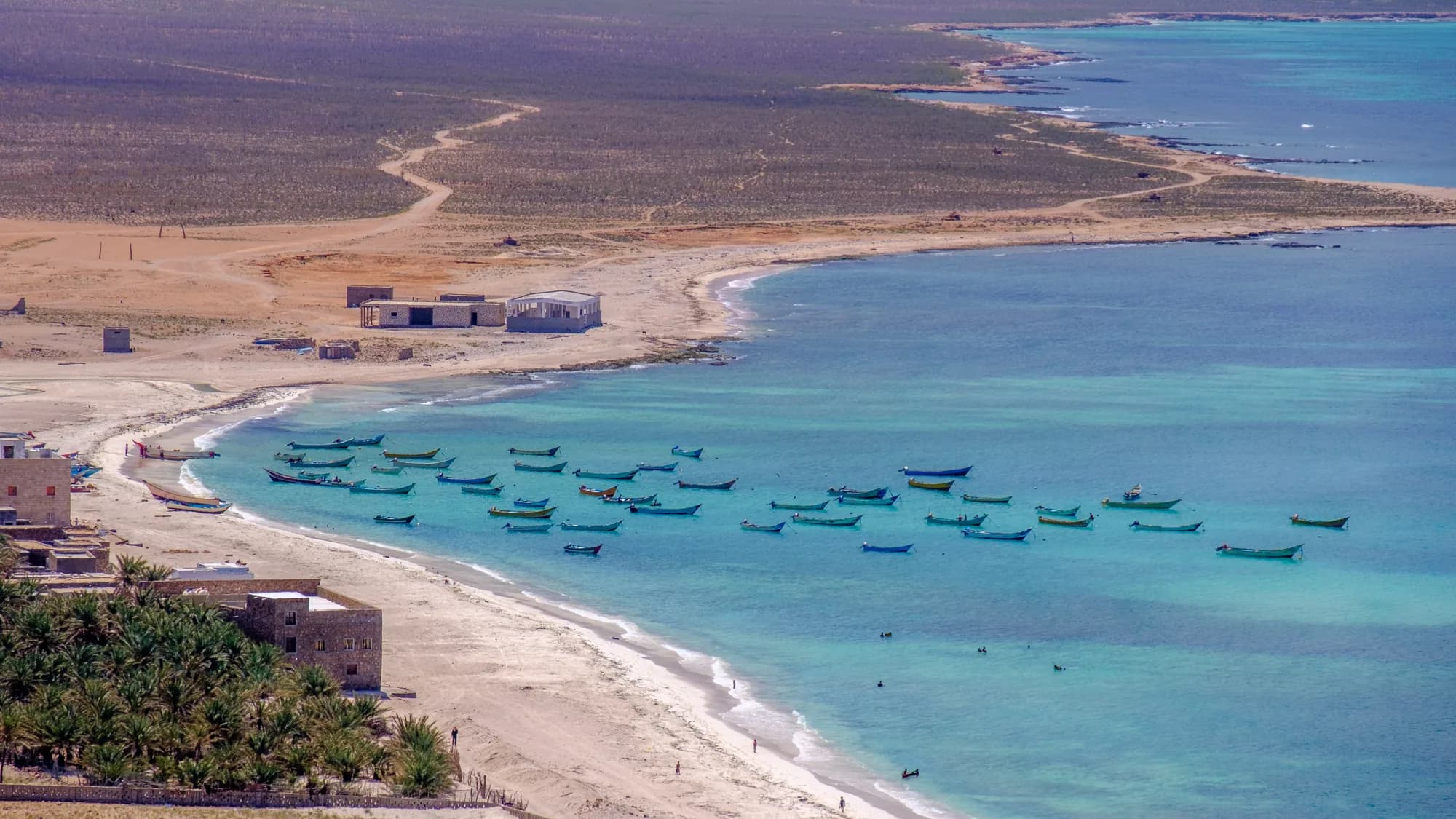
How to Get to Socotra in 2026–27: The Jeddah Flight, and Every Other Route
One direct international flight reaches Socotra, and even its timetable is disputed. The Jeddah flight as filed, what Yemenia has and has not confirmed, what it costs, and what became of the other routes.
By TiS Authors9 min read
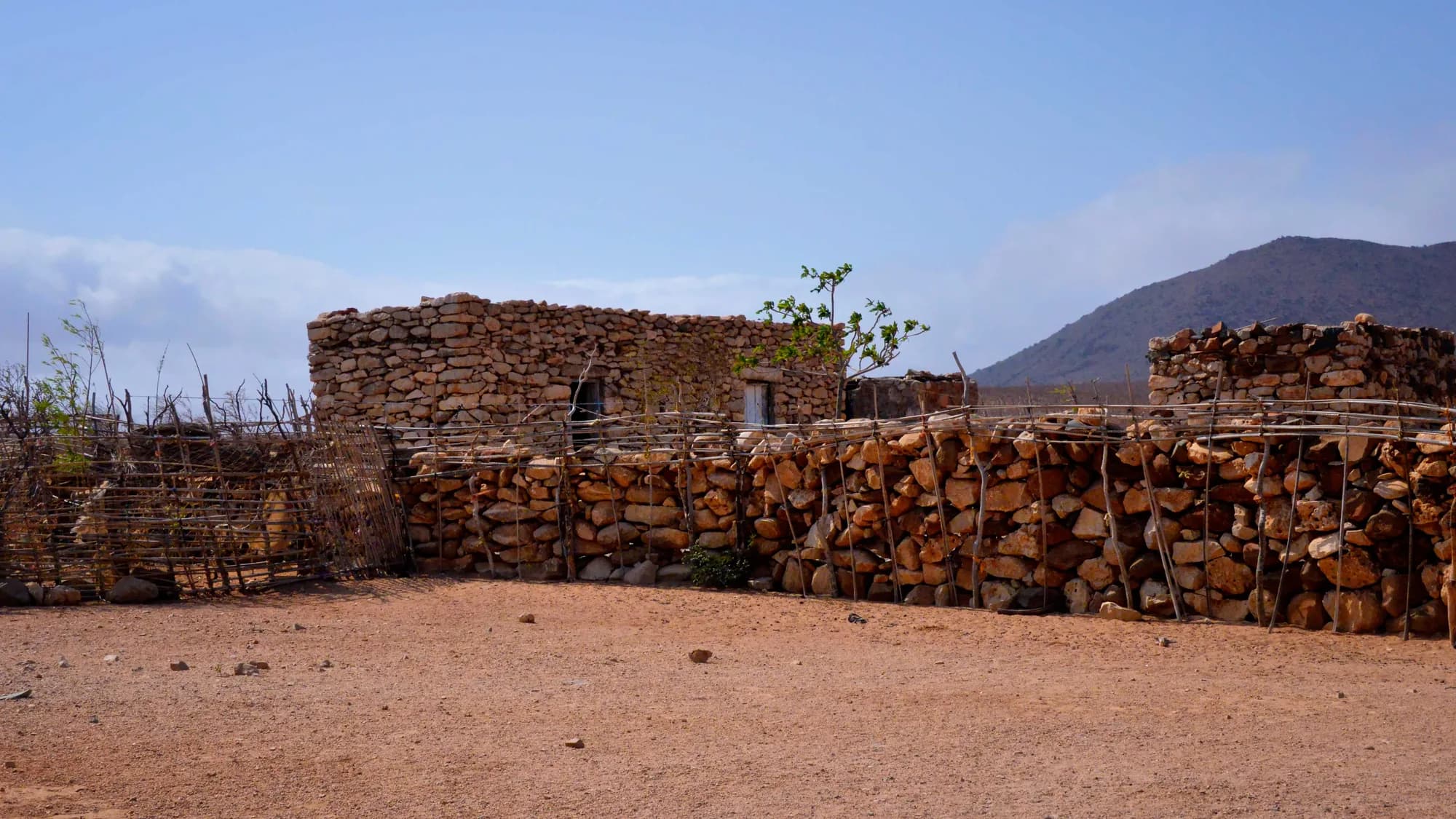
Socotra Permit and Entry, 2026–27: It Is Not a Yemen Visa
Every Socotra trip runs on a permit your operator arranges, while governments describe a different document altogether. What the permit is, what it costs, who issues it, and the distinction almost nobody writes down.
By TiS Authors8 min read