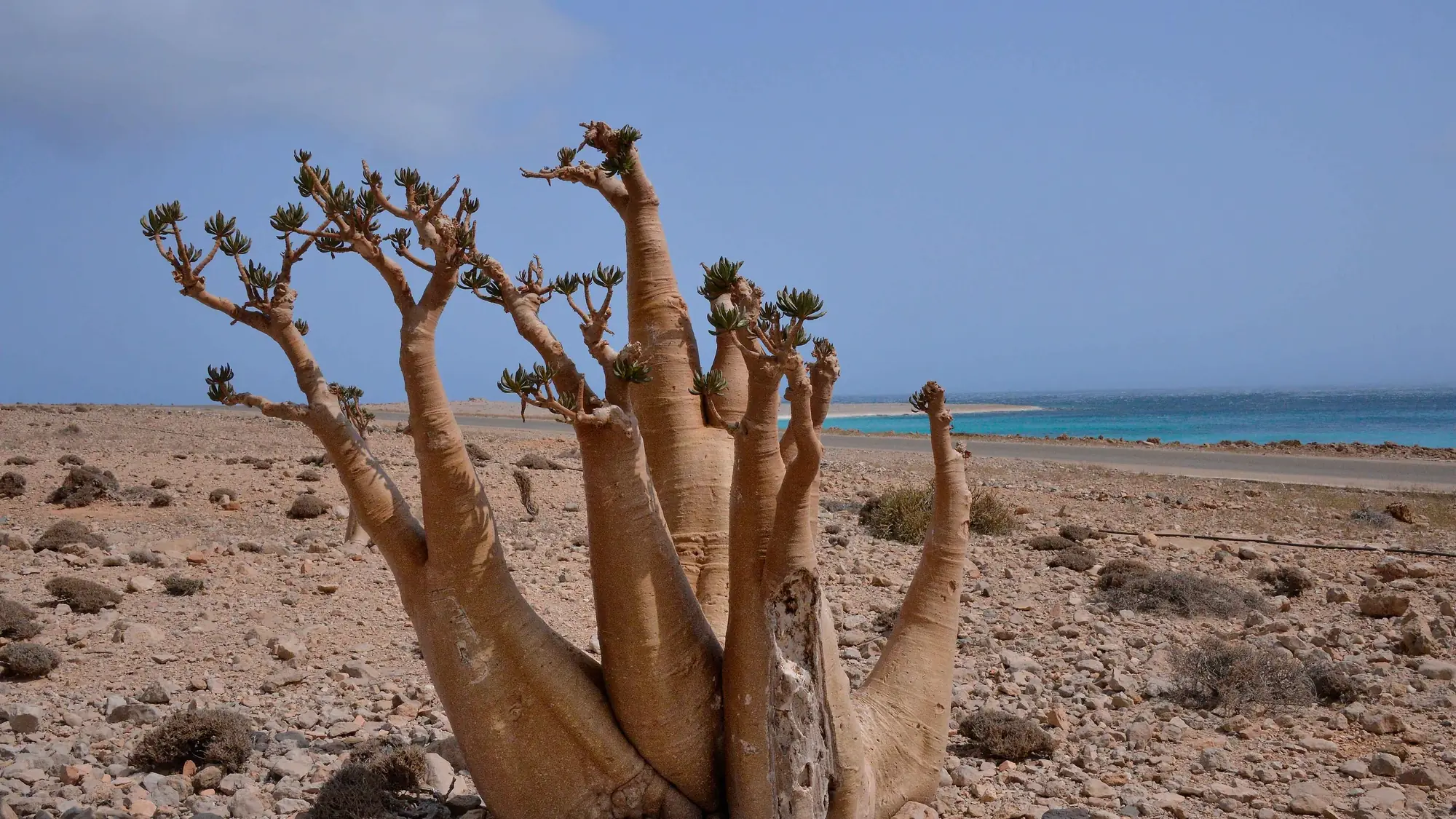
 Rod Waddington · CC BY-SA 2.0
Travel Insurance and Health for Socotra: What Is Actually Covered
Mainstream travel insurance often will not cover Socotra. Policies can exclude Yemen by name, void cover where your government advises against travel, or exclude losses connected to conflicts that began before your trip, and at least one insurer widely recommended for Socotra lists Yemen as never covered. Read the territorial exclusions clause yourself; some specialist brokers will consider Yemen case by case. No medical evacuation from Socotra is documented, so plan as if none is available.
Travel insurance is the part of a Socotra trip that operators call mandatory and nobody explains. Across the entire competitor field, five pages address it and one of them is from 2021. There are forum threads on it going back more than a decade, one with no replies at all, and one ending with a traveller giving up and going uninsured.
So we read the policy documents instead of the marketing pages. What follows is what could be verified, and, just as importantly, what could not.
The finding that matters most
At least one insurer widely recommended for Socotra excludes Yemen by name in its own policy wording. Not by implication, not through a general advisory clause: Yemen appears in a list of countries where, in the policy's words, no trip is covered under any circumstances.
We are not going to name the operator who recommends it, because the point is not to score a hit on a competitor. The point is the instruction it produces:
Open the policy document, find the territorial exclusions clause, and read the country list yourself. Do this even when a tour operator has recommended the policy.
That is thirty seconds of work and it is the single most valuable thing on this page.
How policies actually exclude Socotra
There are three mechanisms, and only the first is obvious.
Named exclusion. Yemen appears in a list of never-covered countries. Unambiguous.
The advisory trigger. The policy voids cover for travel to anywhere your government, or a named government, advises against visiting. Every major government currently advises against all travel to Yemen, and several name Socotra explicitly. This clause catches Socotra even when the policy never mentions Yemen.
The war clause, which is the one people miss. A common form excludes loss connected to war, invasion, hostilities, civil war or insurrection where those circumstances commenced before the period of travel began. Yemen's conflict predates every traveller's booking. Read literally, that wording can exclude a claim arising from the very thing that makes the destination unusual, in a policy that appears to cover you.
One air-medical membership we read carries exactly that clause, and separately provides that where the US State Department advises against all travel, members receive security advice rather than transport, and extra expenses are not covered.
Who will actually consider it
Two specialist brokers state a position in writing.
High Risk Voyager, an FCA-regulated MGA, says Yemen policies are assessed case by case, and its Yemen page names Socotra directly. Cover is quoted to £1,000,000 for medical and the same for evacuation and repatriation. The catch is stated in the same breath: for leisure trips no war cover is provided. So the purchasable policy may exclude the one risk that characterises the destination.
Bellwood Prestbury, a Lloyd's high-risk broker, says medical evacuation, life and disability cover for Yemen can be arranged with war and terrorism risks included, and that arranging direct through Lloyd's may be possible. No underwriter is named publicly.
For several large, familiar names, the honest answer is that we could not establish a position at all. The current wordings were behind blocked or broken links. Absence of an exclusion is not cover, and we are not going to imply otherwise.
What the governments say, and why an underwriter cares
An underwriter does not read our copy. It reads the advisory. Those advisories do not agree, and the differences are useful.
Australia is the only one that states the insurance consequence outright, warning that most Australian policies will not cover travel to Yemen including the island of Socotra, and that a specialised high-risk policy is needed. That is effectively a pre-written declinature.
Germany documents a concrete stranding, noting flights are frequently cancelled or diverted at short notice and that leaving the island was impossible for days in January 2026. That is a precedent an insurer can price against.
Canada is the only advisory that describes Socotra's risk as different in kind from the mainland's, pointing to separatist administration since 2020 and to maritime risk in the surrounding waters, rather than to the civil war. If a case is ever made to a specialist underwriter for treating the island separately, that is the document to build it on.
The safety guide goes through the advisories themselves, including the nationality consequences.
Medical evacuation: the honest position
Socotra's runway is about 3,300 metres of asphalt. Length is not the constraint; it would take a wide-body, let alone an air-ambulance jet.
Everything after that is unknown. Night-landing capability: not published. Jet fuel availability: behind a paid aviation database. A named air-ambulance operator publishing a Yemen position: none found. An indicative cost: no figure exists in any currency. The receiving hospital: not established. The nearest recompression chamber: not identified for Socotra as a referral point. Customs availability at the airport is flagged negative on the trip-support database. And who authorises a landing became genuinely unclear after control of the airport changed hands in January 2026.
We found no record of a medical evacuation from Socotra ever having taken place. The one documented evacuation is the January 2026 airlift of stranded tourists, which was a logistics and security operation with no medical casualties reported.
Stated plainly: the runway can take the aircraft, nobody has said they would fly it, and it does not appear to have happened. Travel on the basis that evacuation is not a plan.
The hospital, and a trap
Sheikh Khalifa Bin Zayed Hospital in Hadibo stopped and restarted under a different funder during 2026. The sequence is documented, almost entirely in Arabic-language local reporting, and is not in any English-language travel source we can find.
Around 15 January 2026 the authorities then managing it issued a notice ordering all medical services stopped and all staff withdrawn. On 3 February 2026 a Saudi reconstruction programme announced it would operate the hospital and cover its running costs, specifically to reduce transfers off the island. On 14 May 2026 the governor toured a working hospital with its director and thanked the Saudi programme for continuing support. It was still open on 7 September 2026, with a named director — and with the governor publicly flagging unstable electricity supply as a threat to continuity of care.
So the hospital closed, was picked up roughly three weeks later by a different state, and is running today on someone else's budget.
The trap: a 2021 article describing the hospital's CT scanner, dialysis, intensive care and 24-hour emergency department still reads as current and is easy to find. It is four and a half years old and predates all of the above. What the hospital can treat today is not published anywhere. Every service that 2021 article names — the scanner, dialysis, intensive care, the 24-hour emergency department — was among those reported suspended in January 2026, and not one has been confirmed as running again since. Bed count, blood bank and oxygen supply are unpublished at every date, including in the announcements celebrating the handover. The 2026 status of the rural health units is equally blank.
The hospital being open is not the same as the hospital being capable, and right now the second question has no public answer at all.
Health, before you go
Malaria is where the official health advice genuinely disagrees, and almost nobody prints that. The UK's travel health service, NaTHNaC, rates Socotra itself as very low risk and advises bite avoidance rather than tablets. Germany's foreign office describes a year-round high risk that includes the island. The US CDC does not mention Socotra by name, but its rule places everywhere in Yemen below 2,500 metres — which is all of Socotra — inside the transmission zone, and it recommends preventive medication. Take all three to a travel doctor well before you go, because if prophylaxis turns out to be right for you, the regimes start before departure.
Germany's advisory also flags dengue from day-biting mosquitoes, endemic cholera, MERS, leishmaniasis, Rift Valley fever, filariasis, and schistosomiasis from freshwater contact.
That last one deserves naming, because Socotra itineraries are full of freshwater swimming: the pool at Homhil, the canyon pools, the wadis. The advisory is country-level and we could not establish whether schistosomiasis occurs on Socotra specifically. We are flagging it rather than staying quiet about it because it is inconvenient.
What is not in dispute: where malaria occurs in Yemen it is mostly P. falciparum, the most dangerous form, and it is resistant to chloroquine. And in June 2026 the CDC issued a notice about increased malaria cases in Yemen, including in areas previously considered low risk — a notice about the country, not a finding about Socotra.
What to do with all this
Buy from a broker that will put Yemen and Socotra in writing, and read the territorial exclusions and the war clause before you pay. Assume evacuation is not available. See a travel doctor early about malaria. Carry a decent first-aid kit and any prescription you rely on, because pharmacy supply on the island is not something we can vouch for.
And treat any page that tells you Socotra is straightforward to insure as a page that has not read the policy. Ours has, and the answer is complicated.
For how the trip itself is arranged and paid for, see how booking Socotra works. For conditions by month, see when to visit.
Chat with a real person — free
Seif and the team reply on WhatsApp — trip questions, custom plans and booking help.
Ask Seif on WhatsAppCommon questions
Can I get travel insurance for Socotra?
Some brokers will consider it. High Risk Voyager, an FCA-regulated MGA, states that Yemen policies are assessed case by case and names Socotra on its own Yemen page. Bellwood Prestbury, a Lloyd's high-risk broker, says cover including war and terrorism risks can be arranged. Mainstream travel policies are a different matter, and several will not cover you at all.
Does standard travel insurance cover Socotra?
Often not, and you must check the wording rather than the marketing. Australia's government advisory states plainly that most Australian policies will not cover travel to Yemen including the island of Socotra, and that a specialised high-risk policy is required. Many policies also void automatically when your own government advises against all travel, which every major government currently does.
Is there a policy that specifically excludes Yemen?
Yes. At least one widely recommended insurer lists Yemen by name in the territorial exclusions of its own policy document, meaning no trip there is covered under any circumstances. Read the territorial exclusions clause yourself before buying, whoever recommended the policy to you.
What does a war exclusion mean for Socotra?
More than travellers expect. A common clause excludes loss connected to war or hostilities where those circumstances began before your trip started. Yemen's conflict predates every visitor's booking, so that wording can exclude a claim without the word Yemen appearing anywhere in the policy. One evacuation membership we read works exactly this way.
Is medical evacuation available from Socotra?
No pathway is established. The runway is long enough for an air ambulance at roughly 3,300 metres, but no operator publishes a position on flying there, no cost exists in any currency, no receiving hospital is identified, and we found no record of a medical evacuation from Socotra ever taking place. Plan on the basis that one is not available.
Is there a hospital on Socotra?
Yes, in Hadibo. Its funding changed hands in 2026: the previous operator ordered all medical services stopped and staff withdrawn in mid-January, and a Saudi programme announced in early February that it would run the hospital and cover its costs. The governor toured a working hospital in May. What it can currently treat is not published anywhere.
Do I need malaria precautions?
The official advice disagrees. The UK's NaTHNaC rates Socotra very low risk and recommends bite avoidance rather than tablets; Germany's foreign office describes a year-round high risk that includes the island; the US CDC places everywhere in Yemen below 2,500 metres, which covers all of Socotra, in its transmission zone and recommends prophylaxis. Take all three to a travel doctor well before travelling. Most pages about Socotra either omit malaria or wave it away.
What else should I raise with a travel doctor?
The same advisory flags dengue from day-biting mosquitoes, endemic cholera, MERS, leishmaniasis, Rift Valley fever, filariasis, and schistosomiasis from freshwater contact. That last one is worth naming because Socotra itineraries involve swimming in wadi pools. The advisory is country-level and we could not establish whether schistosomiasis is present on the island specifically.
Keep reading
Socotra Permit and Entry, 2026–27: It Is Not a Yemen Visa
Every Socotra trip runs on a permit your operator arranges, while governments describe a different document altogether. What the permit is, what it costs, who issues it, and the distinction almost nobody writes down.
By TiS Authors8 min read
When to Visit Socotra: The Season, Month by Month
Socotra closes for a third of the year. When the season opens and shuts, which months suit what, and why the flight schedule matters more than the weather.
By TiS Authors8 min read

Is Socotra Safe in 2026? The Honest Answer, With Sources
Socotra is part of Yemen, and every Western government advises against travelling there. What that actually means, what the real risks are, and the two consequences almost nobody tells you about.
By TiS Authors10 min read