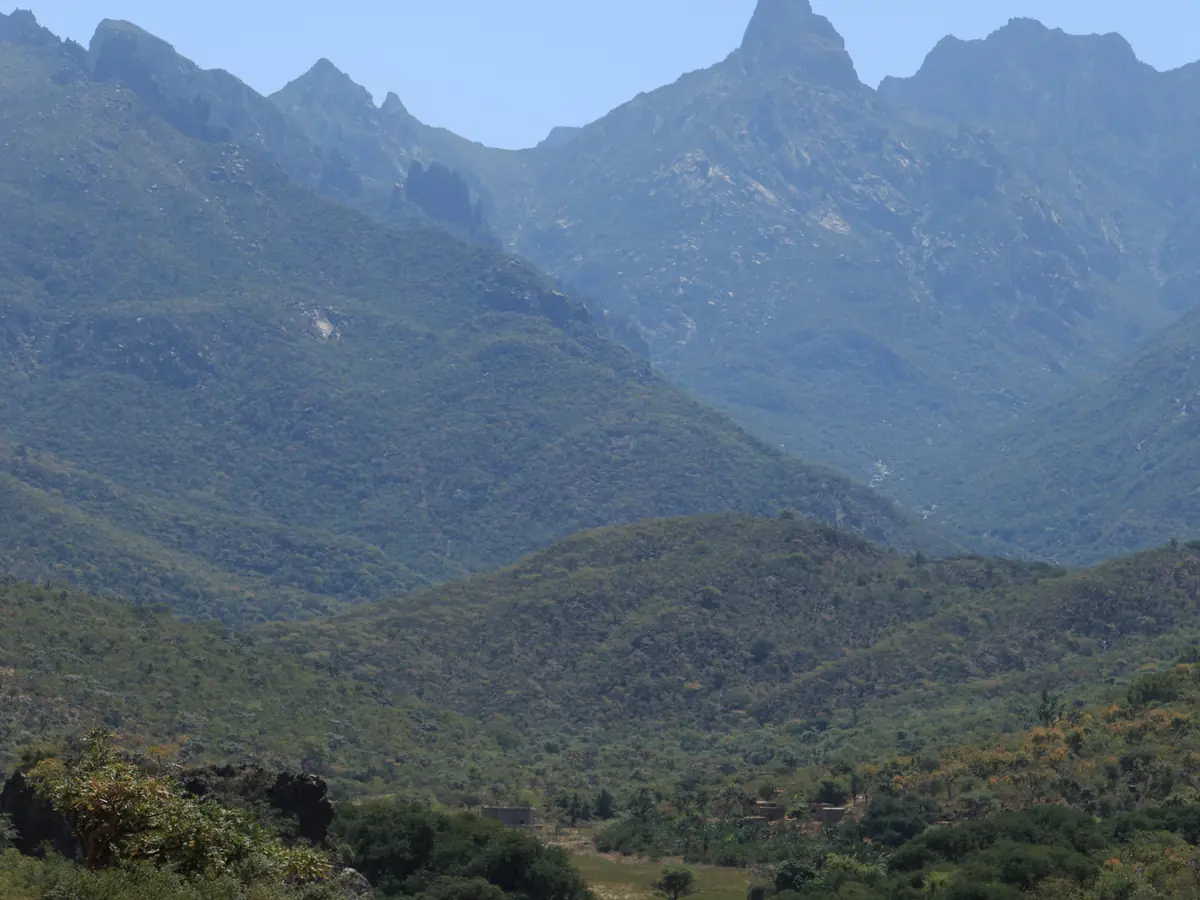
Wadi Ayhaft is a canyon valley south of Hadibo that drains the central Haghier mountains. It has freshwater pools, tamarisk and cucumber trees, and operators describe it as good for endemic birds and for spotting chameleons at night. It is the usual easy walk on the first or last day of an eight-day trip, and its pools are fullest early in the season.
Wadi Ayhaft, also written Ayheft or Ayaft, is a canyon valley south of Hadibo that drains the central Haghier mountains. Freshwater pools lie along its floor among tamarisk and cucumber trees.
Many trips go there straight from the airport on the first day. Others keep it for the last day, before the flight out.
Water from the Haghier
The Haghier mountains, a massif of granite and metamorphic rock, are Socotra's watershed. Their peaks receive roughly 300 mm more rain a year than the lower ground, and the island's highest inland rainfall, about 800 mm a year, is a mountain figure rather than a coastal one. Wadi Ayhaft is one of the valleys that drain them.
The pools change through the season. They are reliably full early on and drop as the months pass, and by the end of the season some are shallow standing water. The waterfall is a feature in November and often only a damp rock face by April. If swimming in a canyon matters to you, travel in the first half of the season.
The cucumber tree
Cucumber trees grow in the valley. Dendrosicyos socotranus is endemic to Socotra and is the only member of the cucumber family that grows into a tree. Live Science names it, with the dragon's blood tree and the bottle tree, as one of the archipelago's signature endemics. It lives mainly in shrubland with succulents and in wadis. A survey found 163 live trees at 24 sites across 96 km² and estimated that more than 6,400 grow on the island. Young trees were regenerating naturally at 77 per cent of the sites where adult trees grow.
Birds in the valley
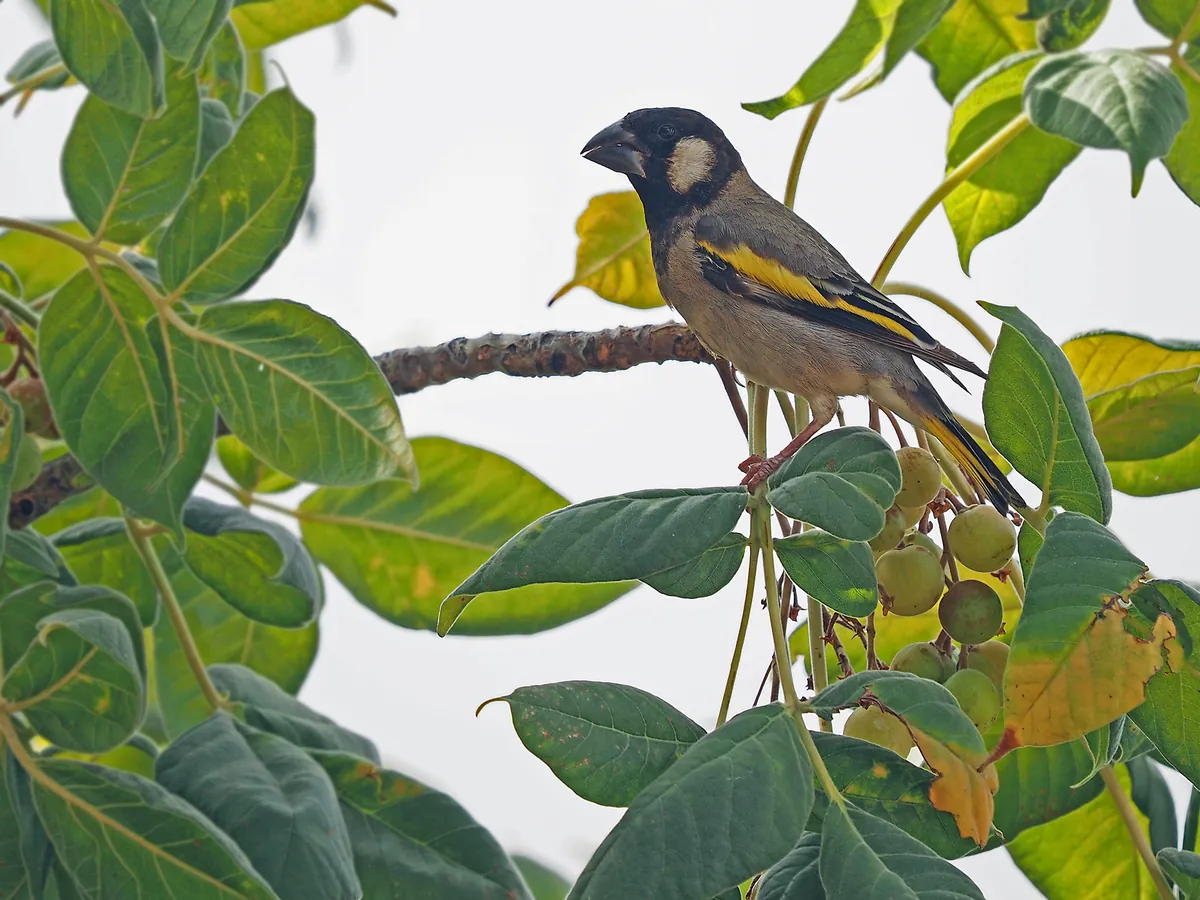
Operators describe Wadi Ayhaft as a good place to see endemic birds. One is the Socotra golden-winged grosbeak, one of the 11 species on the 2020 checklist that live only on the archipelago. It lives in woodland and wadis, including Wadi Ayhaft, and the males have bright yellow patches on the wings and tail. Bring binoculars: most of the endemic birds are small birds of scrub and woodland.
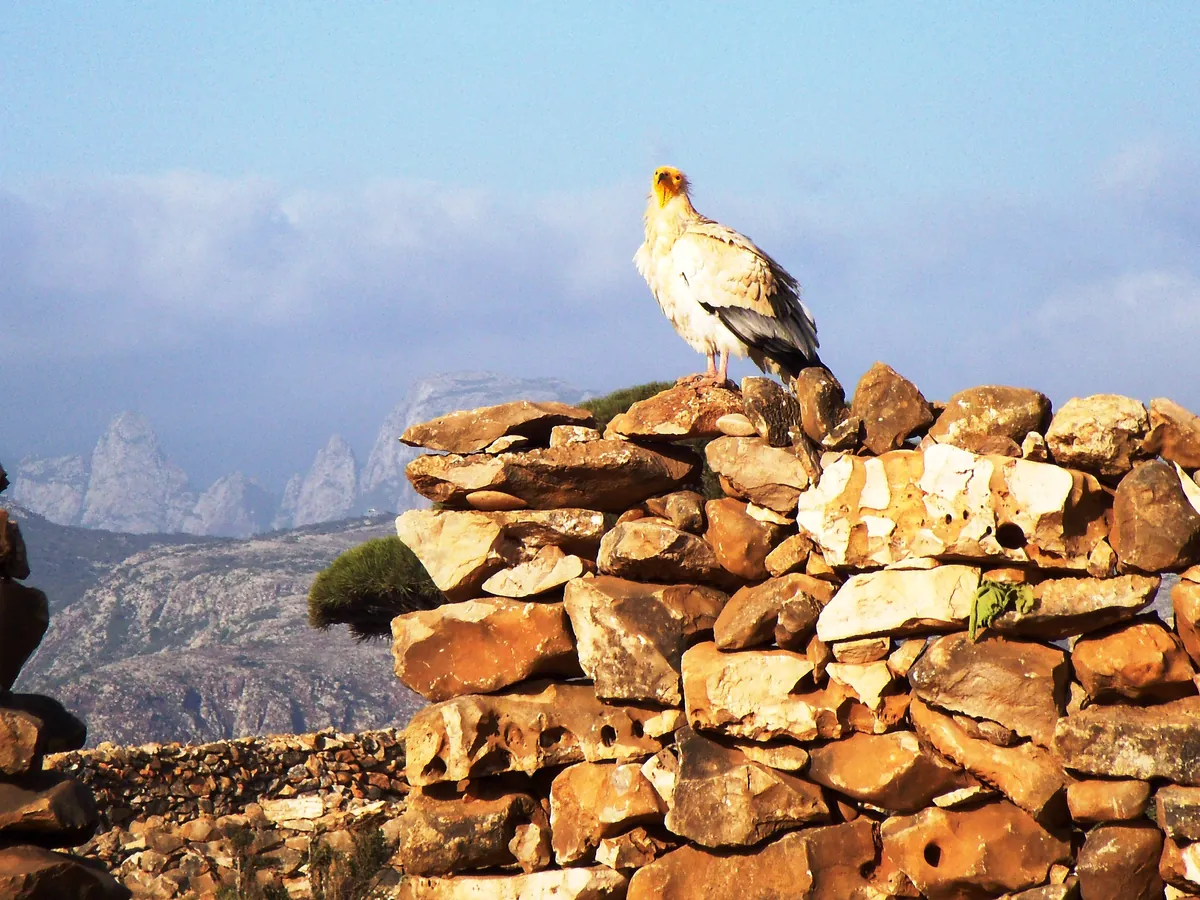
Egyptian vultures feed and roost in the valley. The species is Endangered globally but abundant on Socotra. Roosts of more than 350 birds gather on the north slopes of the Haghier, and more than 20 pairs breed in the mountains.
Chameleons after dark
Operators also describe the valley as good for spotting chameleons at night. The Socotra chameleon, Chamaeleo monachus, is endemic. It lives in dense shrubland, along wadis and sometimes in palm groves, and overgrazing of that shrubland is a threat to it. Catching reptiles to show tourists for tips is prohibited, but it still happens. Do not pay to hold or photograph a captured chameleon, skink or spider.
Protection
Some sources call the valley Ayhaft Canyon National Park. One source states that a new managed protected area in Wadi Ayhaft is planned, and gives no date for it. The Haghier mountains above the valley hold 50 plant species found nowhere else on the island. Botanical and trekking groups use a campsite in the canyon, and no source publishes whether it has toilets or showers.
The walk
Itineraries use Wadi Ayhaft for an easy walk on the first or last day of a trip. On the classic eight-day circuit it is the first stop from the airport, before the coast at Delisha. On the 15-day expedition it comes on day six, after the Diksam plateau and before a night in a hotel in Hadibo. In November, rain can bring rapid stream flows in Socotra's canyons, and campsites in them are chosen with care.
Wildlife here
Visiting
- Usually day one or day seven of an eight-day trip, as an easy walk.
- The pools are fullest early in the season and drop as it goes on.
- On the classic circuit, day one continues to Delisha beach, near Hadibo, for the first night.
There are no bookable tickets for Wadi Ayhaft, here or anywhere else — Socotra has no independent travel, so every visit happens as part of an operator-led trip with a sponsored permit. Our expedition packages all include it.
Read next
Planning a trip that includes Wadi Ayhaft? Tell us your dates and we will come back with what is actually available.
Message us on WhatsApp