Socotra Classic Circuit
8 days, 7 nights · Camping, a new camp each night · up to 8
The full lap of the island in eight days, camping somewhere new each night.
About $2,400
per person, land only · flight extra
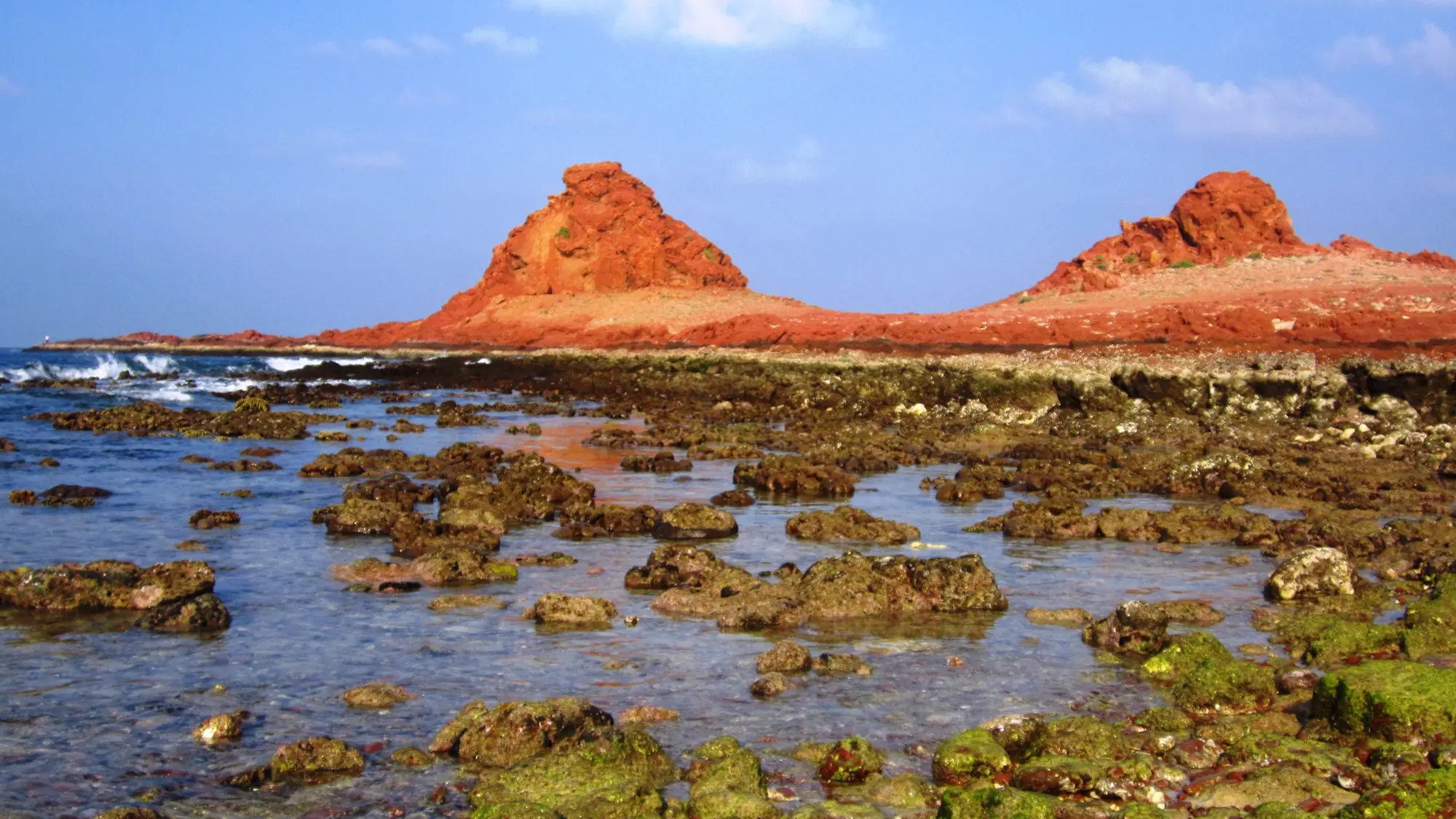 Gerry & Bonni · CC BY 2.0
Packages · Diving
A week of guided boat dives on Socotra's reefs and wrecks, camping by the sea, with a dry day in the forest before you fly.
About $3,700per person, land only · flight and permit extra
The Socotra Diving Expedition is an 8-day trip (7 nights): camping near the dive sites. It costs about $3,700 per person for everything on the island; the return flight from Jeddah (about $950–1,100) and the entry permit (about $150–200) are extra. Trips run in the October to April season, and the exact price is confirmed in writing when you enquire, before you pay anything.
A week of guided boat dives around Socotra: the reef at Dihamri, the east coast, the Rosh marine reserve, and the wrecks off Ras Irissel and near Shuab. You camp by the sea between dives, and spend the last full day on land in the forest, so there is a proper gap before you fly home.
This trip is for certified divers. Conditions, visibility and what you see change with the season and the sea, and nothing is guaranteed.
Seven nights camping near the dive sites, with eight guided boat dives
We do not print driving times: almost none are published for Socotra, and we would rather leave them out than guess.
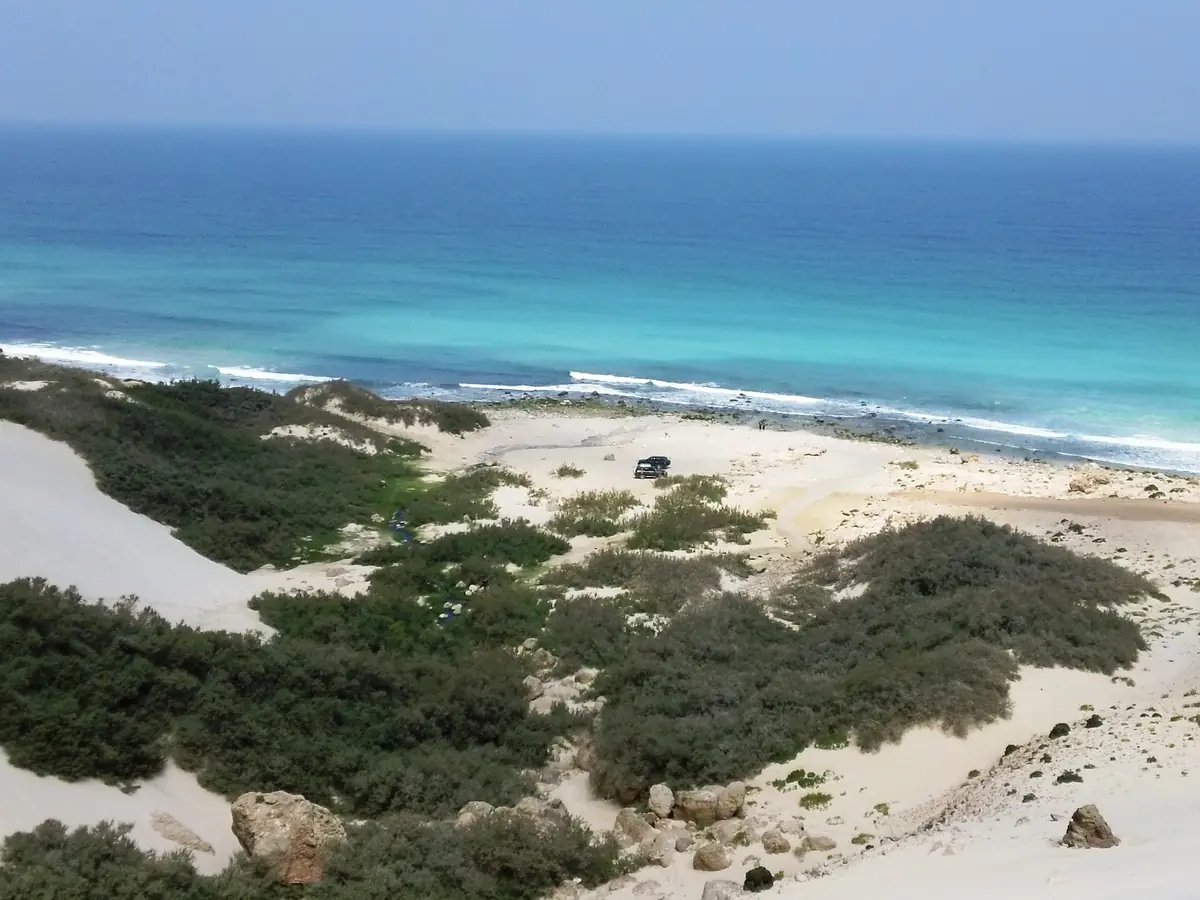 Gerry & Bonni · CC BY 2.0
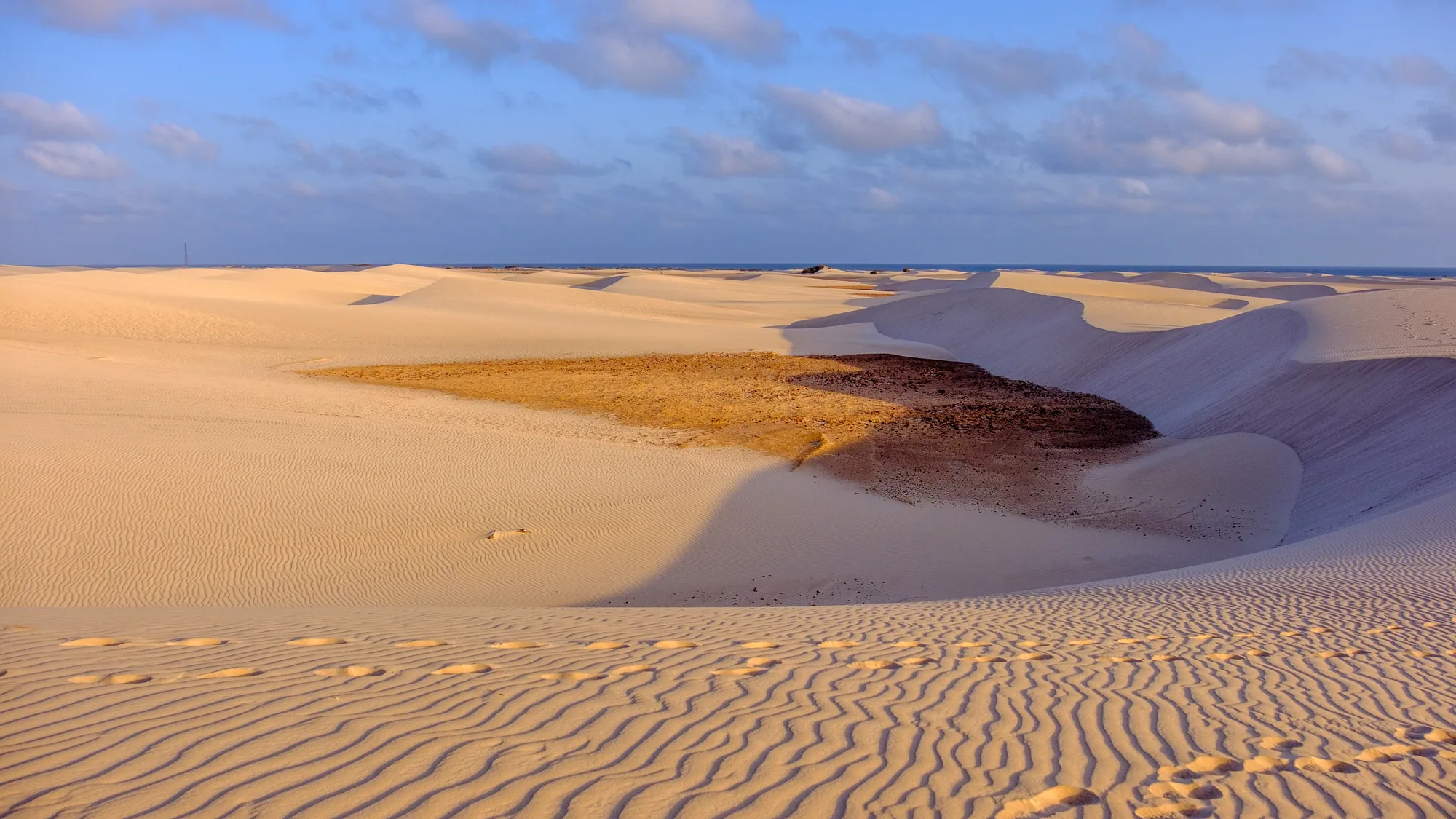
From the airport to the east coast and the Arher dunes, with time to climb them before the light goes. The first camp is near Ras Irissel.
Overnight: Camp near Ras Irissel
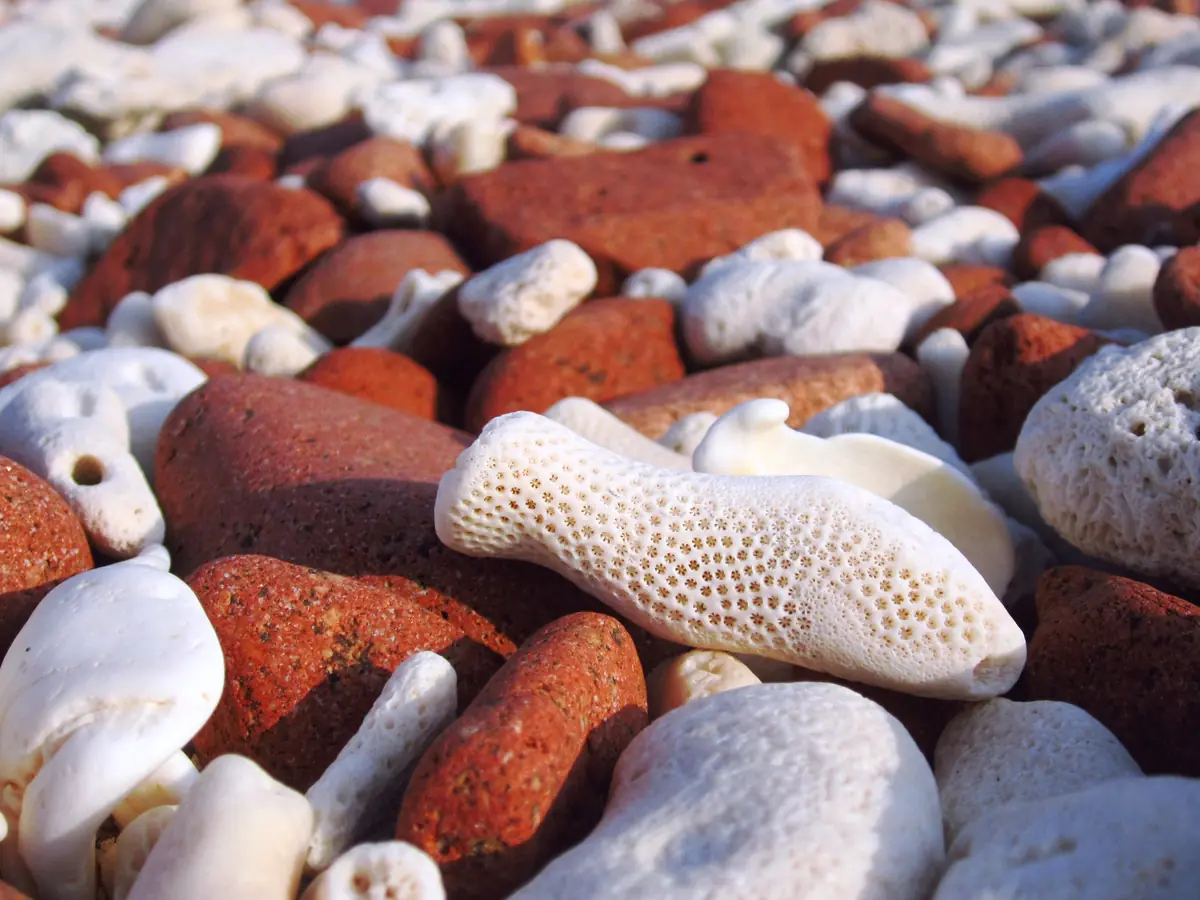 Gerry & Bonni · CC BY 2.0
Kit checks with the local dive master, then two boat dives on the Dihamri reef, where turtles, rays, moray eels and big groupers are commonly reported.
Look out for: Reefs, turtles and dolphins
Overnight: Dihamri camp
A boat dive on the soft coral reefs of the east coast, with a second dive optional. Camp further along the coast.
Overnight: East coast camp
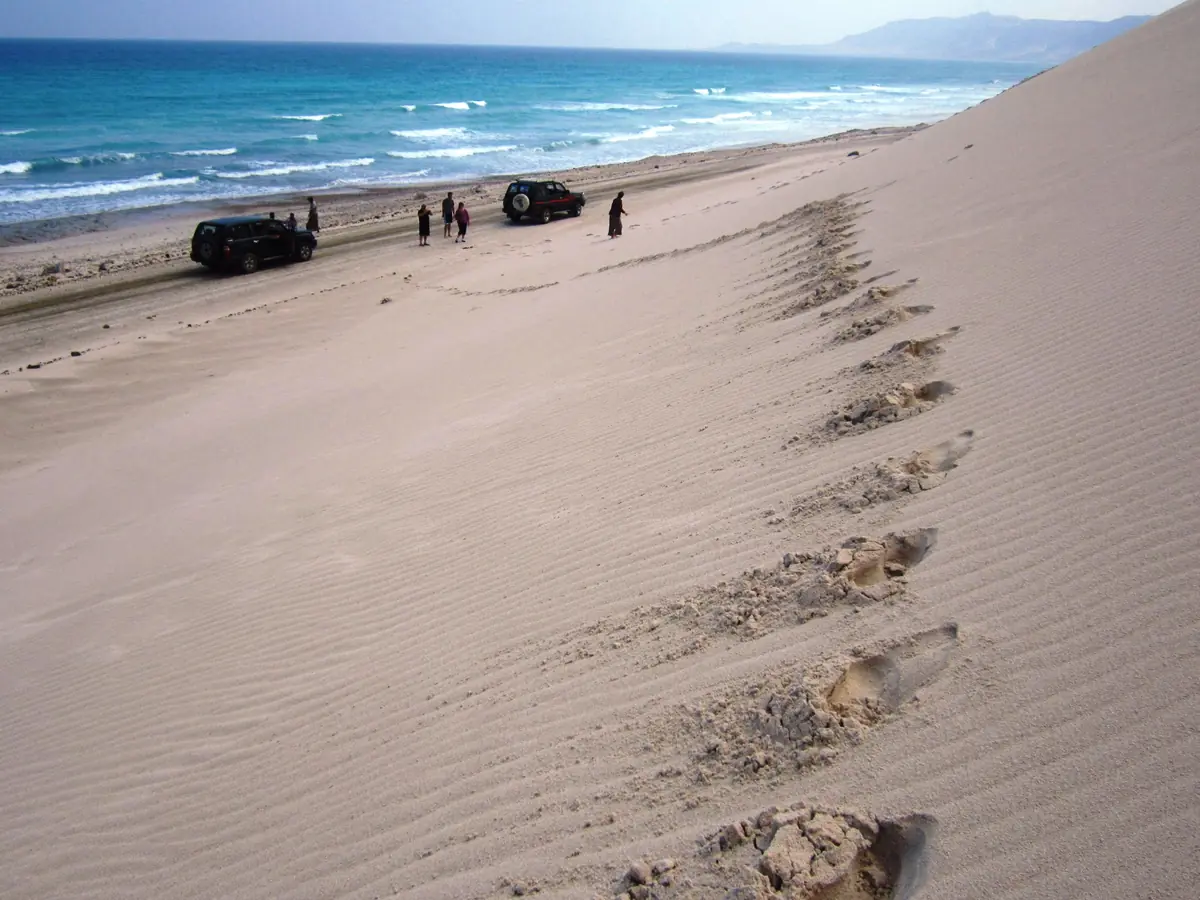 Gerry & Bonni · CC BY 2.0
Two boat dives in the Rosh marine reserve, where operators report reef sharks, rays and turtles over large coral heads.
Overnight: Rosh camp
 Hardscarf · CC BY-SA 4.0
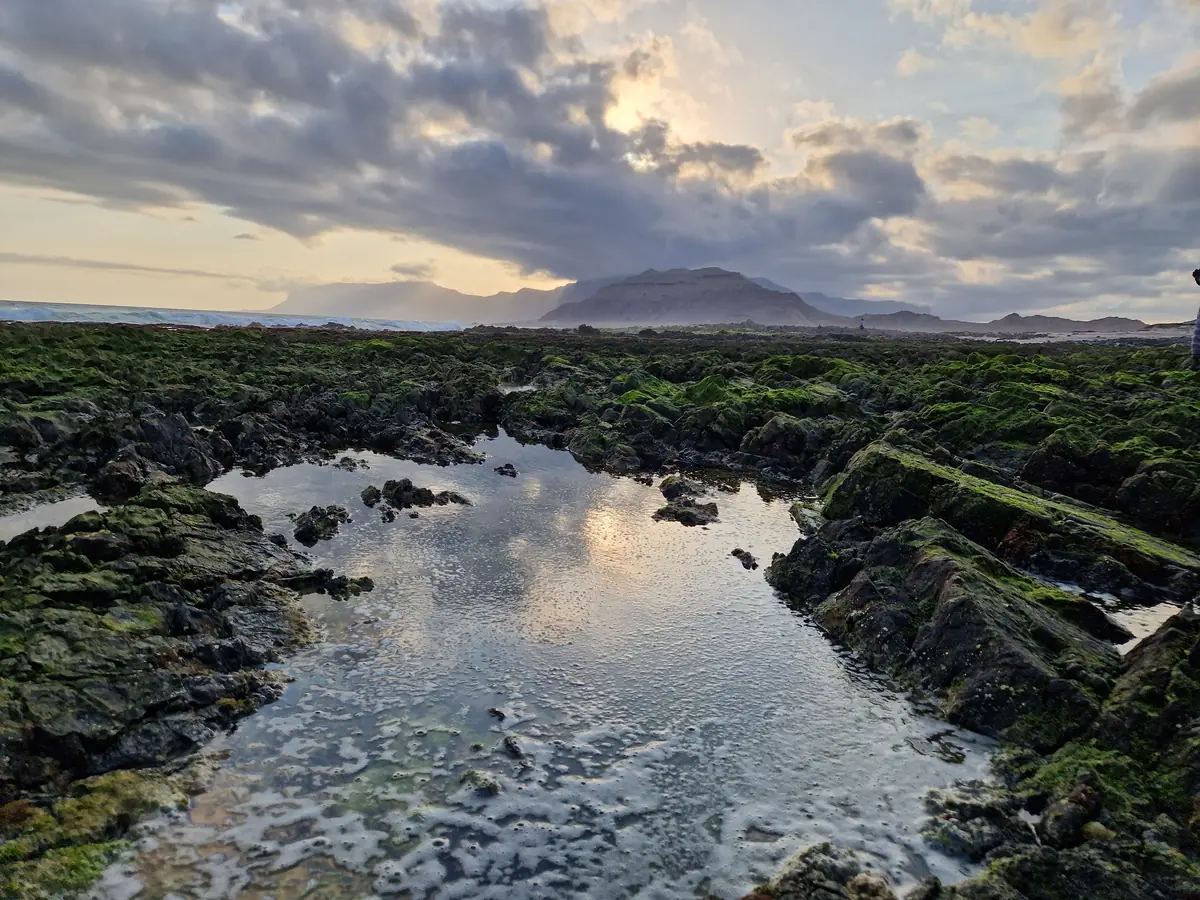
Shallow wreck diving off Ras Irissel at the island's eastern tip, with a second dive optional, then a beach camp.
Overnight: Beach camp, east coast
 Valerian Guillot from Cambridge, United Kingdom · CC BY 2.0
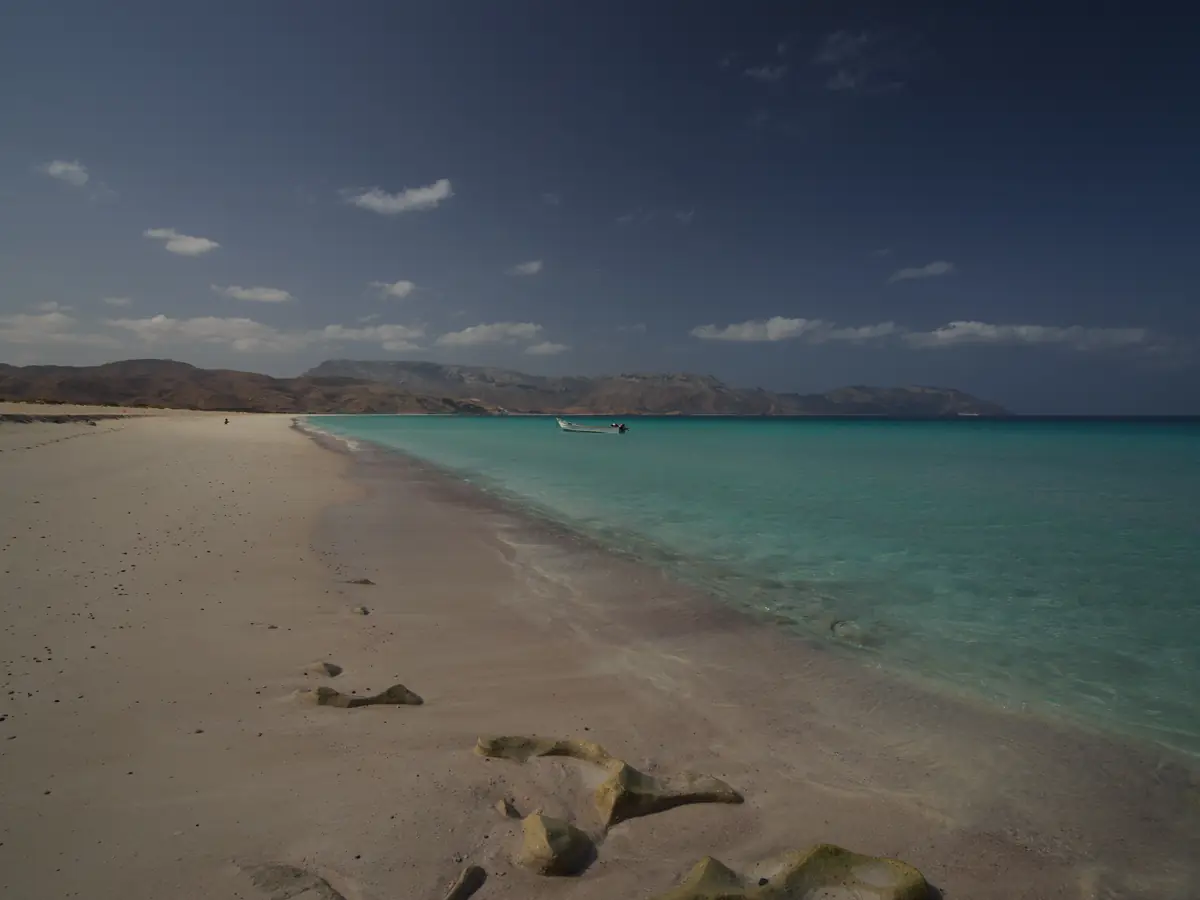
By boat to Shuab, often with spinner dolphins alongside, for two dives on the largest wreck off the island, then on to camp beside the Detwah lagoon.
Look out for: Reefs, turtles and dolphins, Jatropha unicostata, Socotra cormorant
Overnight: Detwah lagoon camp
 Rod Waddington from Kergunyah, Australia · CC BY-SA 2.0
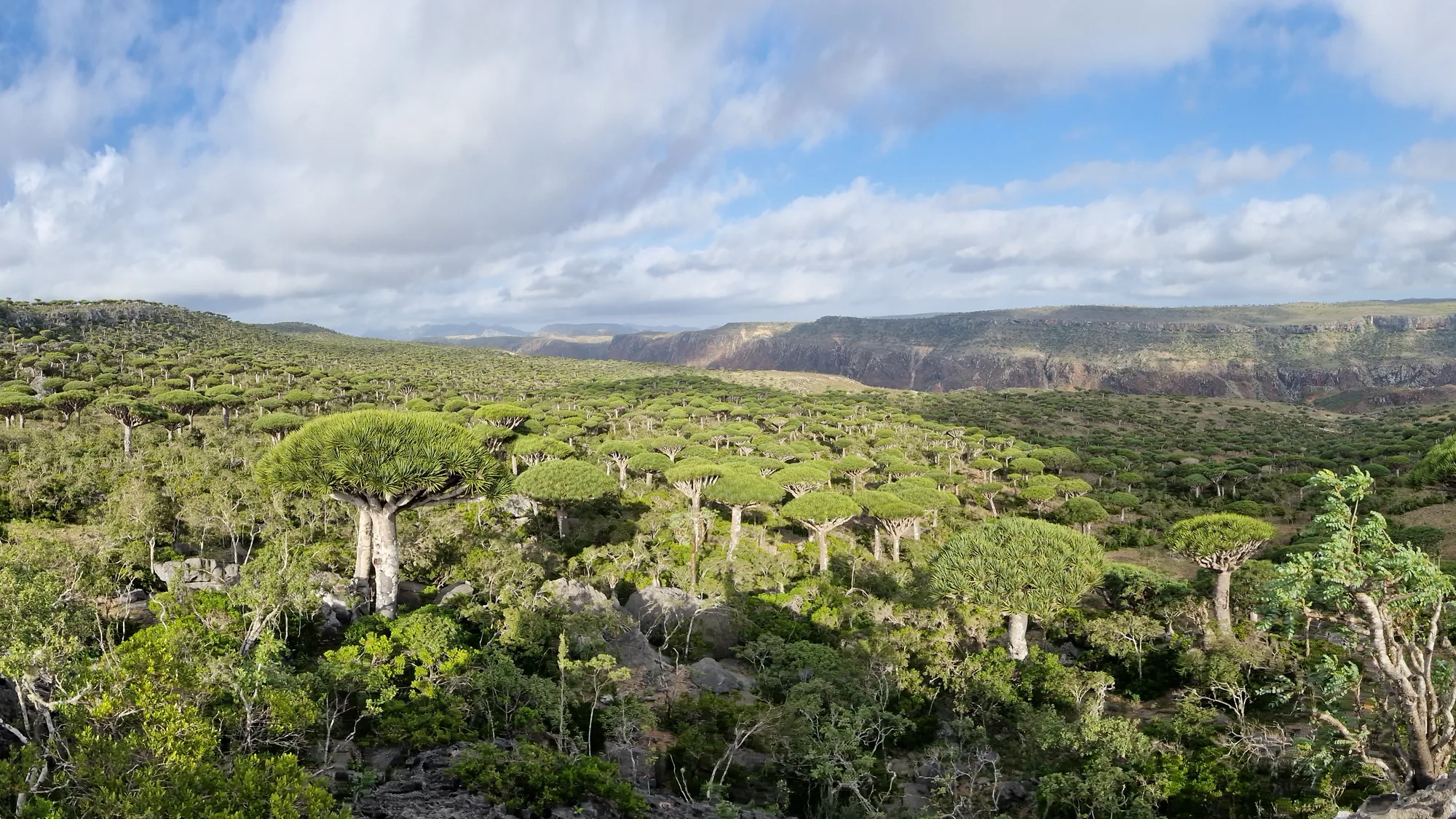
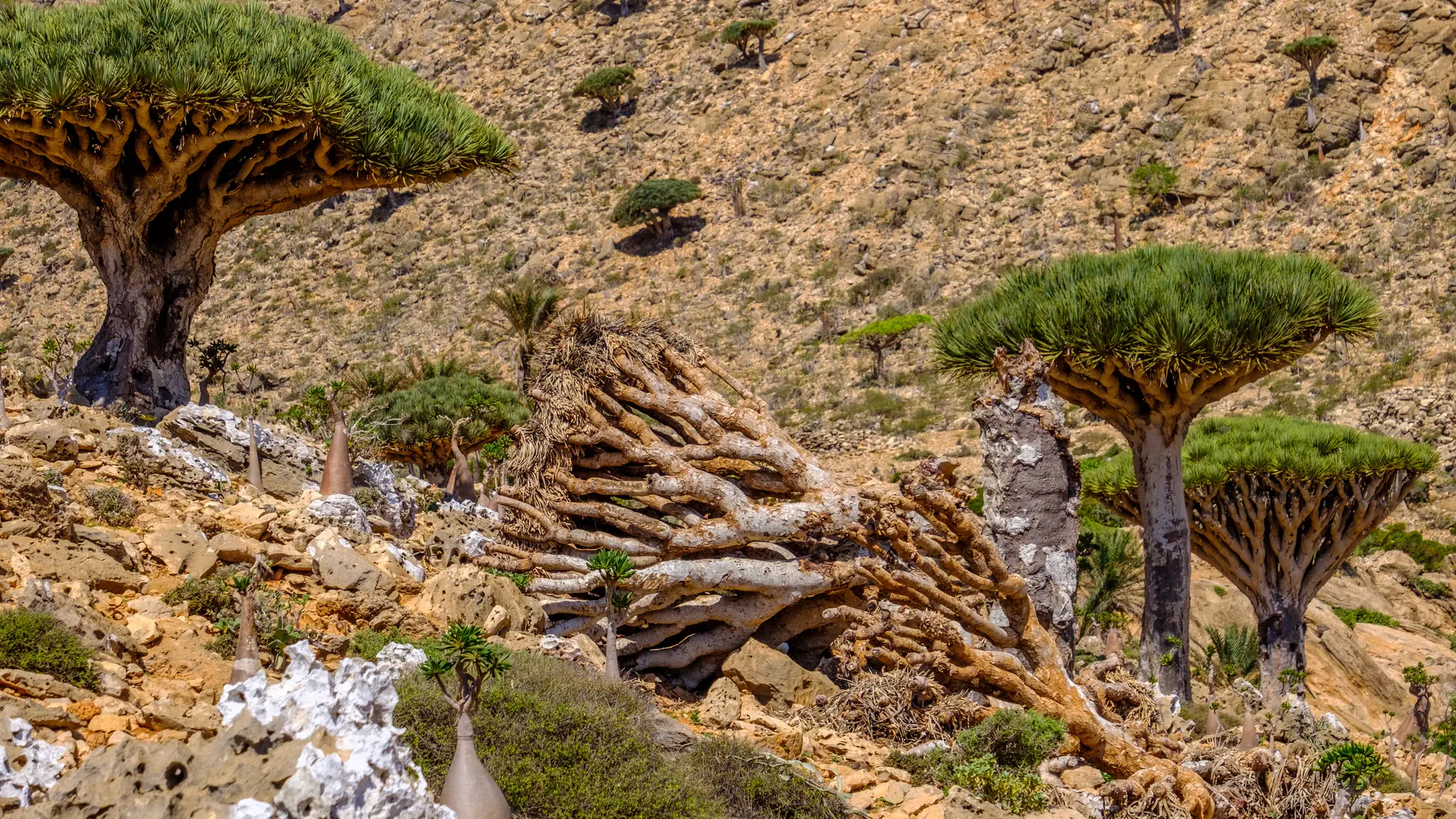
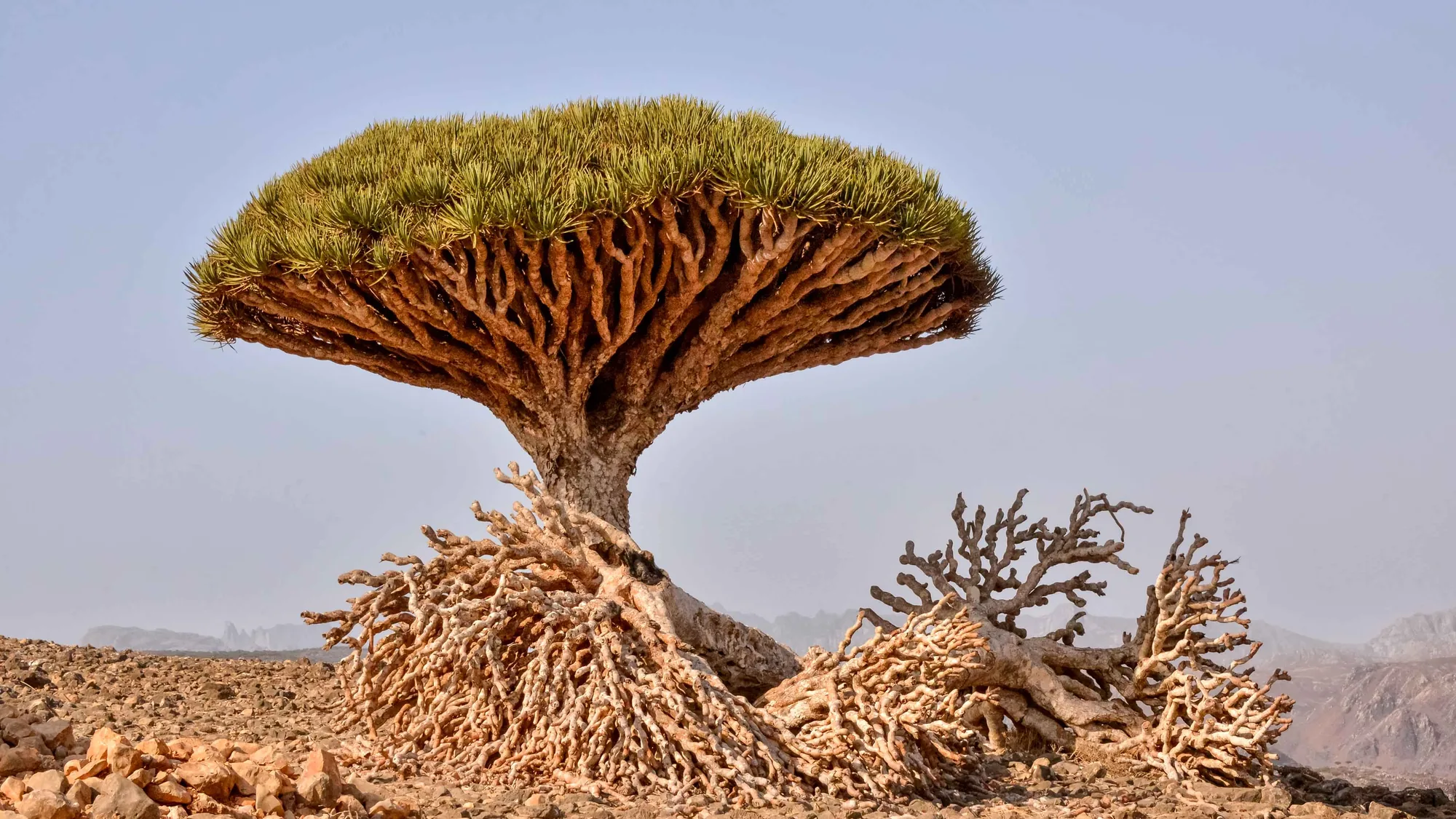
No diving today, on purpose: after several days of diving you need at least 18 hours on the surface before flying. The day goes to the Diksam plateau, the Dirhur canyon and the dragon's blood trees of Firmihin.
Look out for: Dragon's blood tree, Socotra bunting, Socotra golden-winged grosbeak, Socotra buzzard
Overnight: Diksam plateau camp
Pack up and drive to the airport, three hours before departure.
The trip
About $3,700
Per person: everything on the island in the list above.
The flight
About $950–1,100
Return, Jeddah to Socotra. Seats are not sold online, so we book it for you.
The permit
About $150–200
The Socotra entry permit, sponsored by the operator and paid on top of the trip price. The exact amount is in your quote.
All three figures are approximate. The exact price depends on your dates, your group size and the flight rotation, and you get it in writing when you enquire, before you pay anything. Why the same trip is quoted so differently across the market is covered in what Socotra actually costs.
Socotra is a cash-USD island: no working ATMs, no card acceptance. Bring $500–800 in small denominations, and note that only crisp notes from 2009, 2013 or 2017 onwards are reliably accepted.
In January 2026 roughly 600 travellers sat on Socotra for about a week when the rotation stopped. It is the clearest risk on the trip, and the written terms across this market are all over the place: one operator charges $100 per person per day and says plainly that no cash refund will ever be issued for a cancelled flight, offering only non-transferable credit; another promises a full deposit refund; two put every extra night entirely on the traveller; one is silent on force majeure altogether. Travellers who were caught in January 2026 have publicly described recovering money by bank chargeback after being ignored, and being billed with no cost breakdown. Before you pay anything, get the terms for your dates in writing: who keeps the camp, food, vehicle and guide running, who pays for the extra nights, and what is refunded. We ask the operator for exactly that and send it to you with your quote. Treat a vague answer from anyone as an answer.
More on the risk in is Socotra safe and insurance and health.
You need to be a certified diver, and to bring your card and logbook. The local dive master sets each dive plan to your certification and experience.
Yes: wetsuit, BCD, regulator, mask, fins and weights. If you have your own computer and mask, bring them.
Flying soon after diving raises the risk of decompression sickness. The usual guidance after several days of diving is to spend at least 18 hours on the surface before flying, so the last full day is spent on land.
Operators on Socotra report turtles, rays, moray eels, big groupers and reef sharks, as well as several wrecks. Nothing is guaranteed: visibility and sightings change with the season and the sea.
No. The return flight between Jeddah and Socotra is extra, usually about $950–1,100, and we book it for you: seats are released to licensed operators rather than sold online. The price shown is the land price per person.
It is an approximate land price per person. The final figure depends on your dates, the size of your group and the flight rotation, and you get it in writing when you enquire, before you pay anything.
Socotra uses an entry permit sponsored by a licensed local operator, not a visa you apply for yourself. It is arranged for you but charged on top of the price shown, usually $150–200, and the exact amount is in your quote. It is usually issued a week or two before travel, so do not leave booking to the last minute.
October to April. The southwest monsoon closes the island from roughly May to September: winds pick up, sea crossings stop and flights are often cancelled.
8 days, 7 nights · Camping, a new camp each night · up to 8
The full lap of the island in eight days, camping somewhere new each night.
About $2,400
per person, land only · flight extra
8 days, 7 nights · Camping, three bases · up to 10
The same island from three camps, on the east coast, in the Firmihin forest and at Detwah lagoon, so you unpack three times instead of seven.
About $2,300
per person, land only · flight and permit extra
8 days, 7 nights · Hotel in Hadibo · up to 10
Every night in a hotel in Hadibo, with day trips out to the forest, the lagoon, the reef and the dunes.
About $2,450
per person, land only · flight extra
15 days, 14 nights · Camping, two hotel nights · up to 8
Fifteen days: two on foot in the Haghier mountains, then the whole island at an easier pace.
About $4,650
per person, land only · flight and permit extra