Socotra Classic Circuit
8 days, 7 nights · Camping, a new camp each night · up to 8
The full lap of the island in eight days, camping somewhere new each night.
About $1,600
per person, land only · flight extra
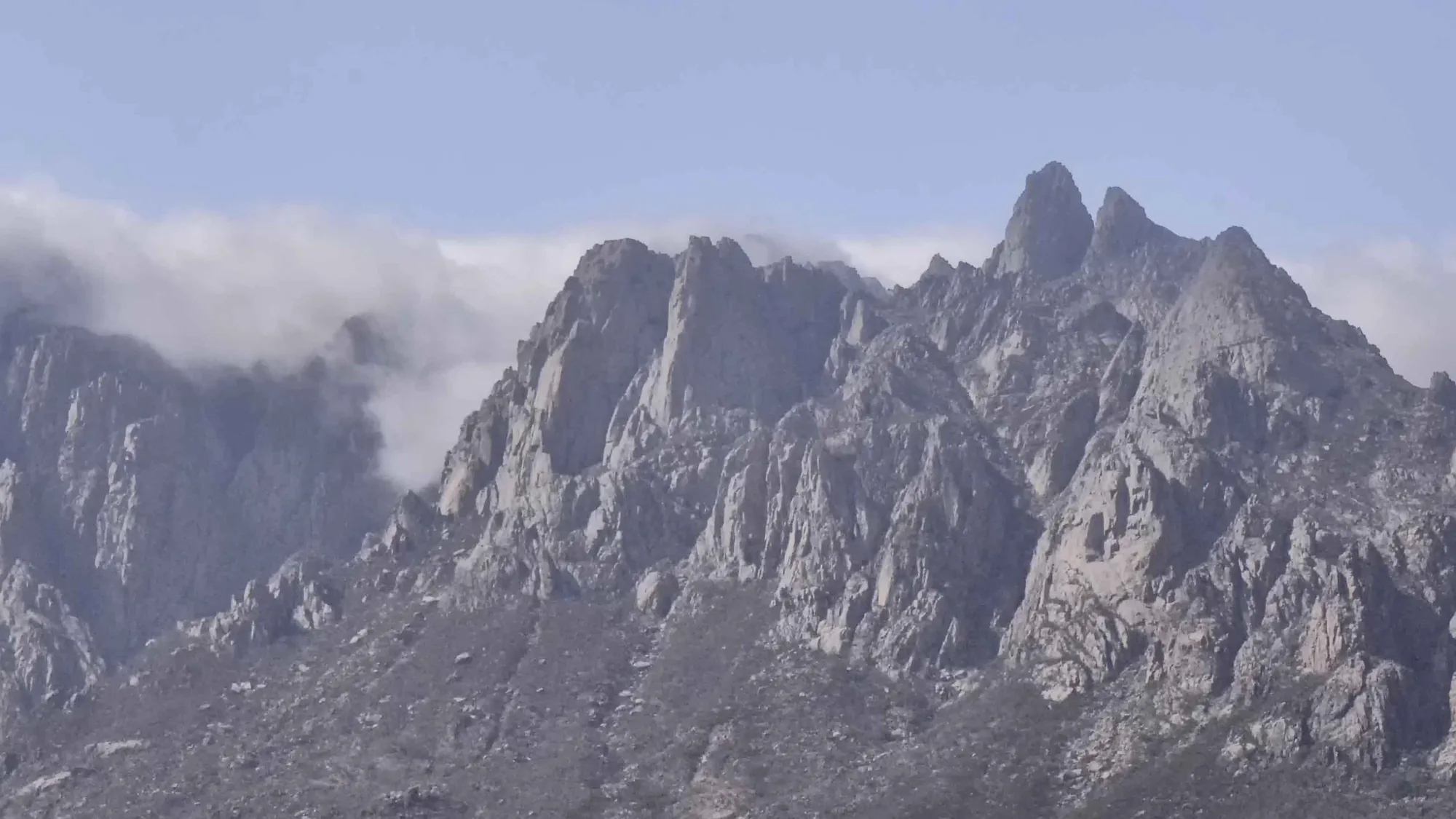 Rod Waddington from Kergunyah, Australia · CC BY-SA 2.0
Packages · 15 days
Fifteen days: two on foot in the Haghier mountains, then the whole island at an easier pace.
About $3,150per person, land only · flight extra
Fifteen days lines up with the flight two weeks later, and it changes the trip. There is time to walk into the Haghier mountains for two days before seeing the rest of the island, the forest, the reef, the caves, the east and the west, without the rush of a single week.
The mountain section is on foot, usually with a camel carrying the kit, and the nights up there are basic. After that the pace eases: most nights camping at the island's best-known sites, and two nights in a hotel in Hadibo.
Two days trekking in the Haghier, then the whole island: camping, with two hotel nights
We do not print driving times: almost none are published for Socotra, and we would rather leave them out than guess.
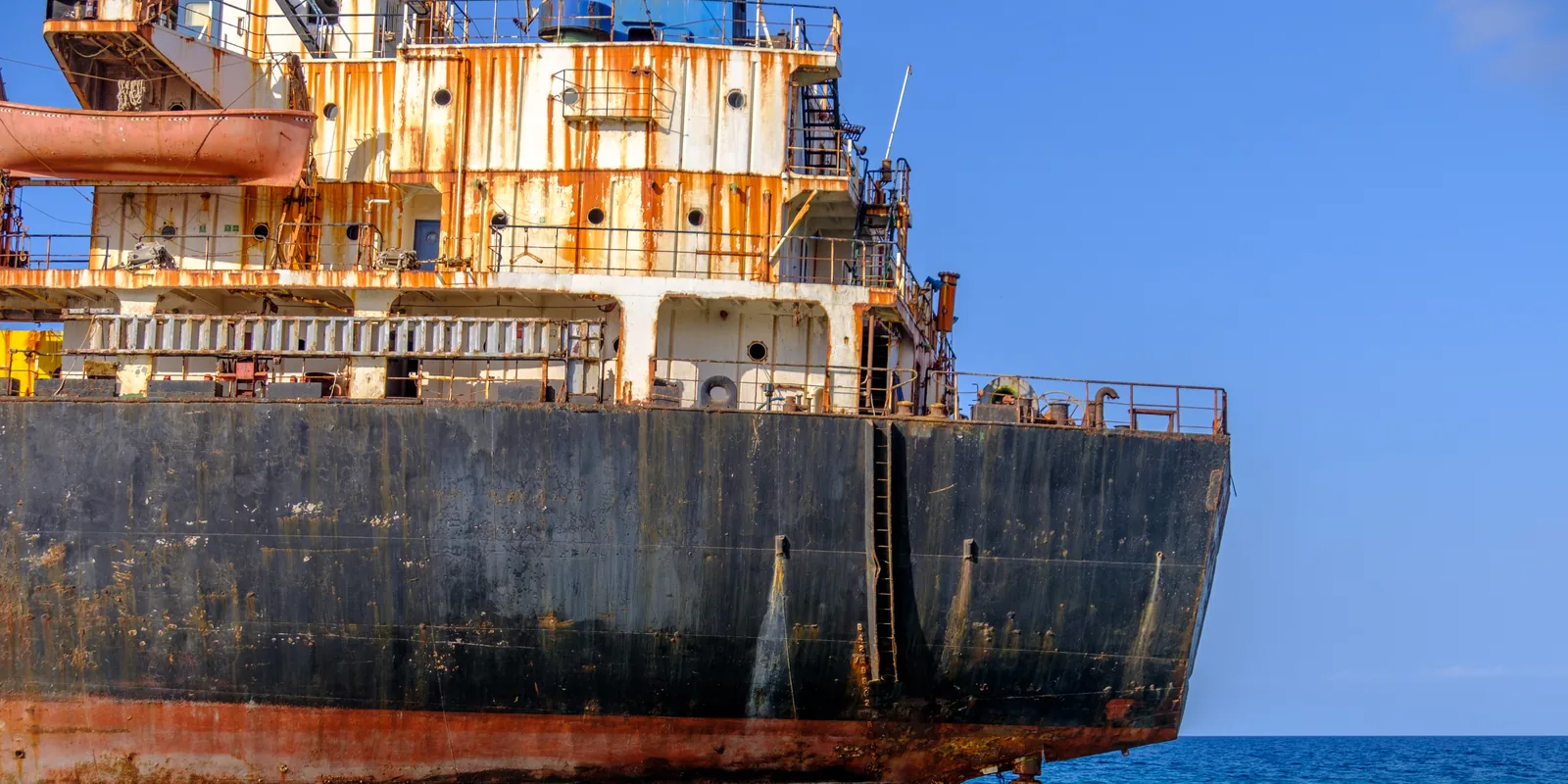 Hardscarf · CC BY-SA 4.0
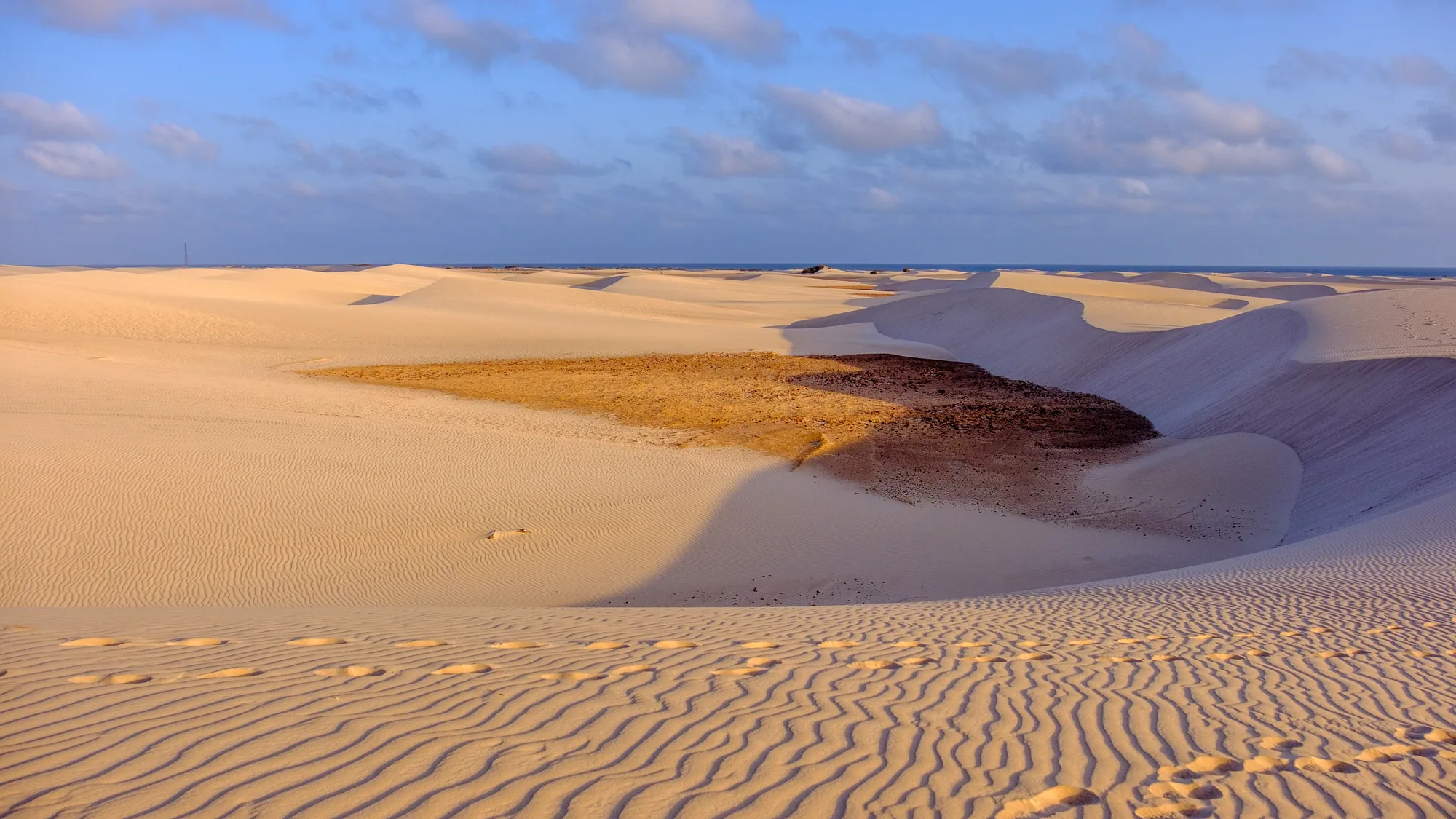
From the airport to Delisha beach, with its freshwater lagoon behind the dunes, for the sunset. First camp.
Overnight: Delisha beach camp
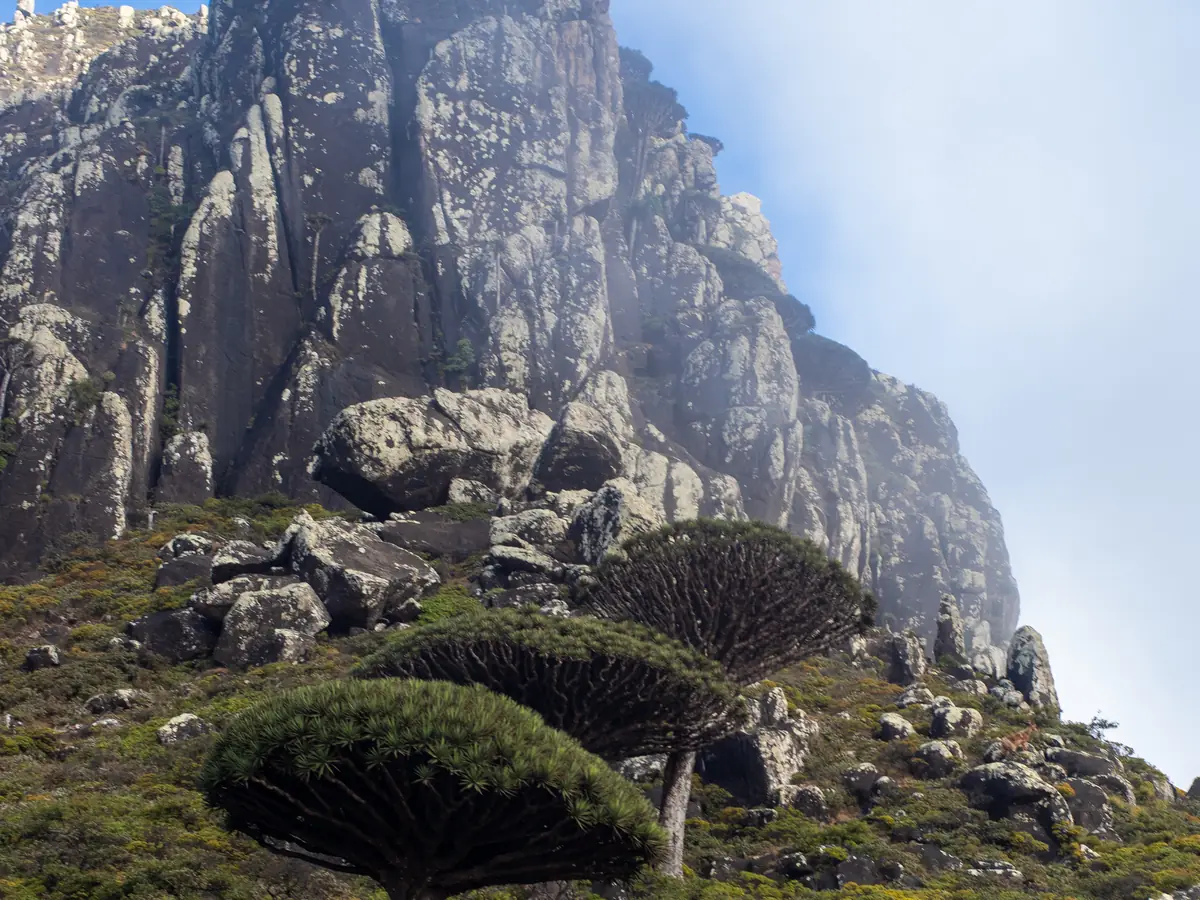 Valerian Guillot from Cambridge, United Kingdom · CC BY 2.0
The walk begins: up through the wadis of the Haghier among endemic plants, past the village of Kishan, to a high camp at Adoho Dema'alah. A camel usually carries the kit.
Overnight: Mountain camp
A day along the high ridges towards Fa'arh peak, with views down to the coast, then down through Wadi Di-Azaqaloh to camp in the wadi.
Overnight: Wadi camp
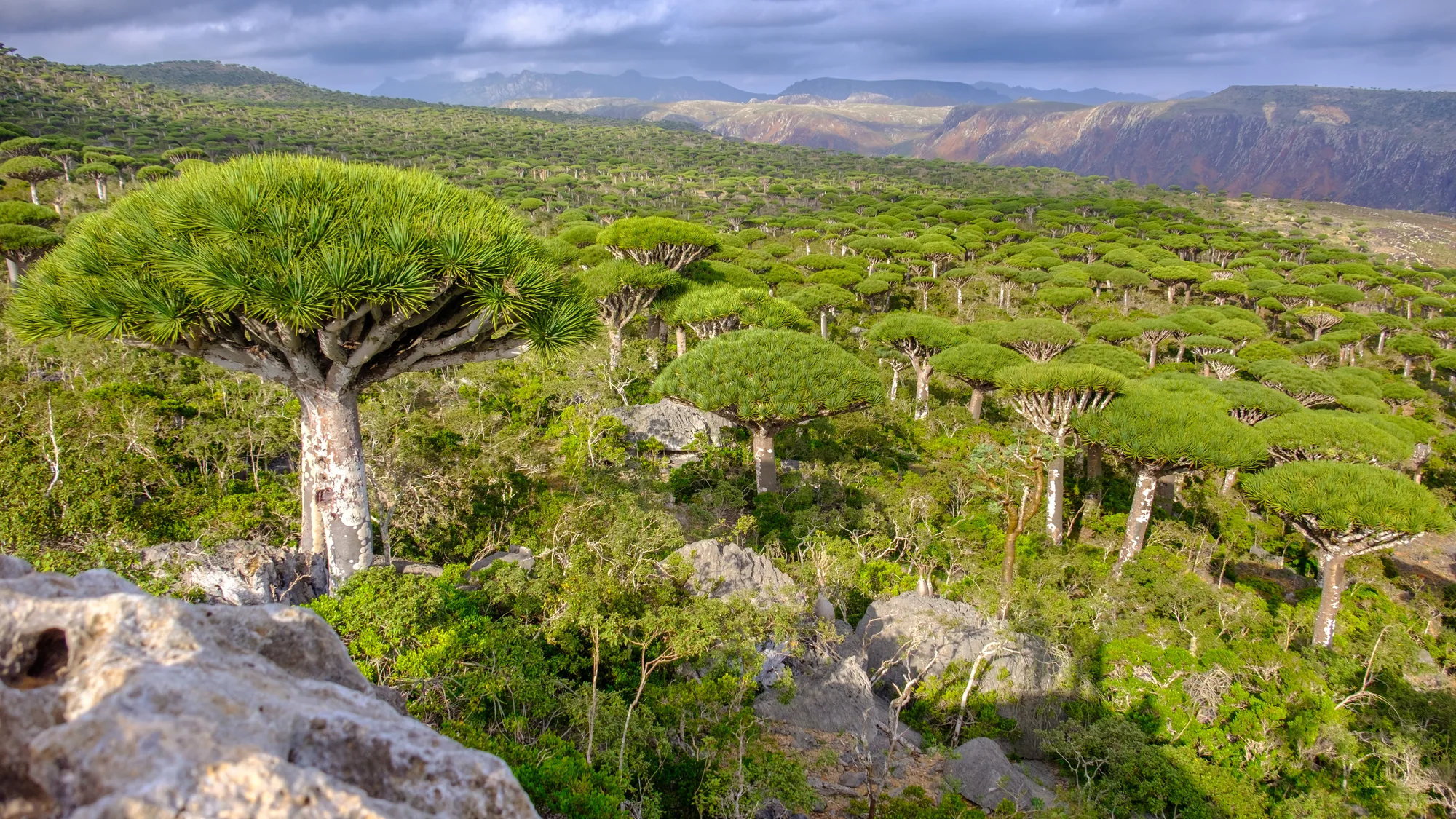 Hardscarf · CC BY-SA 4.0
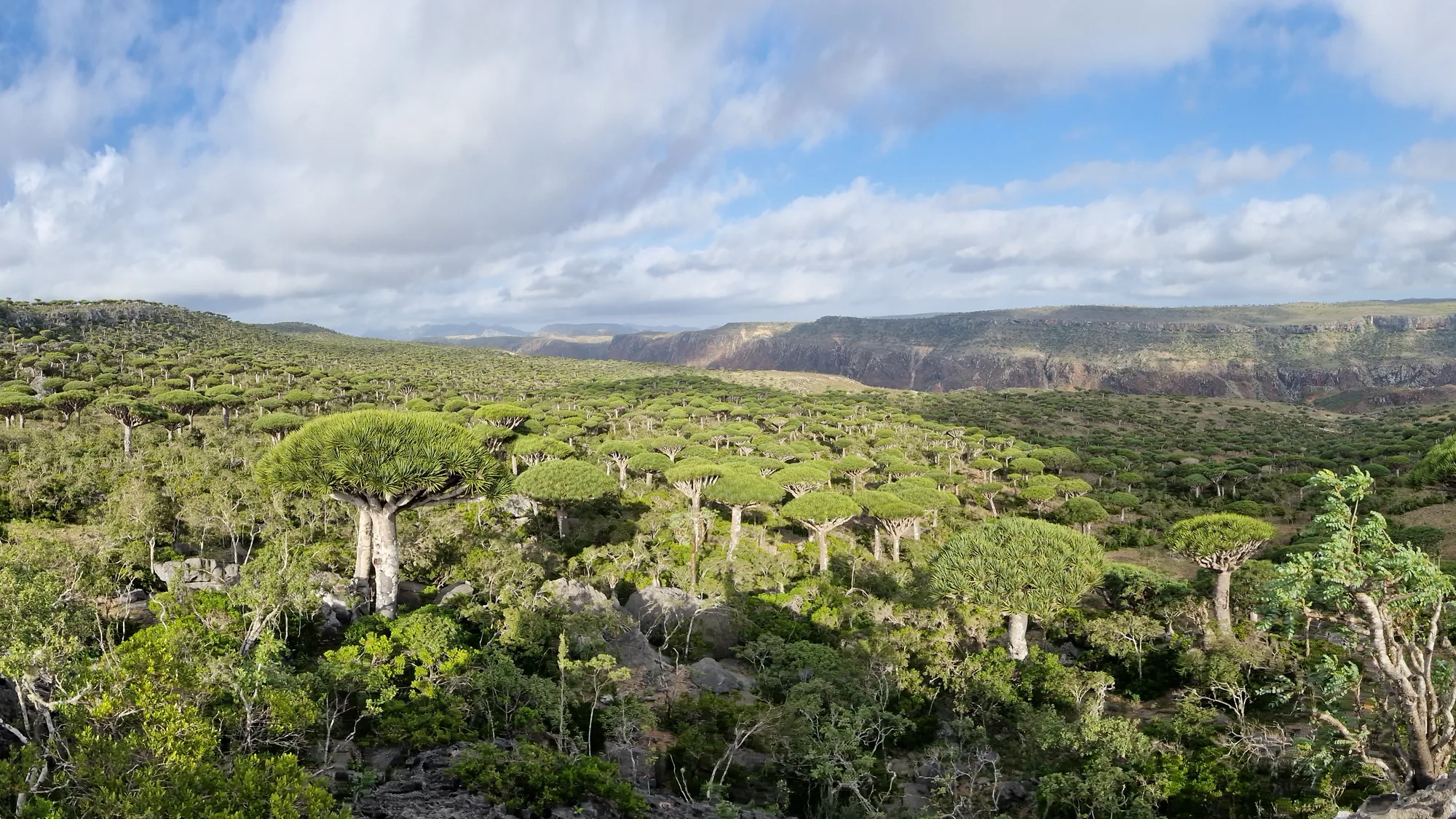
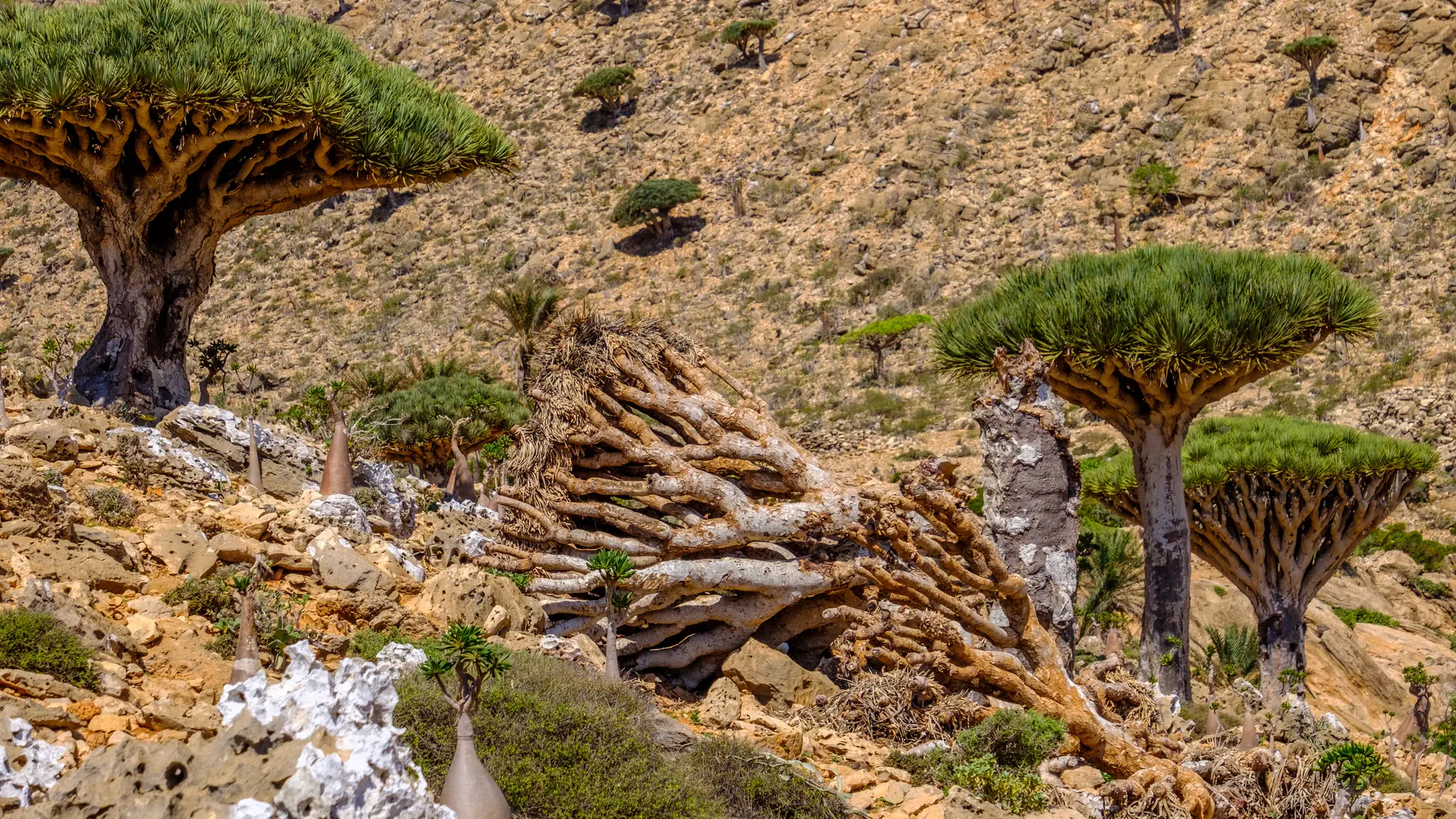
Off the mountain to canyon pools, then on to Firmihin, the densest dragon's blood forest left on earth. Camp among the trees.
Overnight: Firmihin forest camp
 Hardscarf · CC BY-SA 4.0
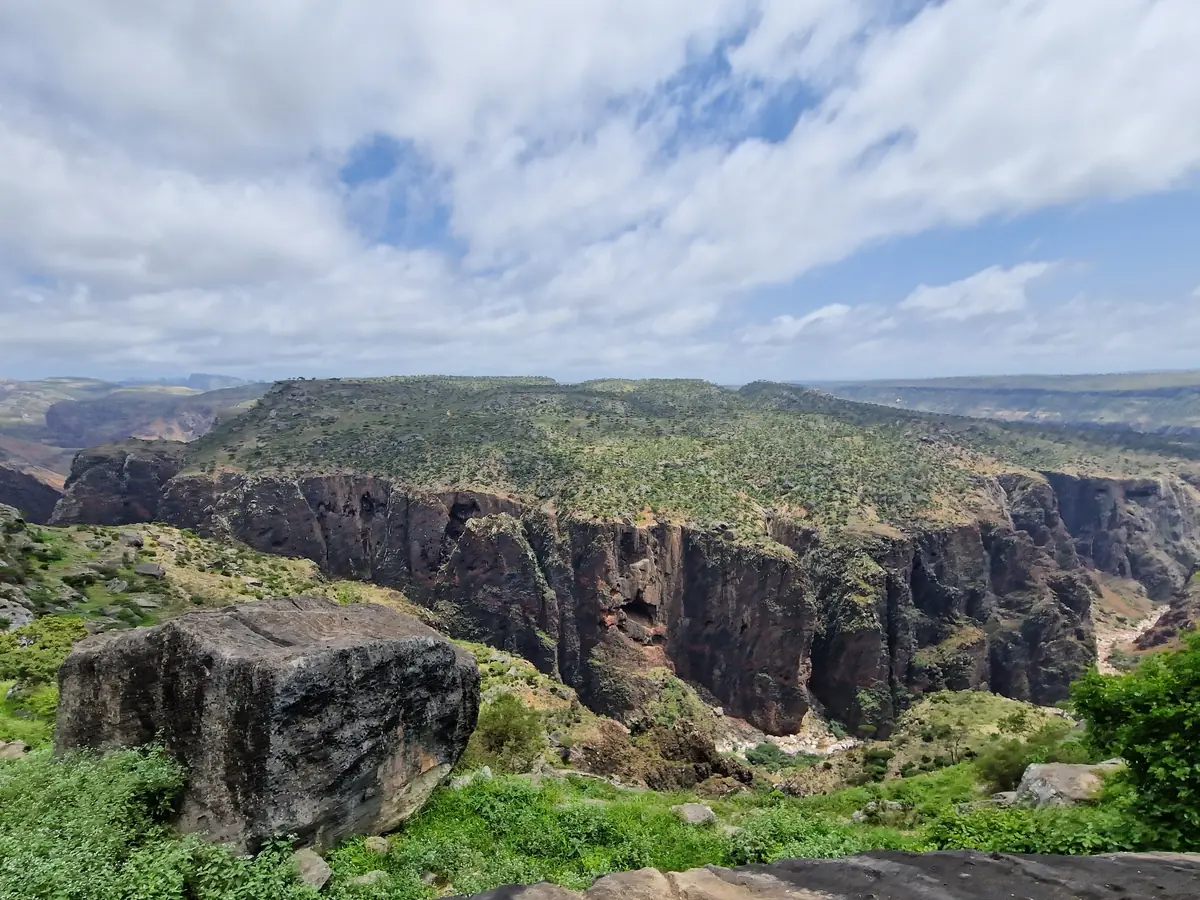
Into the Wadi Dirhur canyon and up onto the Diksam plateau, with its views over the gorge and its Bedouin grazing land.
Overnight: Diksam plateau camp
 Valerian Guillot · CC BY 2.0
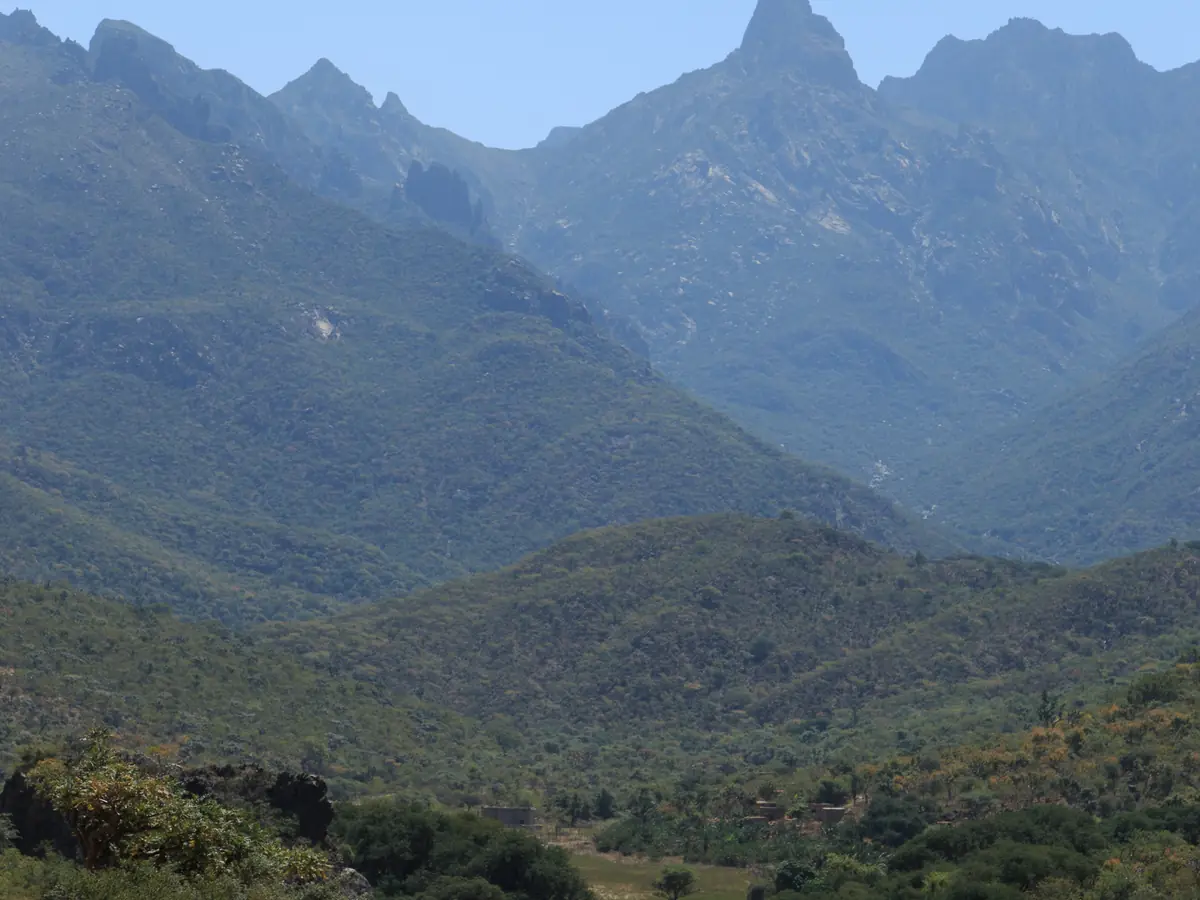
North to the Ayhaft national park, a green valley of freshwater pools, tamarind and cucumber trees and endemic birds. The night is in a hotel in Hadibo.
Overnight: Hotel, Hadibo
 Gerry & Bonni · CC BY 2.0
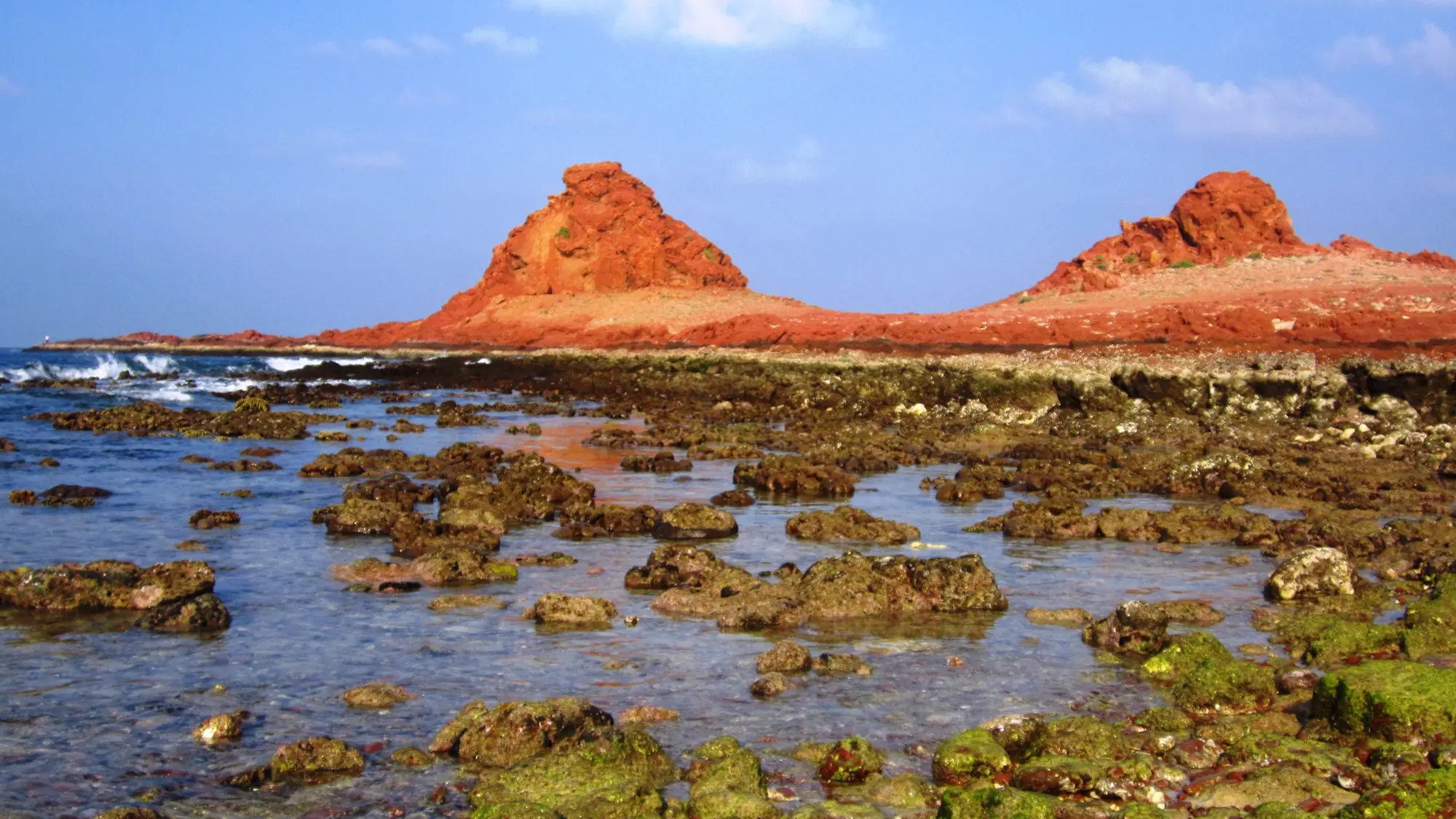
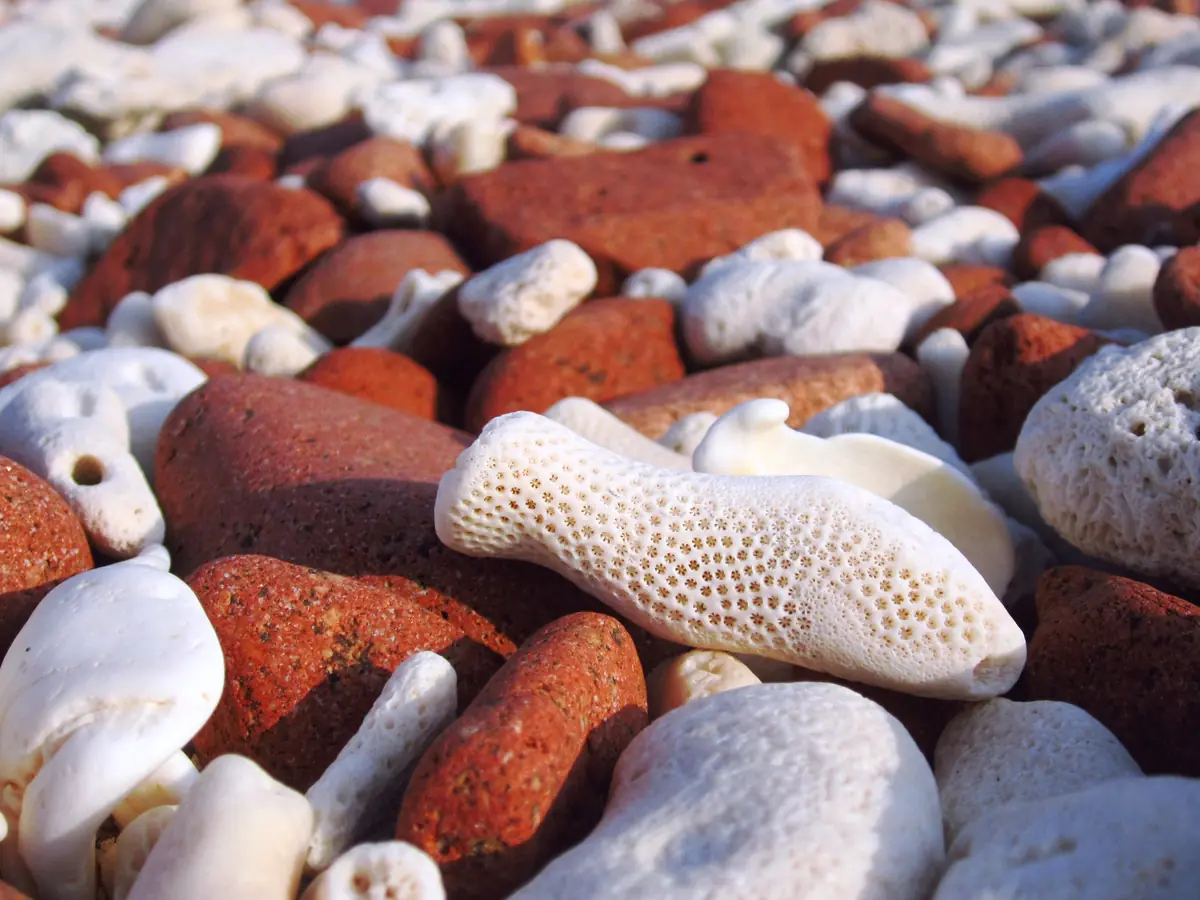
A day on the reef at Dihamri for snorkelling, and an evening in the fishing village.
Overnight: Dihamri camp
 Hardscarf · CC BY-SA 4.0
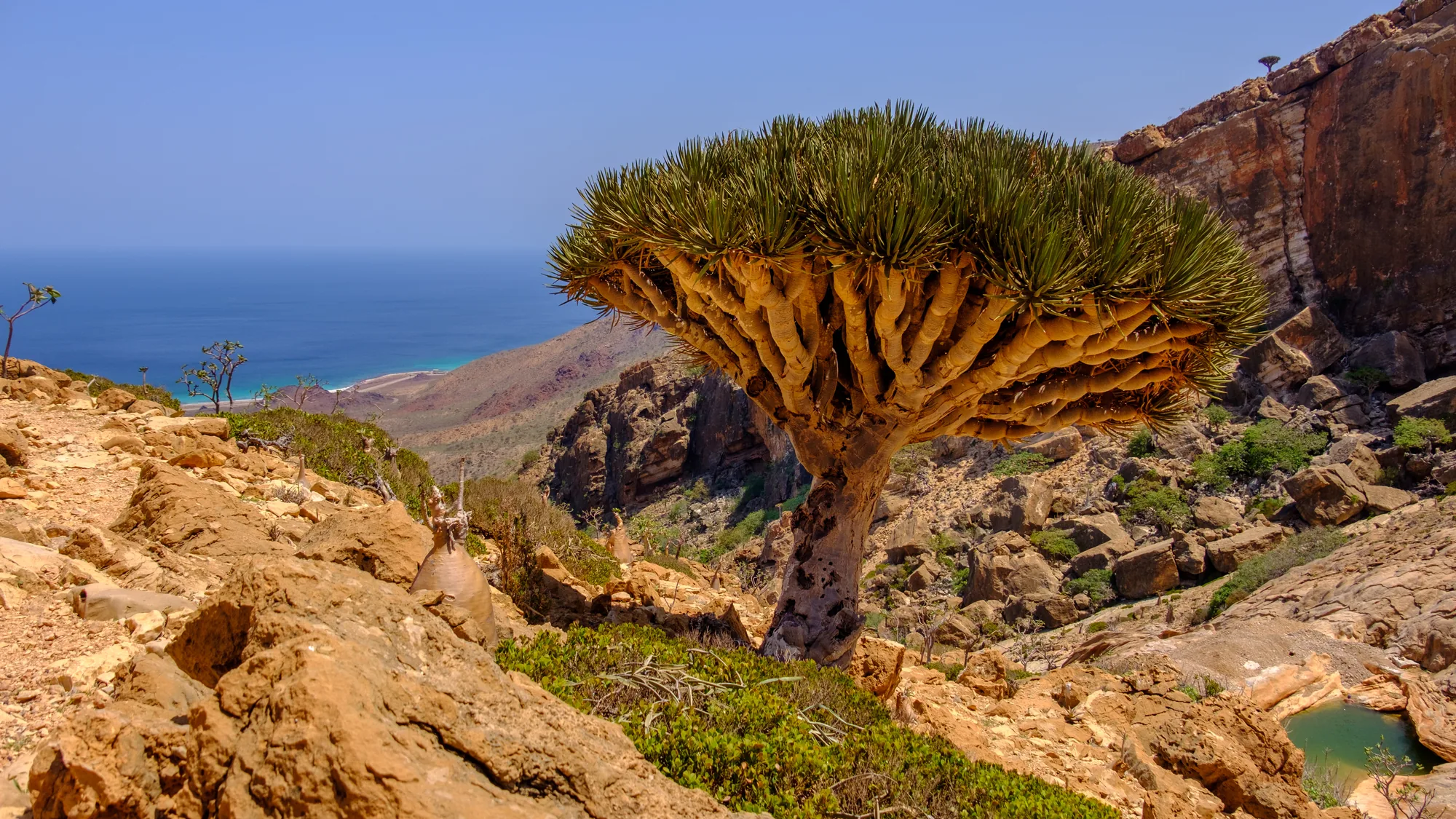
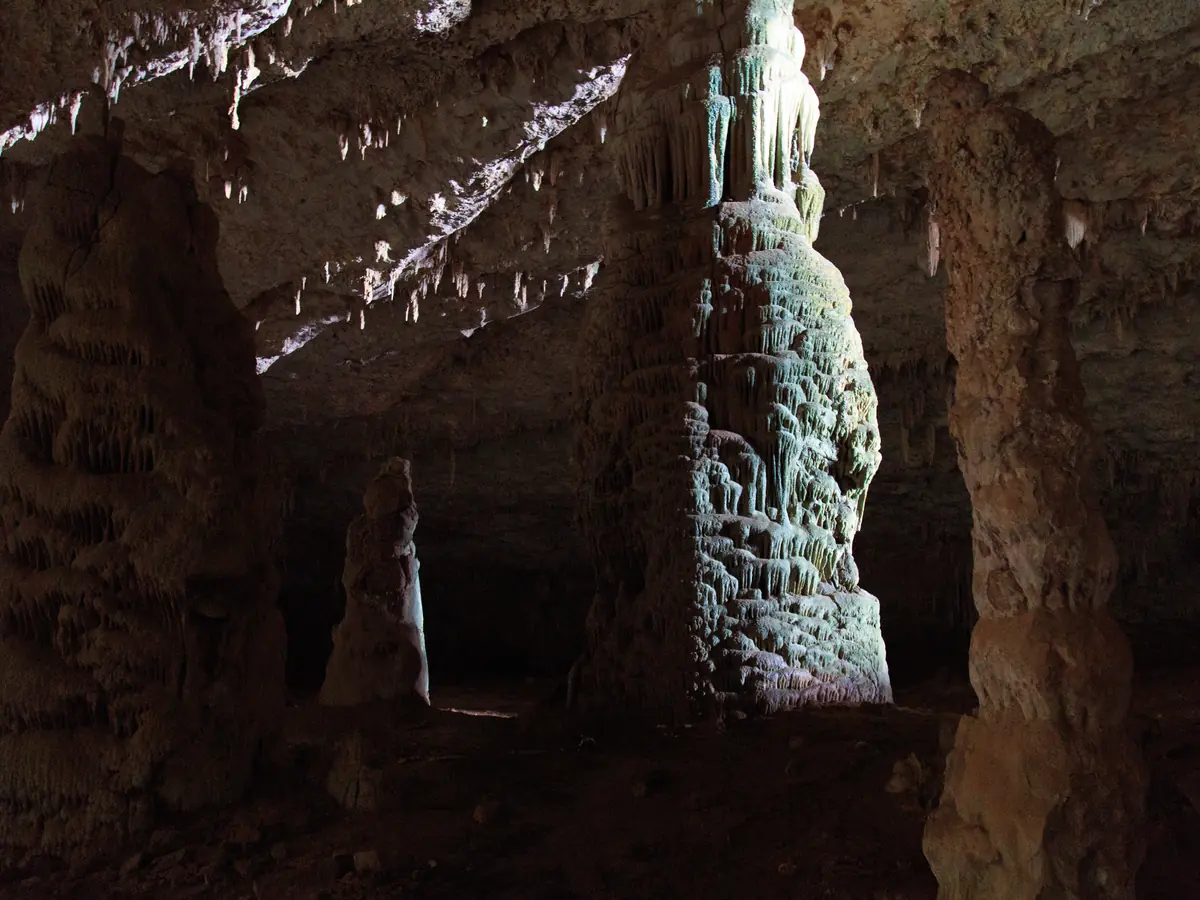
The pools of Kalysan canyon, the Qaria lagoon with its flamingos and herons in season, and the bottle trees and infinity pool at Homhil.
Overnight: Homhil camp
 Valerian Guillot · CC BY 2.0
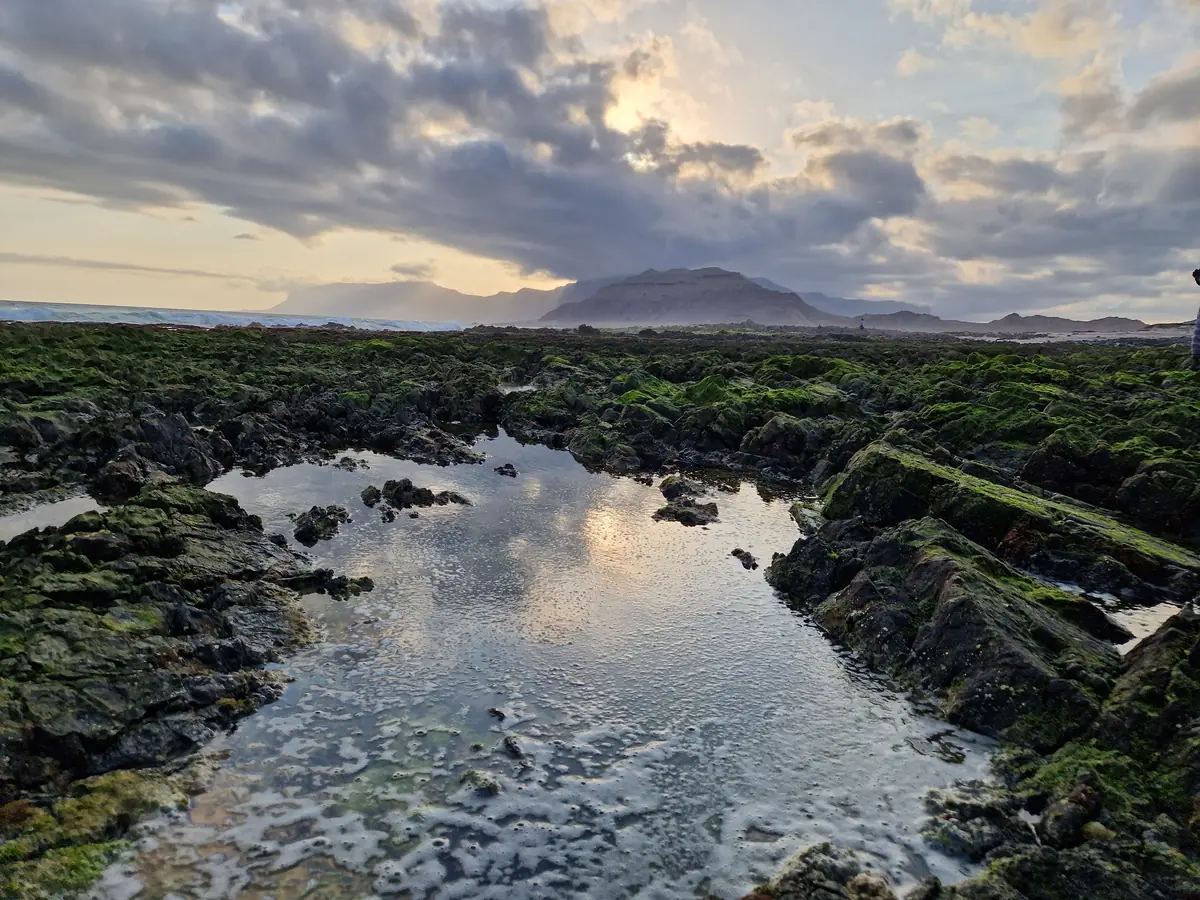
The climb to Hoq Cave and its ancient inscriptions, then down to the coast at the Rosh marine reserve.
Overnight: Rosh camp
 Hardscarf · CC BY-SA 4.0
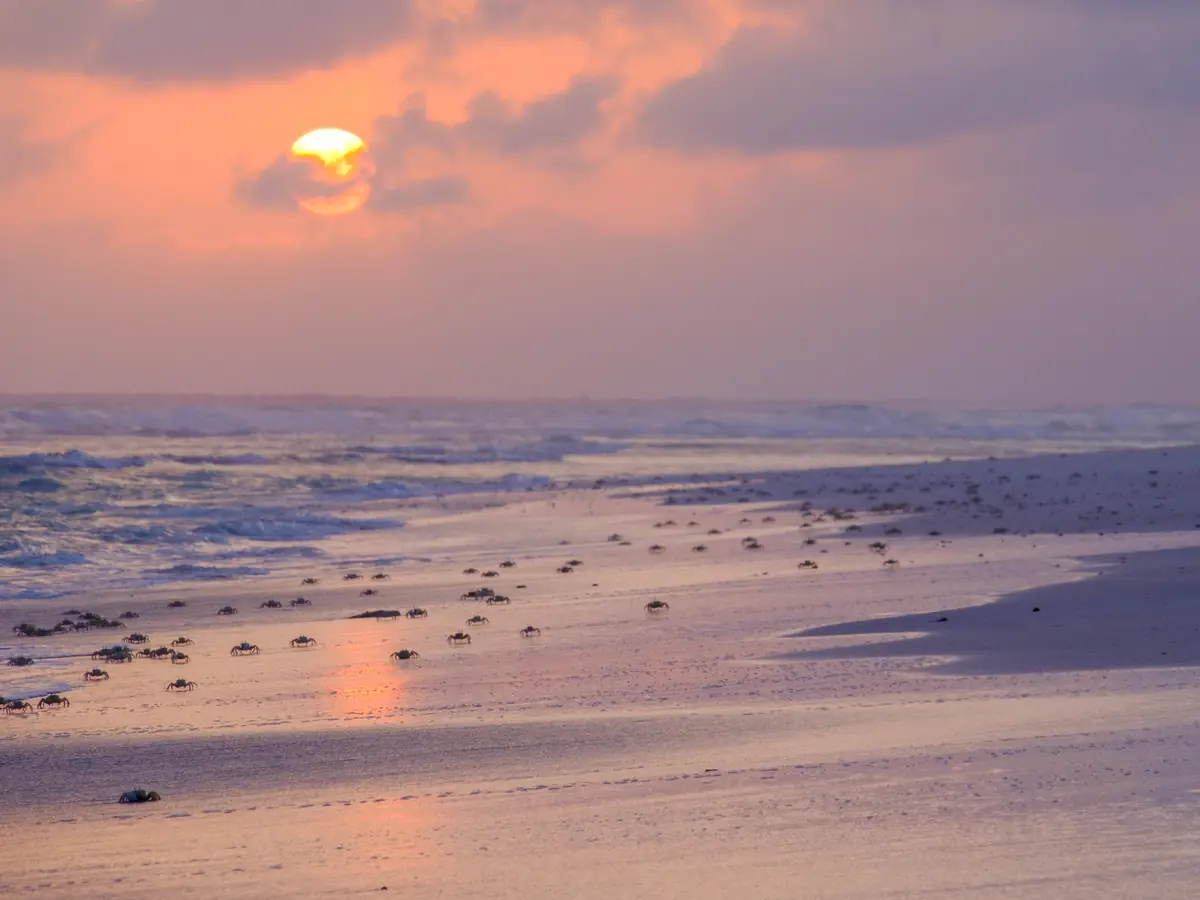
Out to Ras Irissel at the island's eastern tip, then the dunes at Arher, piled against the cliffs above a freshwater stream.
Overnight: Arher camp
 Hardscarf · CC BY-SA 4.0
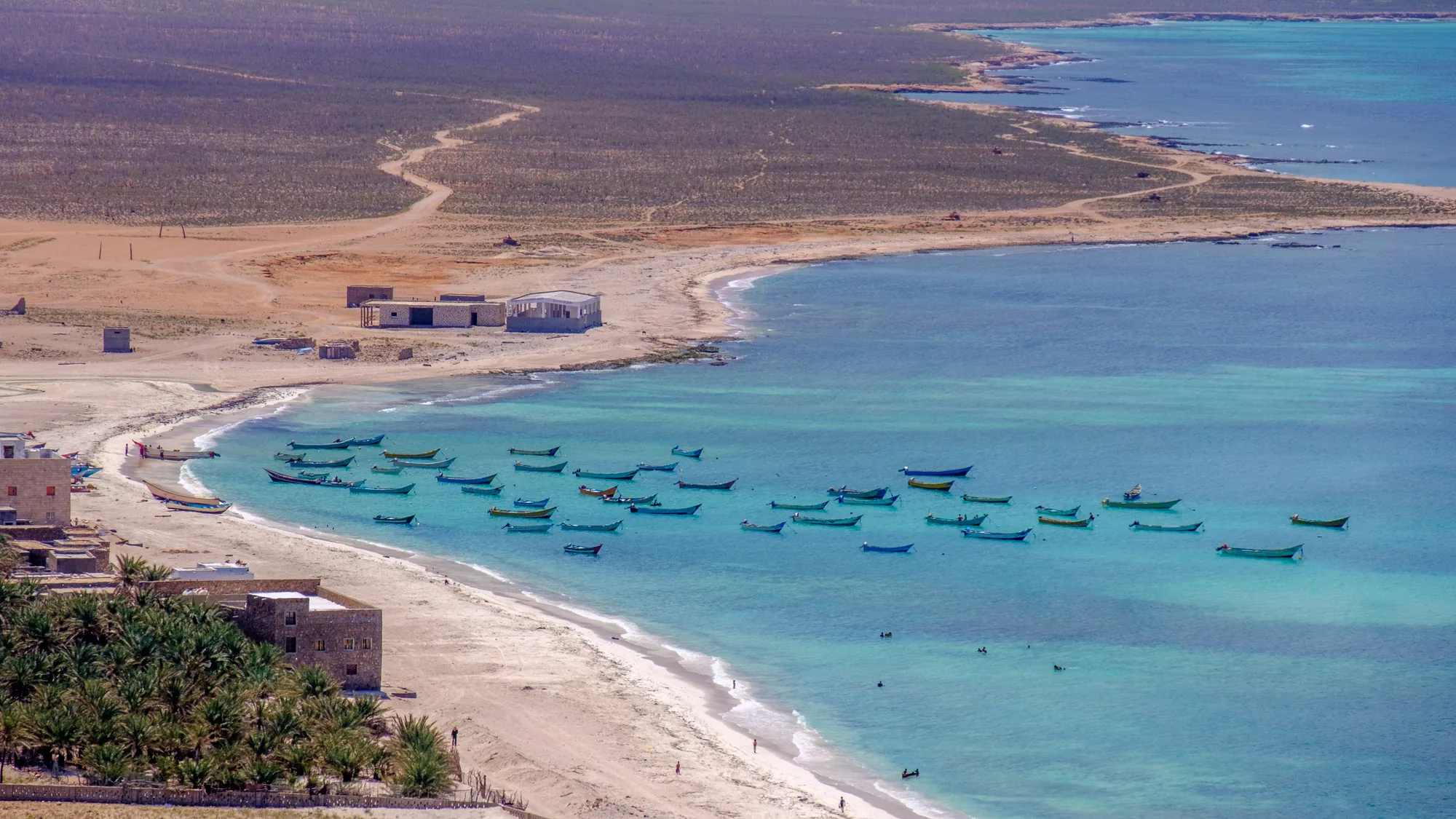
Through Wadi Defarhu to the south coast: Aomak beach, and the view from Digub Cave over the plain.
Overnight: Aomak beach camp
 Hardscarf · CC BY-SA 4.0
Across the island to the west: the fishing town of Qalansiyah and the lagoon at Detwah.
Overnight: Detwah lagoon camp
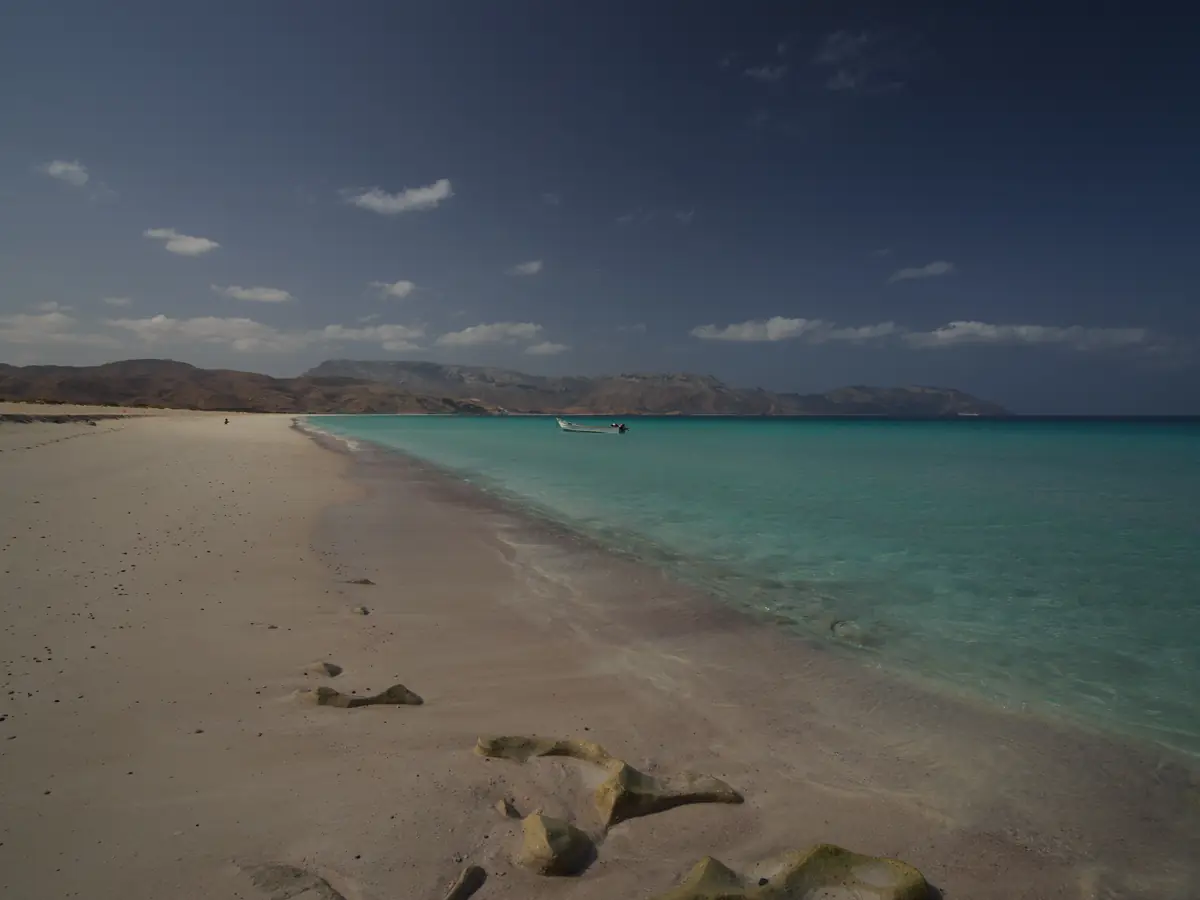 Valerian Guillot from Cambridge, United Kingdom · CC BY 2.0
A boat along the cliffs to Shuab, often with spinner dolphins alongside, and a day on the beach.
Overnight: Detwah lagoon camp
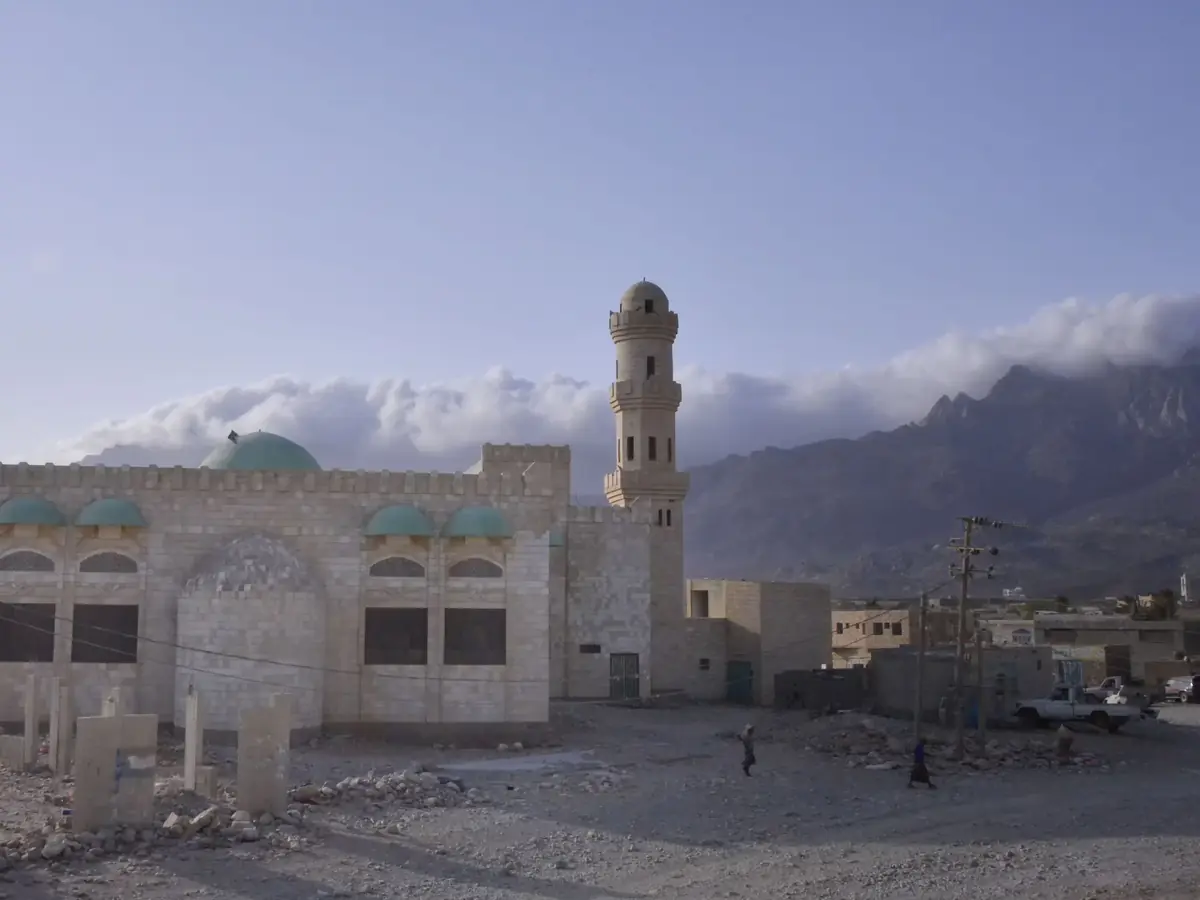 Rod Waddington from Kergunyah, Australia · CC BY-SA 2.0
Back to Hadibo for the town, its markets and a last evening in a hotel.
Overnight: Hotel, Hadibo
Transfer to the airport, three hours before departure.
The trip
About $3,150
Per person: everything on the island in the list above.
The flight
About $950–1,100
Return, Jeddah to Socotra. Seats are not sold online, so we book it for you.
Both figures are approximate. The exact price depends on your dates, your group size and the flight rotation, and you get it in writing when you enquire, before you pay anything. Why the same trip is quoted so differently across the market is covered in what Socotra actually costs.
Socotra is a cash-USD island: no working ATMs, no card acceptance. Bring $500–800 in small denominations, and note that only crisp notes from 2009, 2013 or 2017 onwards are reliably accepted.
In January 2026 roughly 600 travellers sat on Socotra for about a week when the rotation stopped. It is the clearest risk on the trip, and the written terms across this market are all over the place: one operator charges $100 per person per day and says plainly that no cash refund will ever be issued for a cancelled flight, offering only non-transferable credit; another promises a full deposit refund; two put every extra night entirely on the traveller; one is silent on force majeure altogether. Travellers who were caught in January 2026 have publicly described recovering money by bank chargeback after being ignored, and being billed with no cost breakdown. Before you pay anything, get the terms for your dates in writing: who keeps the camp, food, vehicle and guide running, who pays for the extra nights, and what is refunded. We ask the operator for exactly that and send it to you with your quote. Treat a vague answer from anyone as an answer.
More on the risk in is Socotra safe and insurance and health.
It is the hardest part of any Socotra trip: two days of walking on rough paths through the Haghier, with basic camps. You need to be comfortable walking for several hours a day on uneven ground. The rest of the trip is much easier.
The flight from Jeddah runs on a weekly pattern, so trips come in weekly blocks. Fifteen days lines up with the flight two weeks later and leaves room for the mountains.
No. The return flight between Jeddah and Socotra is extra, usually about $950–1,100, and we book it for you: seats are released to licensed operators rather than sold online. The price shown is the land price per person.
It is an approximate land price per person. The final figure depends on your dates, the size of your group and the flight rotation, and you get it in writing when you enquire, before you pay anything.
Socotra uses an entry permit sponsored by a licensed local operator, not a visa you apply for yourself. It is arranged for you and included in the price. It is usually issued a week or two before travel, so do not leave booking to the last minute.
October to April. The southwest monsoon closes the island from roughly May to September: winds pick up, sea crossings stop and flights are often cancelled.
8 days, 7 nights · Camping, a new camp each night · up to 8
The full lap of the island in eight days, camping somewhere new each night.
About $1,600
per person, land only · flight extra
8 days, 7 nights · Camping, three bases · up to 10
The same island from three camps, on the east coast, in the Firmihin forest and at Detwah lagoon, so you unpack three times instead of seven.
About $2,850
per person, land only · flight extra
8 days, 7 nights · Hotel in Hadibo · up to 10
Every night in a hotel in Hadibo, with day trips out to the forest, the lagoon, the reef and the dunes.
About $2,850
per person, land only · flight extra
8 days, 7 nights · Camping near the dive sites · up to 8
A week of guided boat dives on Socotra's reefs and wrecks, camping by the sea, with a dry day in the forest before you fly.
About $2,750
per person, land only · flight extra